AI model comparisons, with the receipts.
We give every image model the same prompts and every video model the same start frames and motion prompts, then judge each output against a checklist. Every render on these pages is real, shown with what it cost and how long it took.
Image models
The scoreboard
Each output is scored 0 to 3 against the test's checklist (3 = did what was asked). Costs are what we were billed, in credits (100 credits = $1). Scores are averages over a handful of tests with one take each: a guide, not a law of nature.
Images
| Model (tier tested) | Avg score | Credits / image | Render time |
|---|---|---|---|
| Nano Banana ProNano Banana Pro | 3.0 / 3 | 38 ($0.38) | 22 s |
| Grok ImagineGrok Imagine (quality) | 2.8 / 3 | 13 ($0.13) | 7 s |
| GPT Image 2GPT Image 2 (high quality) | 2.8 / 3 | 40 ($0.40) | 93 s |
| Flux 2 ProFlux 2 Pro | 2.7 / 3 | 8 ($0.08) | 9 s |
| Seedream 5Seedream 5 Lite | 2.7 / 3 | 9 ($0.09) | 34 s |
| Nano Banana 2Nano Banana 2 | 2.5 / 3 | 20 ($0.20) | 12 s |
| Ideogram 4Ideogram 4 | 2.0 / 3 | 3 ($0.03) | 9 s |
Video (image-to-video)
| Model (tier tested) | Avg score | Credits / second | Render time |
|---|---|---|---|
| Kling O3Kling O3 Standard, image-to-video, 5 s | 2.8 / 3 | 21 ($0.21) | 79 s |
| Kling 3.0Kling 3.0 Standard, image-to-video, 5 s | 2.3 / 3 | 21 ($0.21) | 76 s |
| Seedance 2.0Seedance 2.0 Fast, image-to-video, 5 s, no audio | 2.3 / 3 | 61 ($0.61) | 243 s |
| PixVerse V6PixVerse V6, image-to-video, 5 s | 2.0 / 3 | 11 ($0.11) | 46 s |
| Kling 2.5 TurboKling 2.5 Turbo Pro, image-to-video, 5 s | 2.0 / 3 | 18 ($0.18) | 134 s |
| Veo 3.1Veo 3.1 Fast, image-to-video, 6 s, no audio | 1.8 / 3 | 25 ($0.25) | 211 s |
Every image test, every model
Realistic portrait
Skin, wrinkles, beard texture and believable depth of field are where AI portraits look plastic.
Close-up portrait of an elderly fisherman with deep wrinkles and a salt-and-pepper beard, wearing a yellow oilskin hat, overcast harbor light, 85mm lens, shallow depth of field, documentary photograph
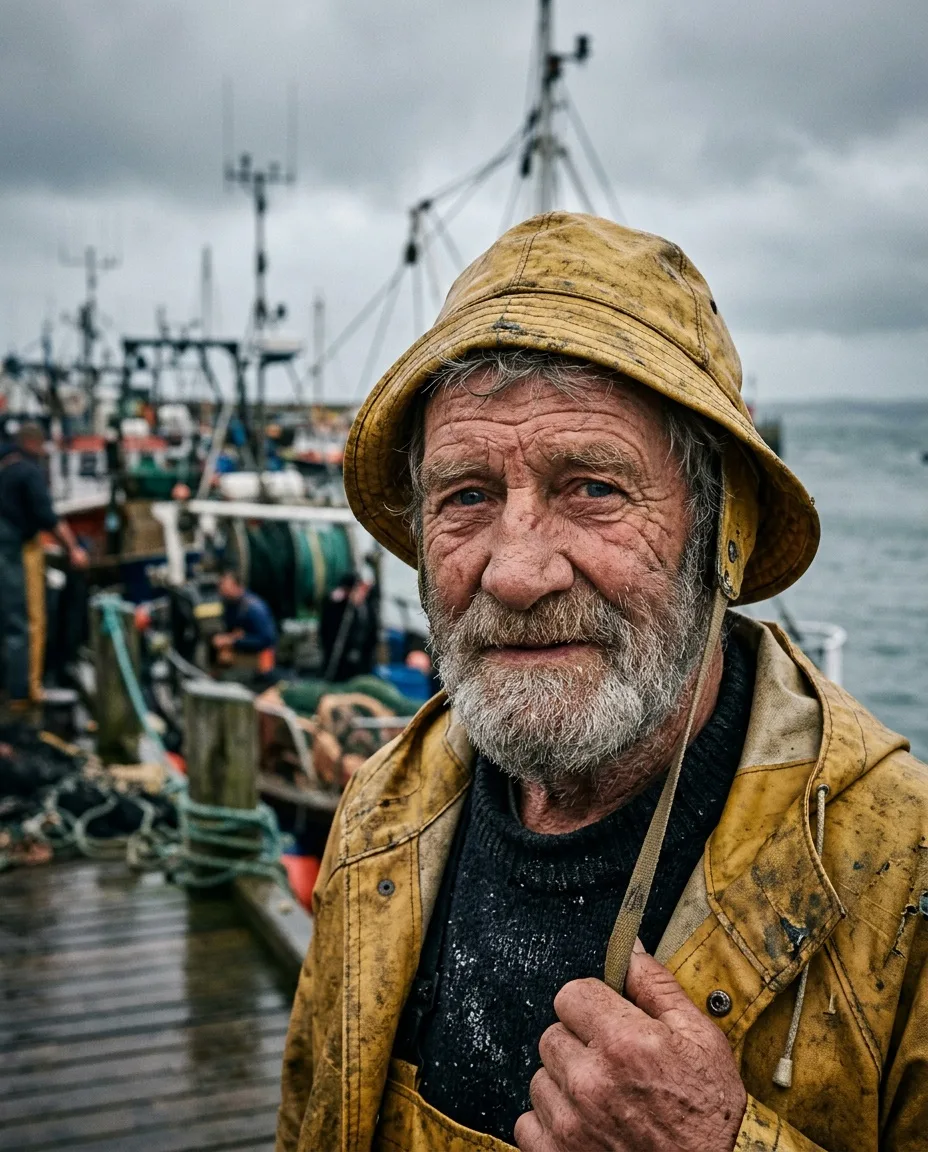
Weathered skin, a worn yellow oilskin hat and a busy harbor are all there, but it framed a half-length shot rather than a close-up and the boats behind are only lightly blurred. Heavy HDR-style sharpening makes the skin look crunchy.
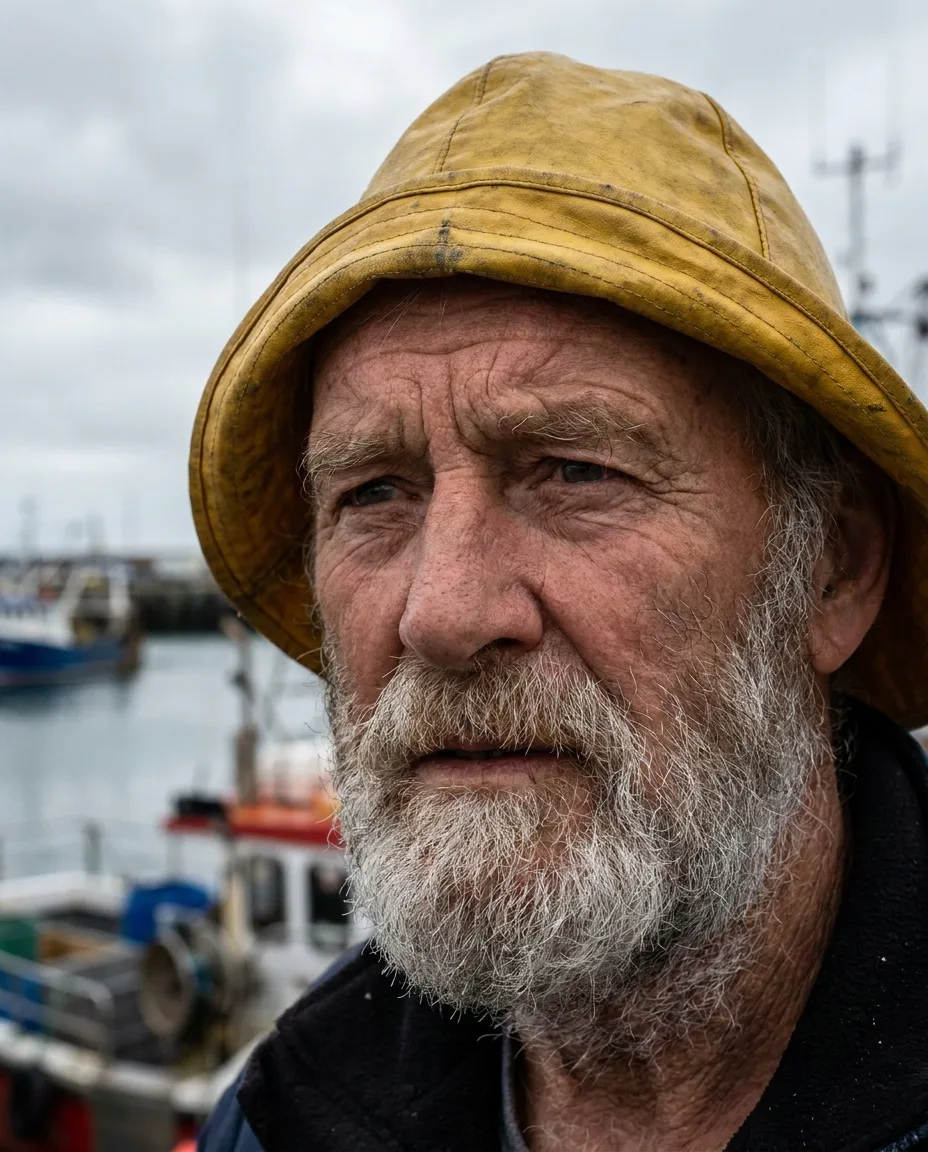
A true close-up with believable pores, deep wrinkles and a grizzled gray-and-white beard under a worn oilskin hat. The harbor and boats fall into soft, overcast blur, as an 85mm portrait should.
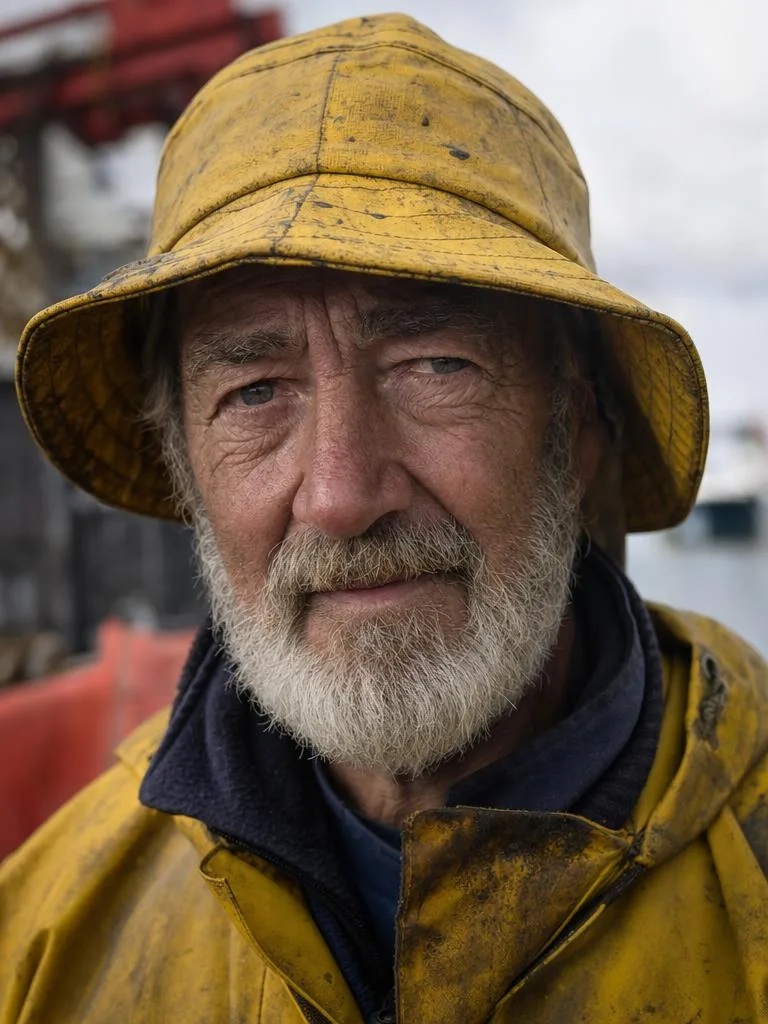
Natural skin texture and a scuffed oilskin hat and jacket, framed tight with the background melted into soft blur. The beard reads more white than salt-and-pepper, and the harbor is only hinted at by red nets and a hull.
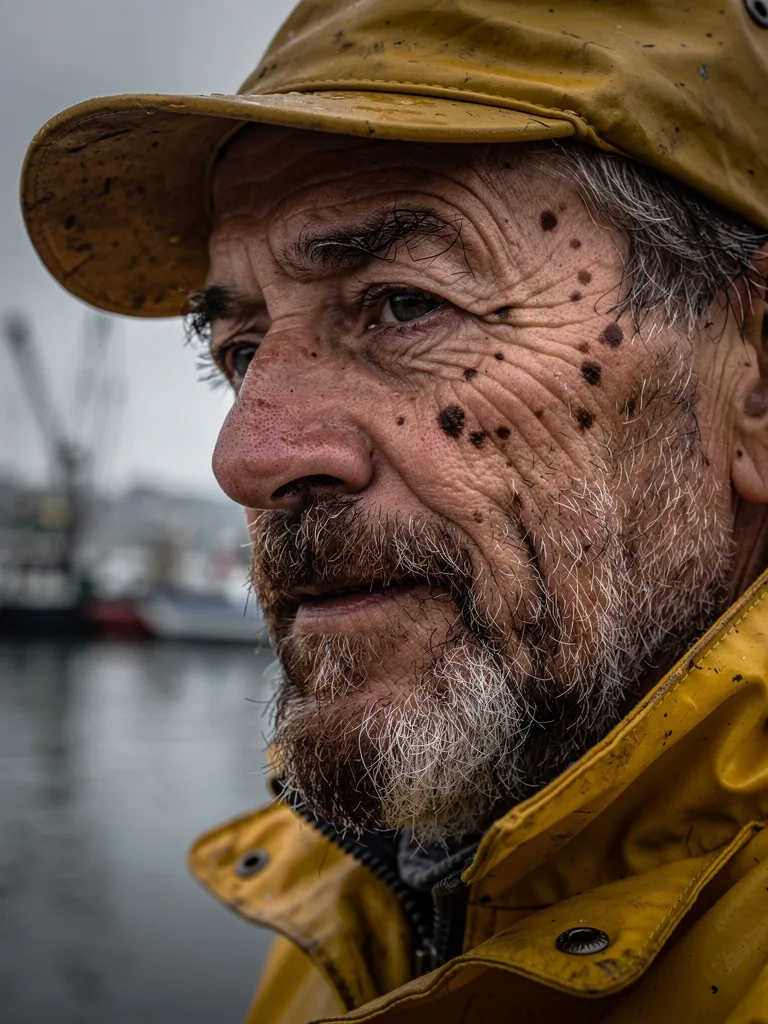
A strong profile with a harbor crane and water melting into blur, though the hat is a yellow cap rather than an oilskin sou'wester. Over-sharpened skin and a cluster of dark blotches on the cheek look artificial at full size.
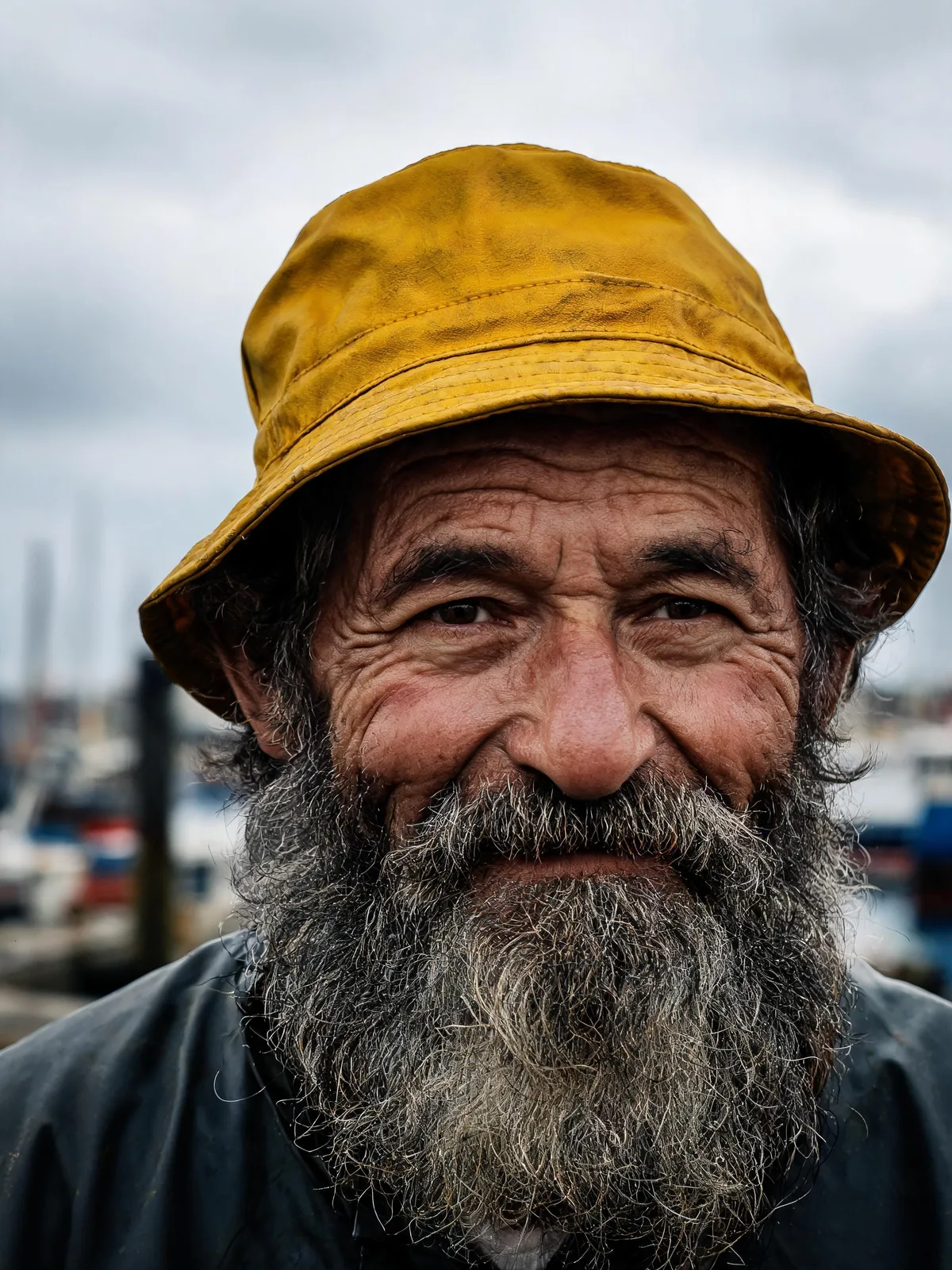
The clearest salt-and-pepper beard of the set, with deep crow's-feet and a warm smile under a mustard oilskin hat, against softly blurred harbor boats. Contrast is pushed a little hard, but nothing looks broken.
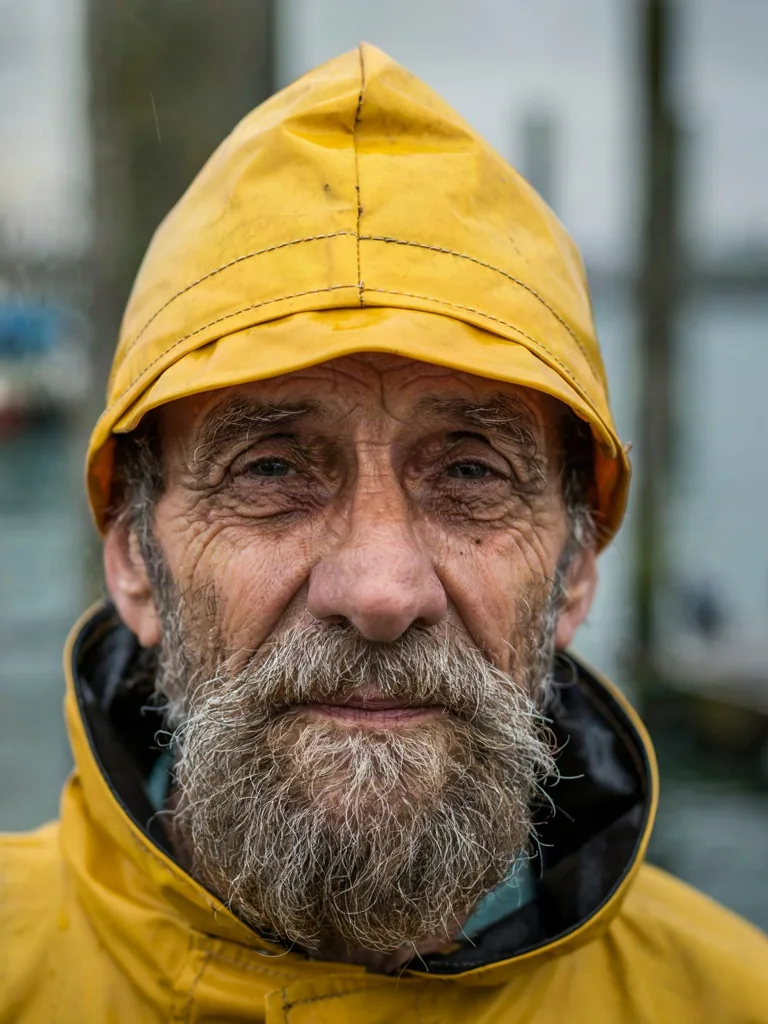
Deeply etched wrinkles, a wiry gray beard and a yellow sou'wester with a matching collar, with soft harbor posts and water behind. The hat rises to an odd point like a hood, and the wrinkles are slightly exaggerated.
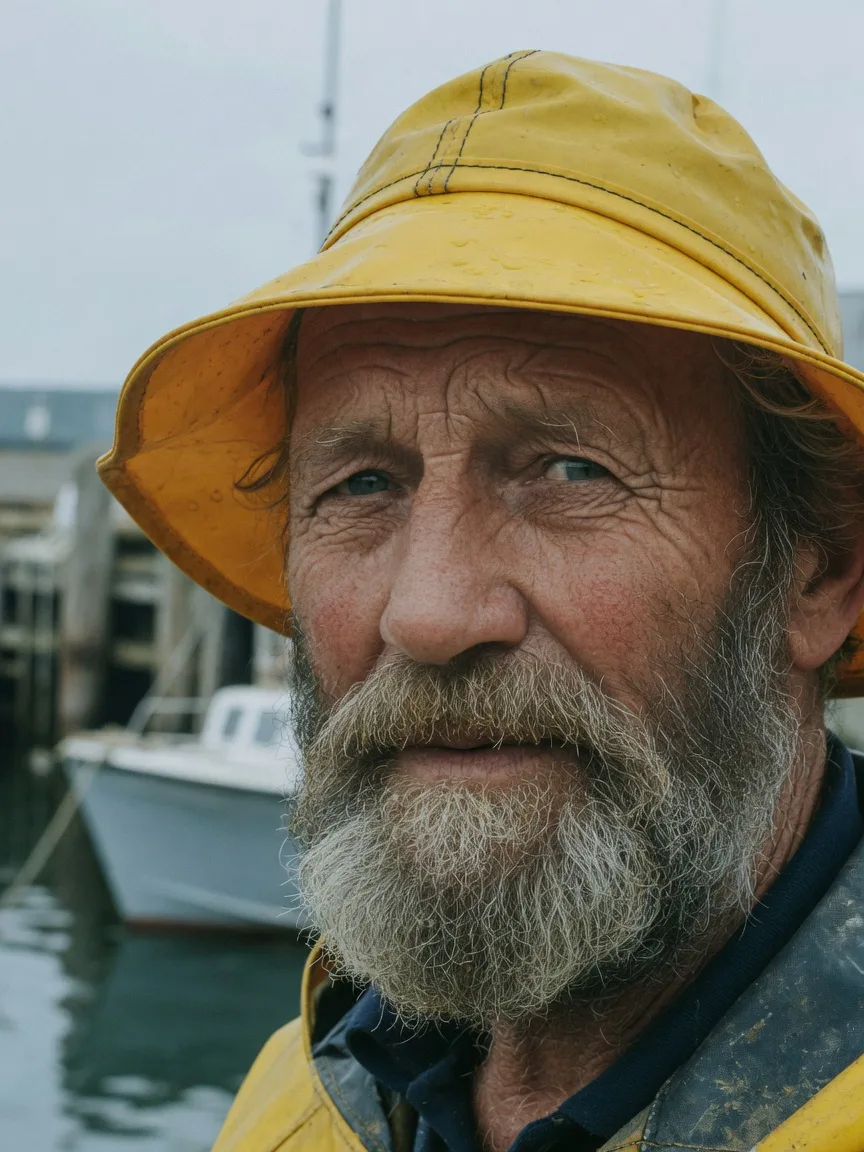
A tight close-up with fine wrinkles, a full salt-and-pepper beard and a stitched yellow oilskin hat, with moored boats softly blurred behind. Delivered at 3:4 because the model has no 4:5 option.
Product packshot
Glass, metal and a clean set test material rendering and restraint.
A frosted glass skincare serum bottle with a gold dropper standing on a travertine block, a sprig of eucalyptus beside it, soft window light from the left, plain beige backdrop, clean beauty product photography
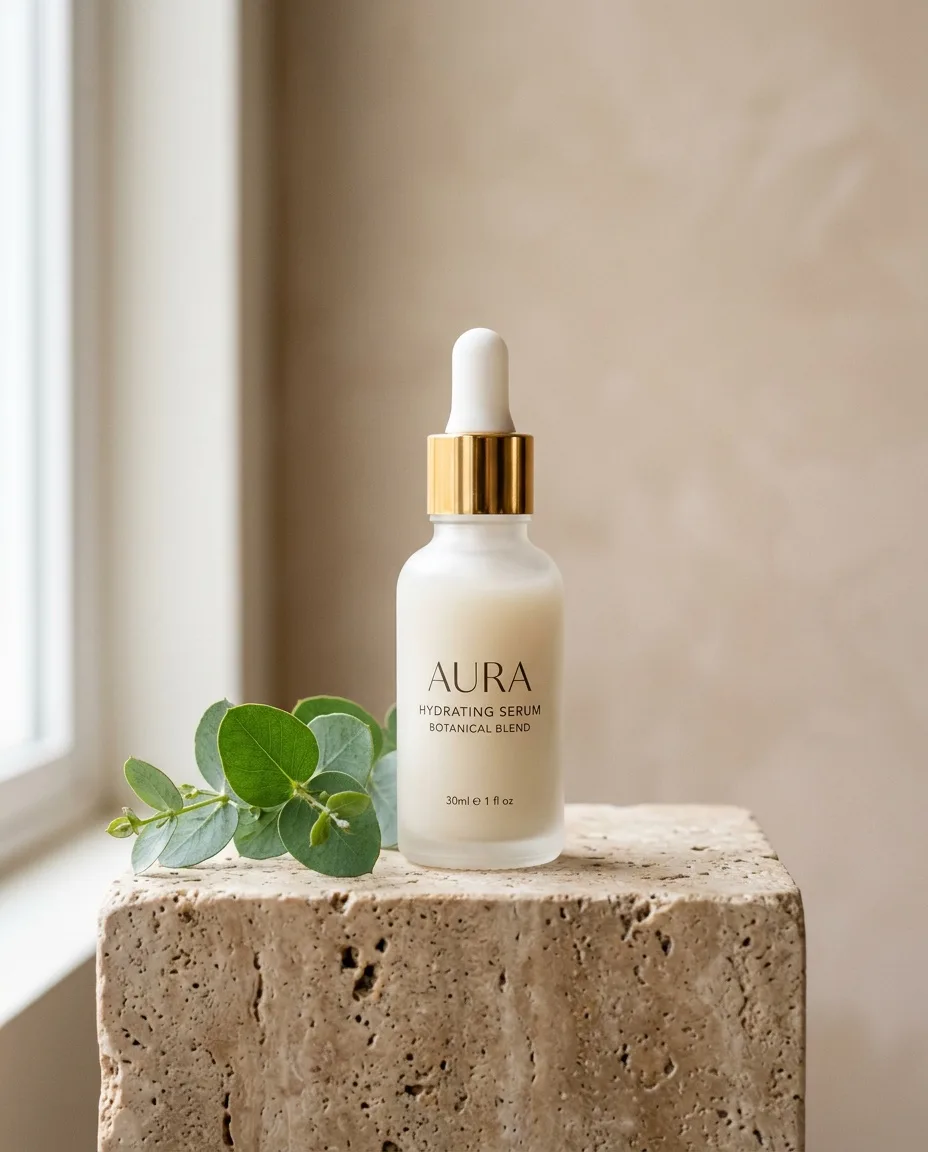
Frosted bottle, gold collar, pitted travertine and a eucalyptus sprig, lit by a window on the left against a beige plaster wall. It added an invented "AURA" label, spelled cleanly.
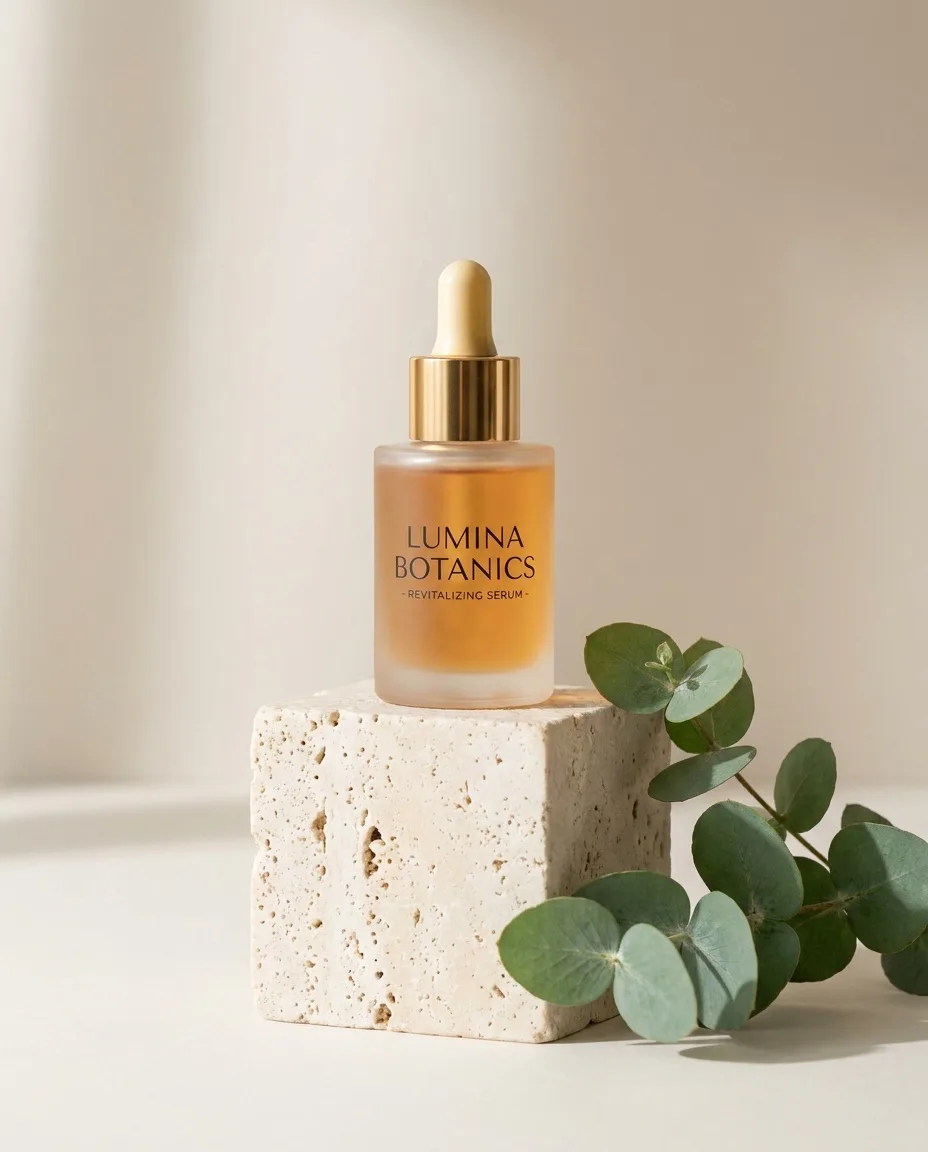
Frosted shoulders over amber serum, a gold collar, a travertine cube and a eucalyptus spray, with soft shadow streaks from the left. The backdrop is closer to off-white than beige, and it added a clean "LUMINA BOTANICS" label.
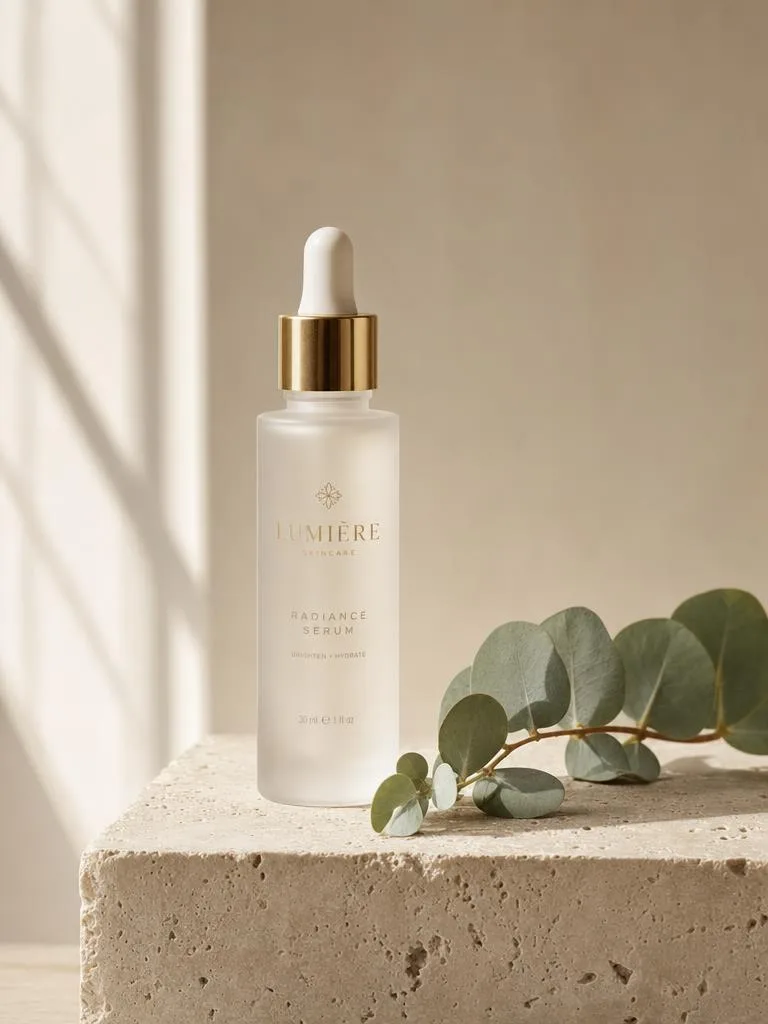
A restrained, catalog-style frame: clearly frosted glass, a gold collar, travertine, eucalyptus and window shadows raking from the left across a beige wall. Its invented "LUMIÈRE" label stays legible down to the small print.
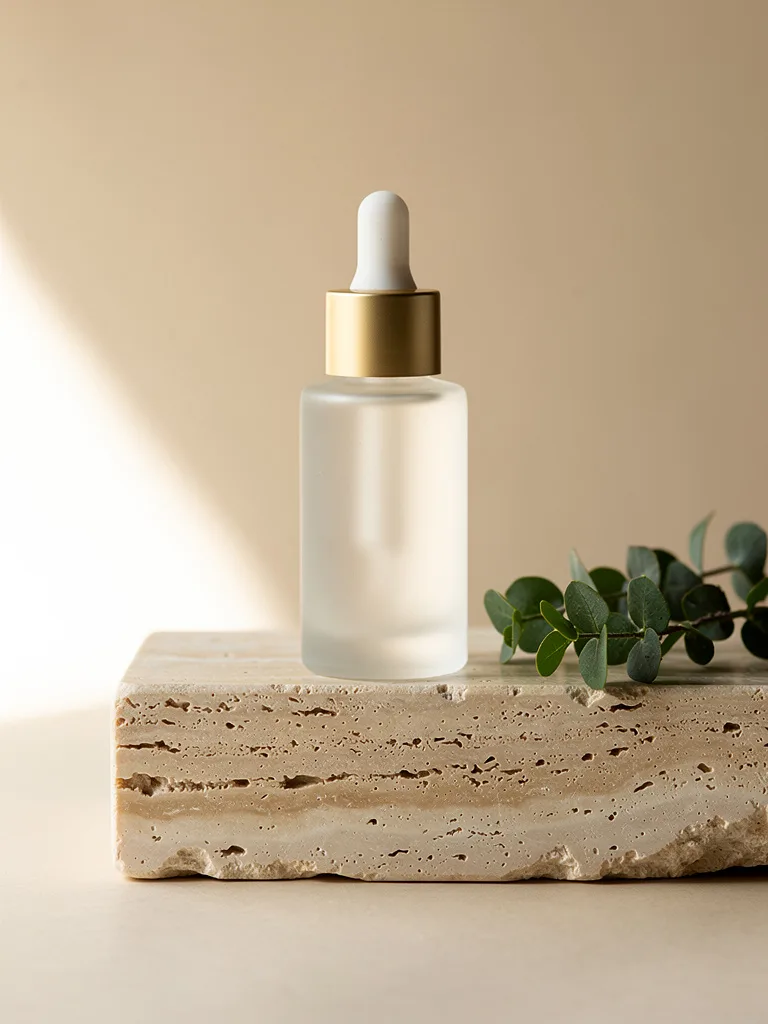
Unbranded and clean: the glass reads as frosted, the gold collar is brushed rather than shiny, and a beam from the left falls across a beige backdrop and a banded travertine slab with eucalyptus.
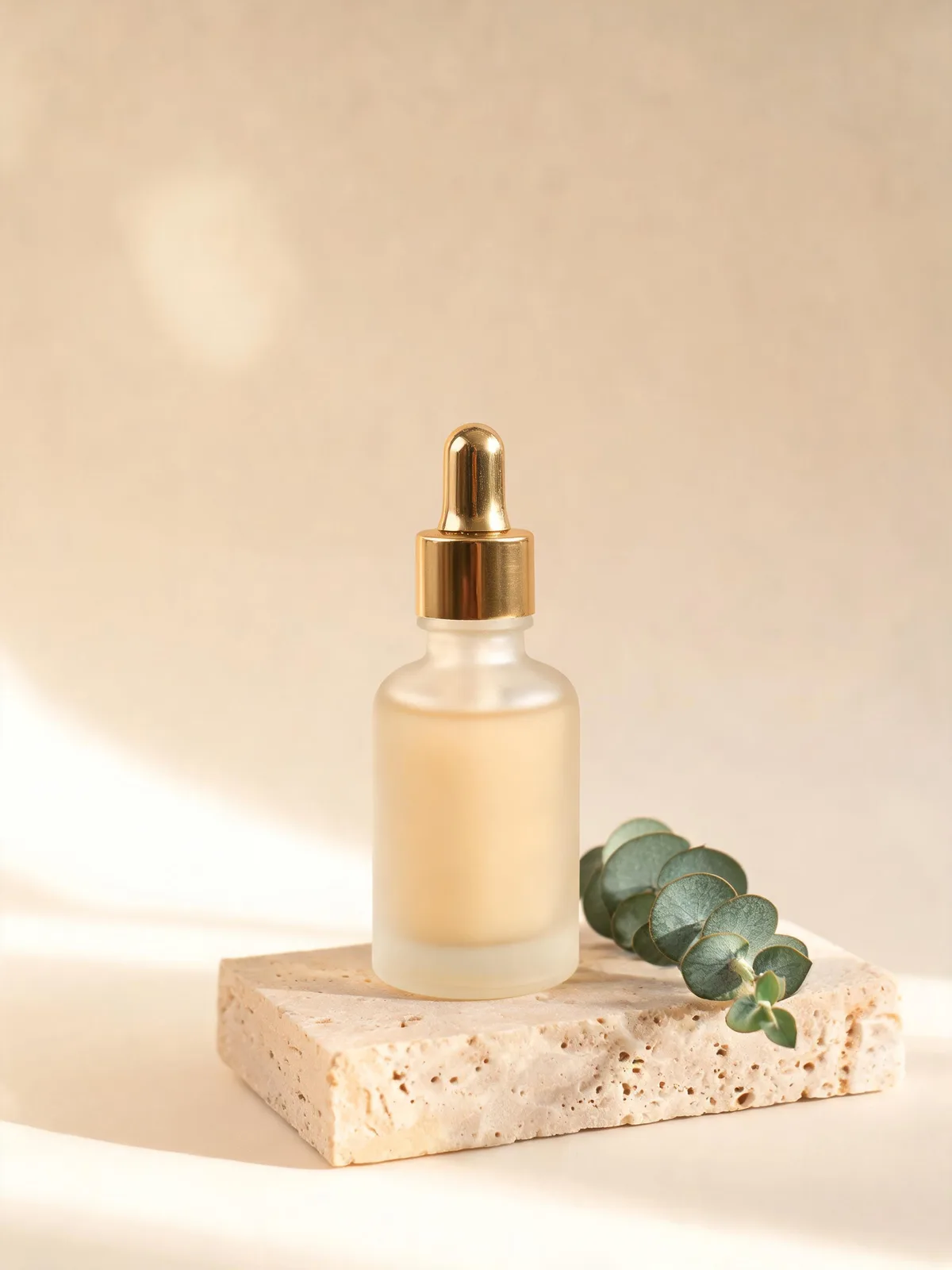
Frosted bottle with an all-gold dropper, a low travertine slab and a eucalyptus sprig, in warm patches of sun from the left on a cream-beige set. Soft and airy, with no label to go wrong.
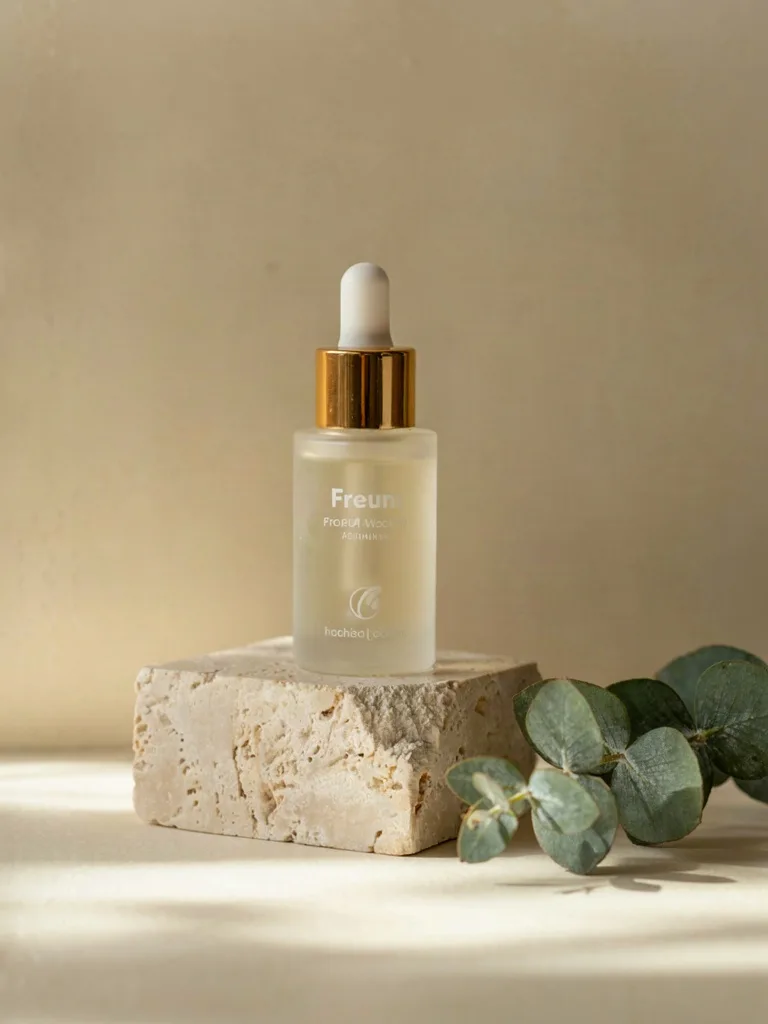
Travertine block, eucalyptus, gold collar and soft light from the left are all there. It invented a label of garbled pseudo-text ("Freun" and unreadable lines), which would need retouching before use.
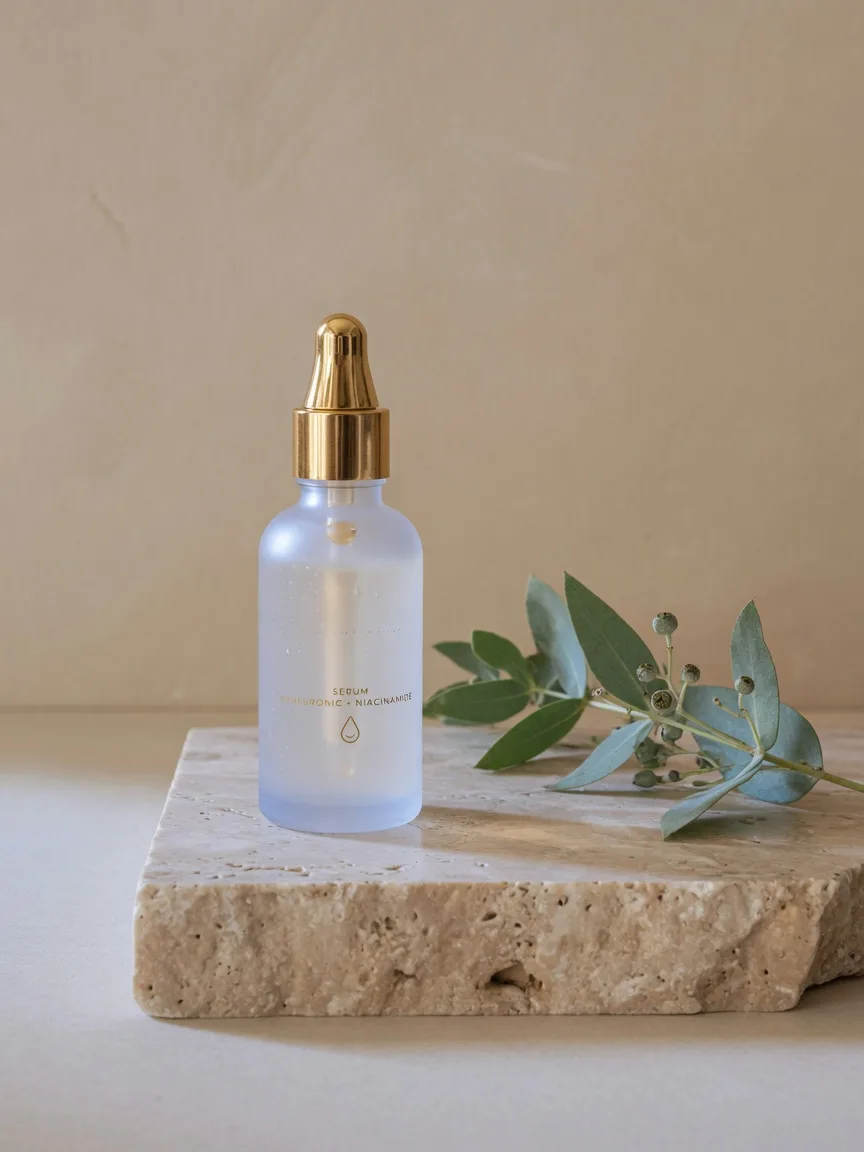
Frosted bottle with a gold dropper on a pitted travertine slab, eucalyptus with seed pods, soft light from the left on a beige wall. Its invented "SERUM" label is mostly legible but the ingredient line is partly cut off.
Exact text on a sign
Spelling two lines of quoted text exactly is still the clearest separator between image models.
A vintage enamel shop sign mounted on a red brick wall that reads "BLUE HOUR COFFEE" in cream serif letters, with "EST. 1987" in smaller letters underneath, late afternoon sun, photograph
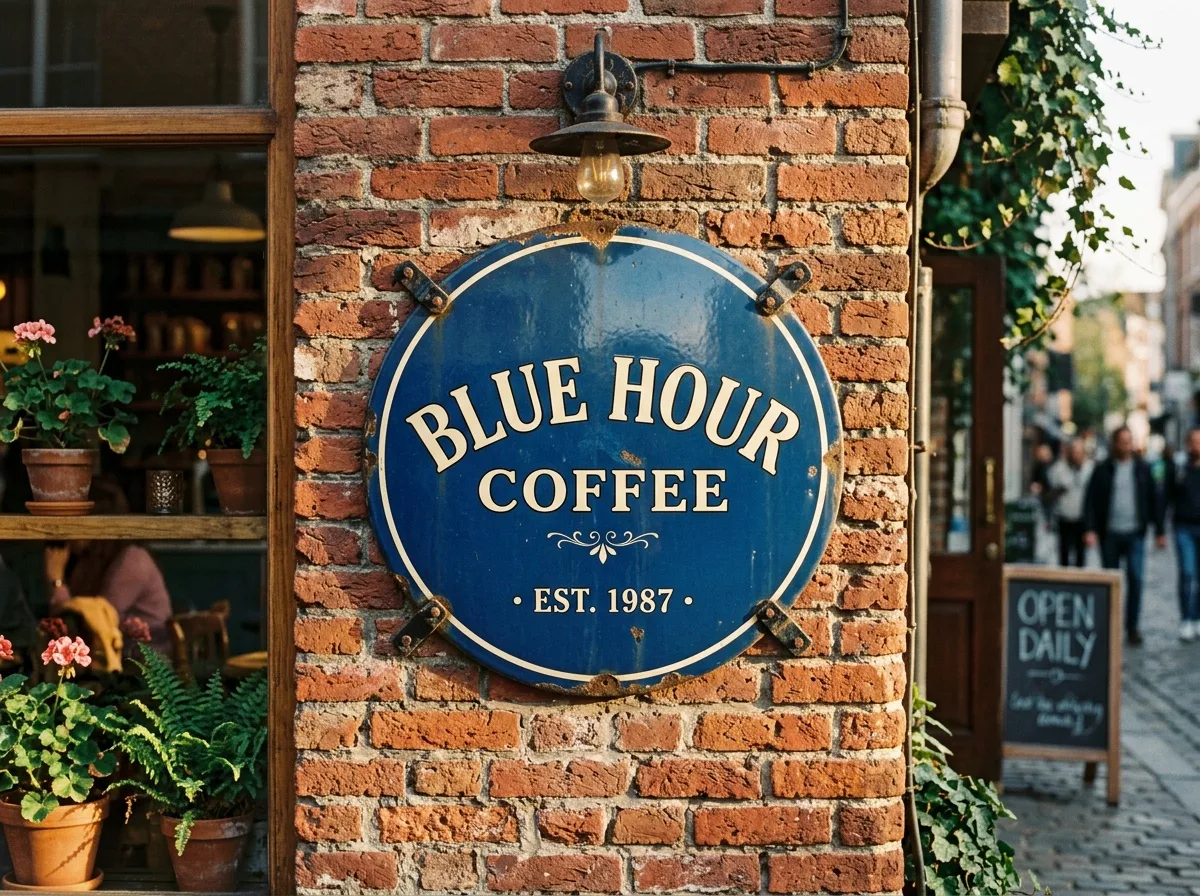
Spelled "BLUE HOUR COFFEE" and "EST. 1987" exactly in cream serif on a round blue enamel sign, adding a small flourish and dots. The street beyond glows with late sun, though the sign itself sits in softer light.
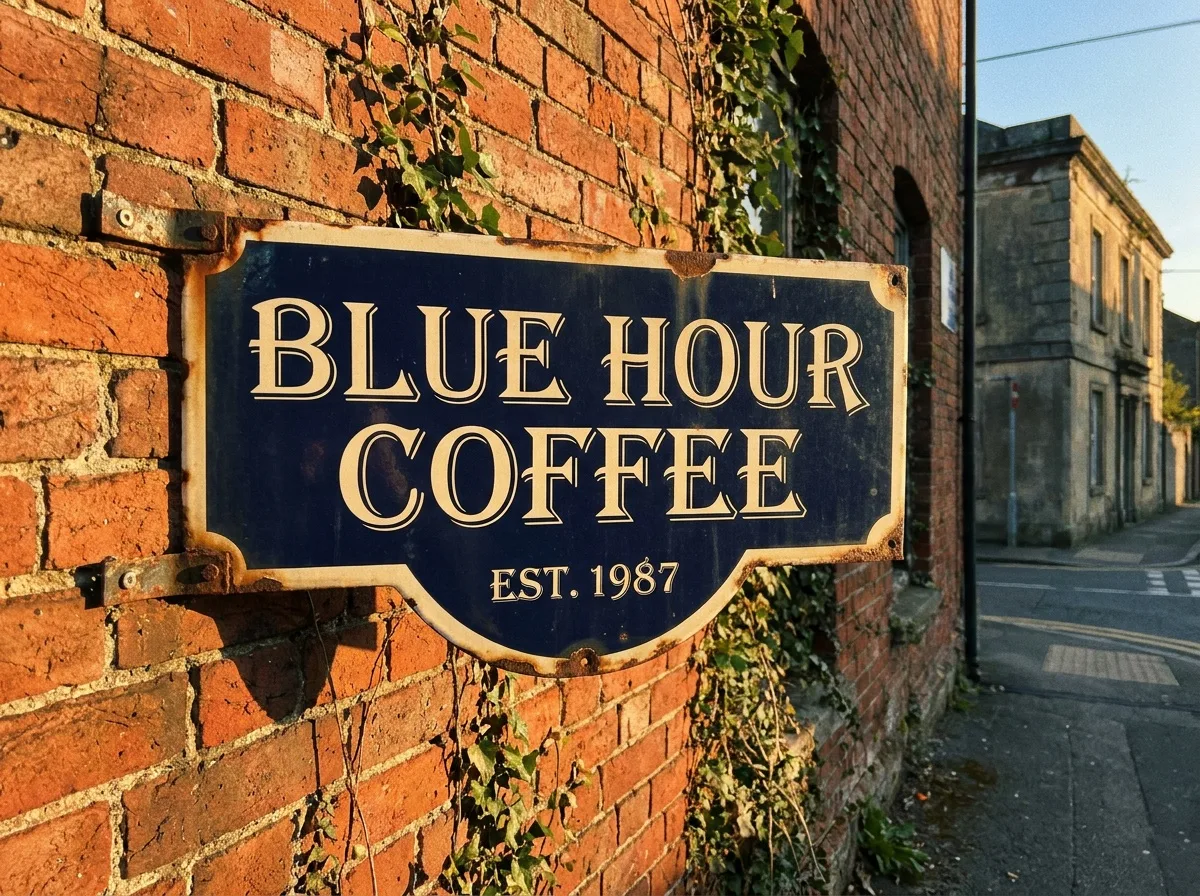
Exact on both lines, in a shaded cream serif on a chipped navy enamel plate with rust at the edges. Low, raking sun and ivy on the brick make it read as a real street corner.
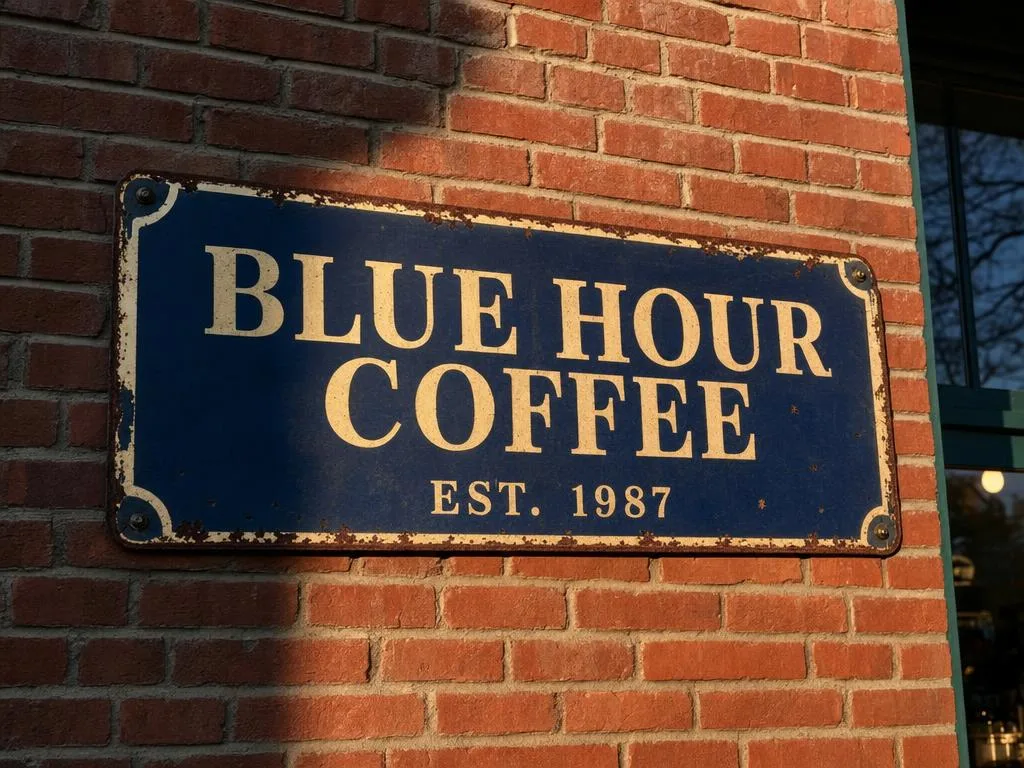
Both lines exact in cream serif on a weathered blue enamel plate with rusted edges and corner screws. A diagonal shadow across the wall sells the late-afternoon sun.
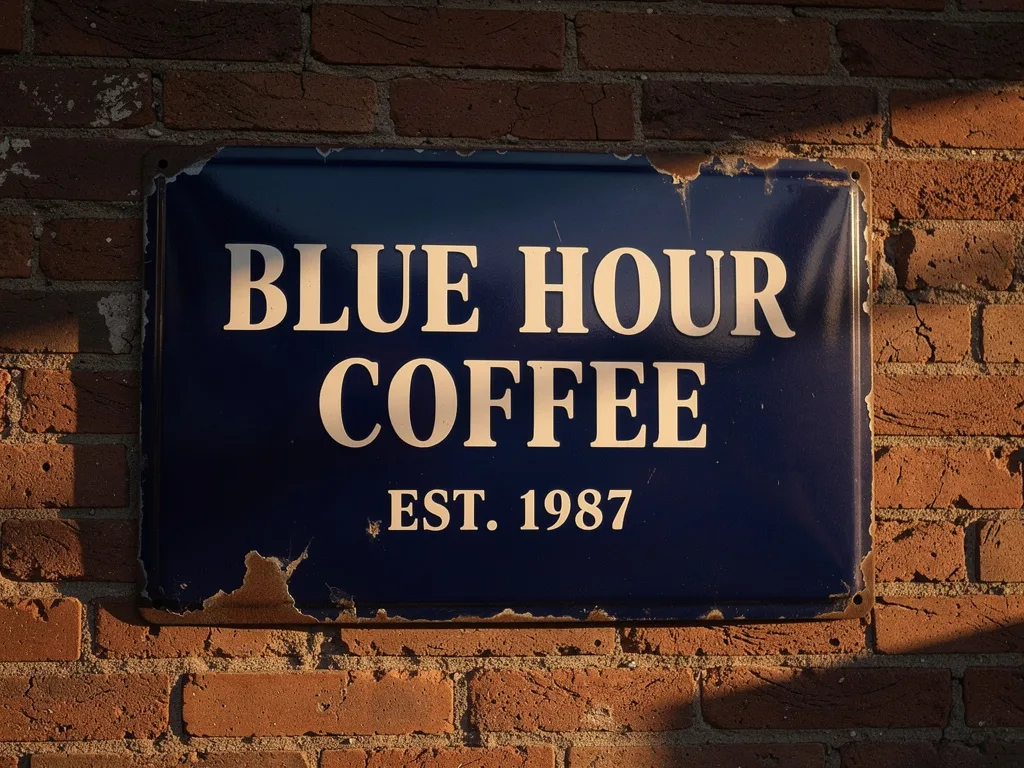
Both lines spelled exactly in cream serif on navy enamel with realistic chipping at the corners. Warm sun catches only the top right, so the light reads late but a little dim.
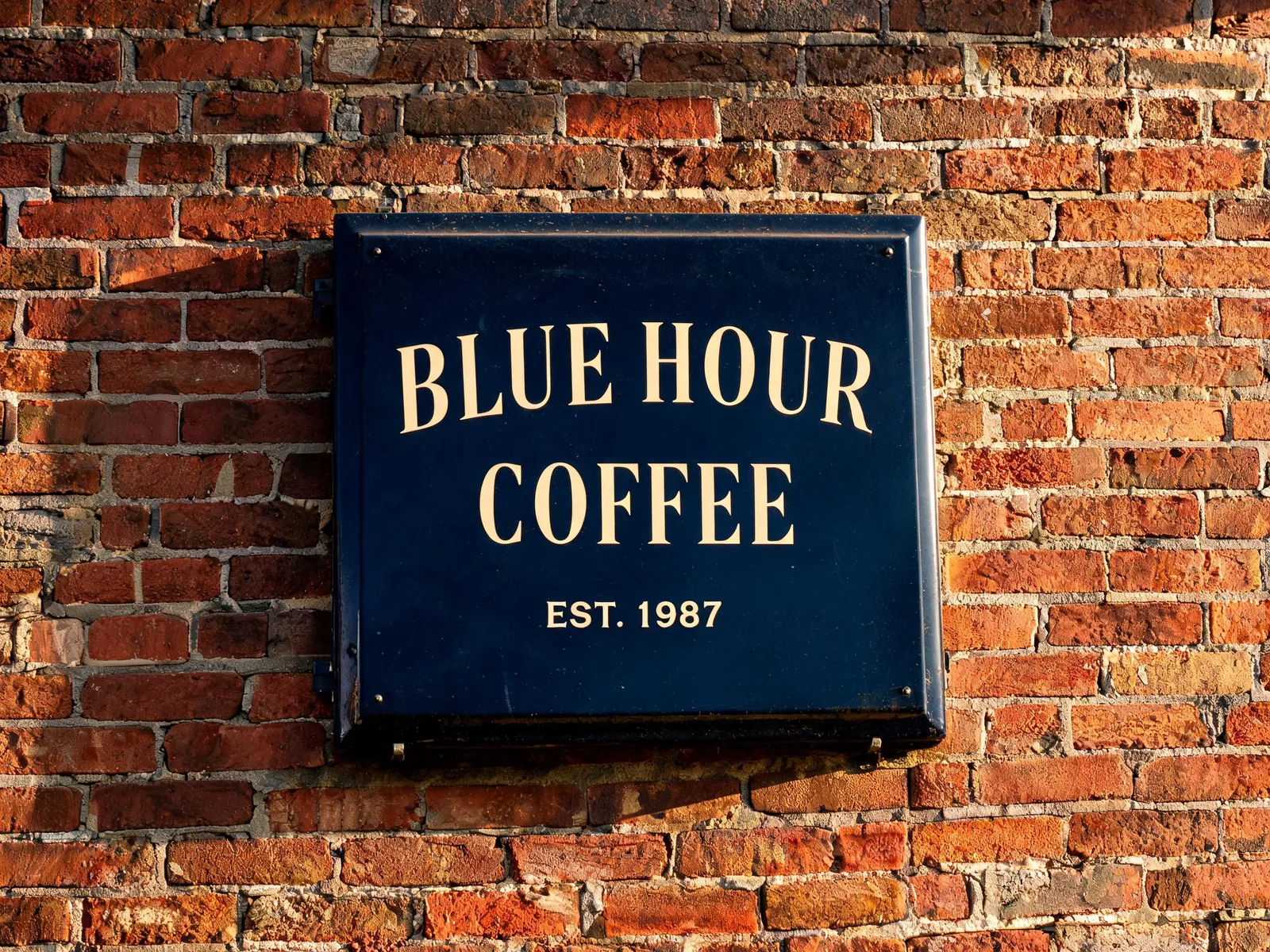
Spelled exactly, with tall condensed serif capitals for the name and a small sans-serif "EST. 1987" underneath. The panel reads more as painted metal than vintage enamel, but the sunlit brick is crisp.
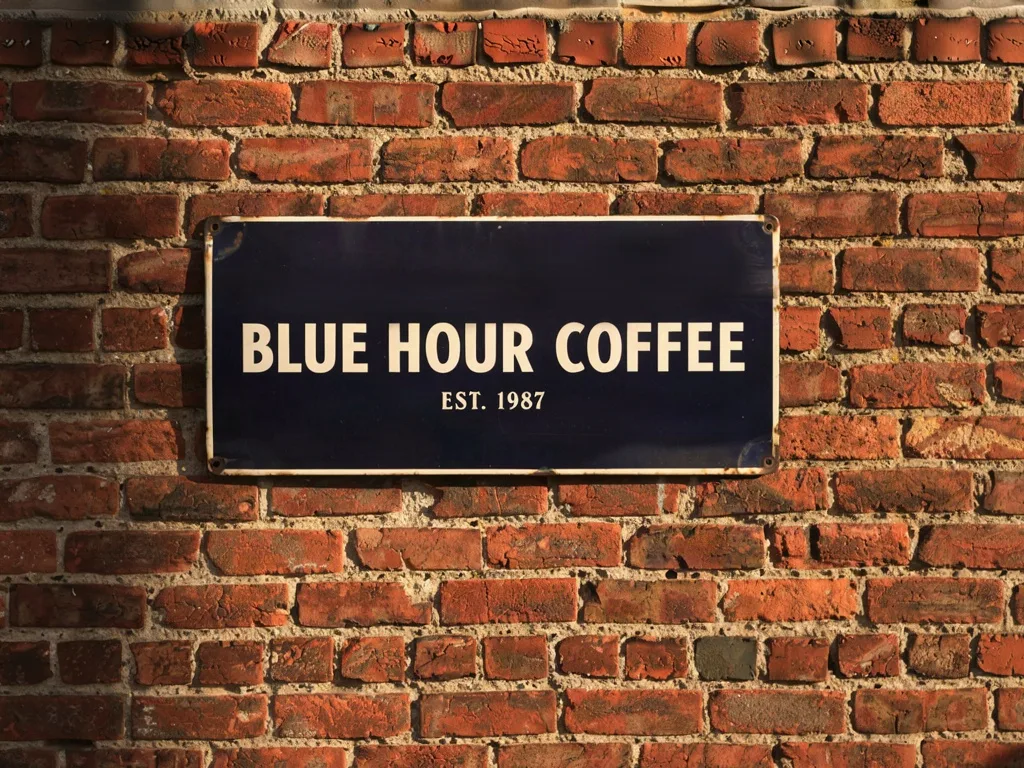
Spelled both lines exactly, but set "BLUE HOUR COFFEE" on a single line in a sans-serif, missing the serif instruction. The enamel plate, red brick and warm low sun are right.
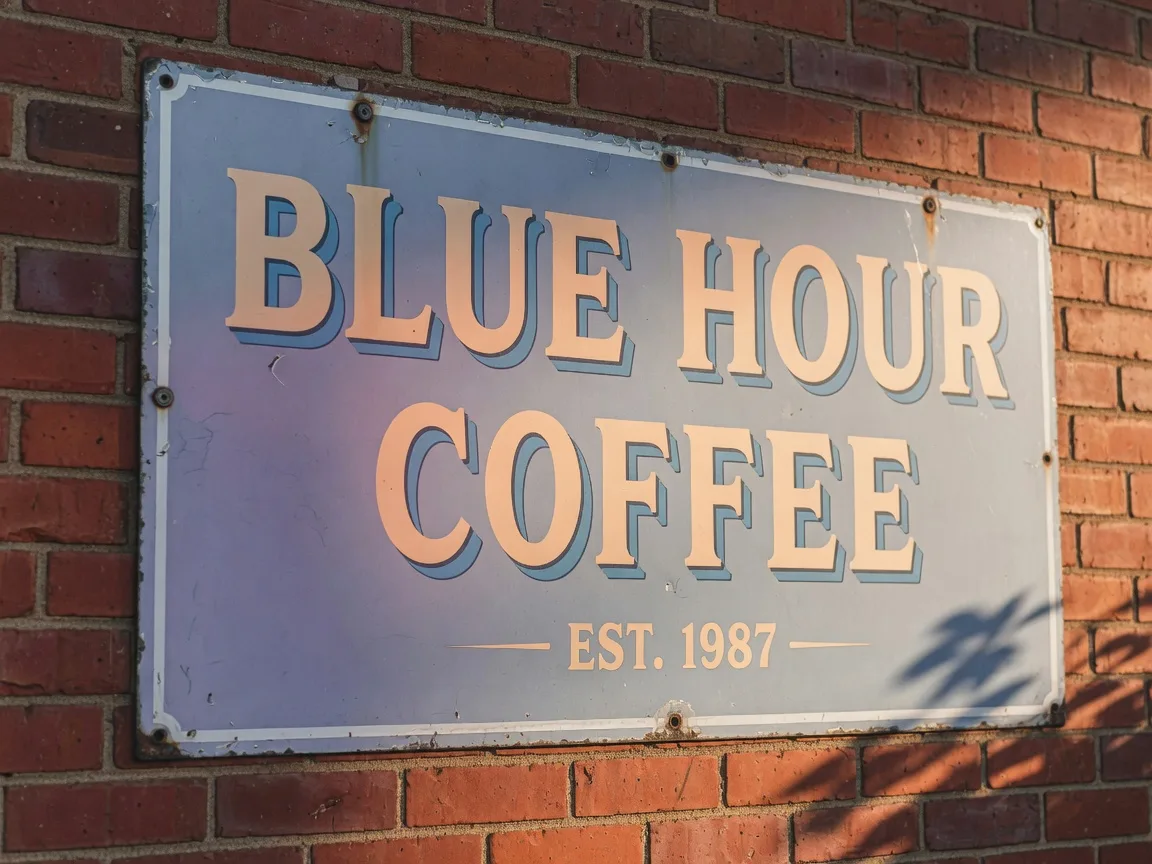
Exact on both lines, in cream serif with a blue drop shadow and rules on either side of "EST. 1987". The pale blue enamel plate has chips and screws, warmed by low sun and a leaf shadow.
Crowded scene, many details
A long list of people, props and actions shows whether a model follows the whole brief or only the first half.
Three kids building a cardboard rocket in a sunny backyard: a girl in a red raincoat painting stars on it, a boy with glasses taping on the fins, a toddler wearing a colander as a helmet, a golden retriever watching, toys scattered on the grass, warm afternoon light, photograph
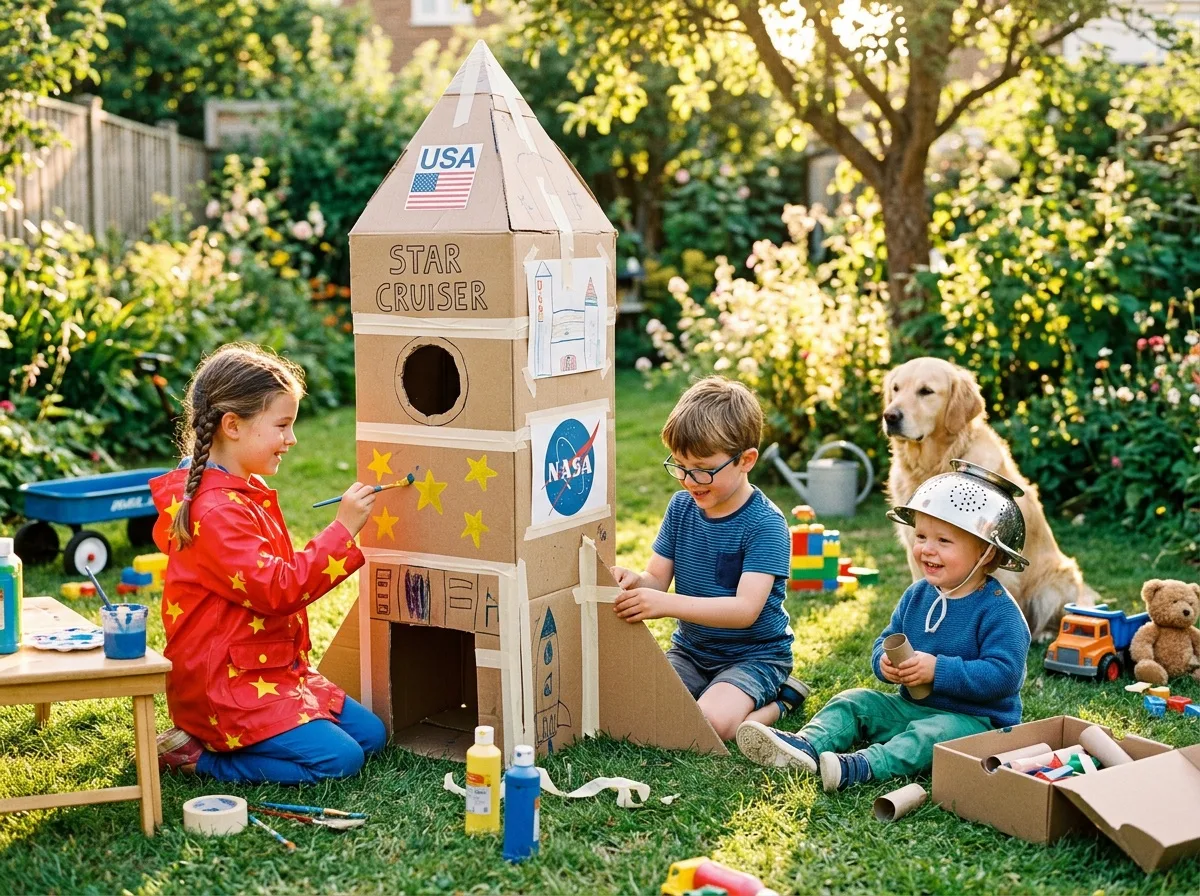
All seven items, down to the boy pressing tape onto a fin and a colander tied under the toddler's chin. It also put a NASA logo and a US flag on the rocket unprompted, worth noticing for commercial work.
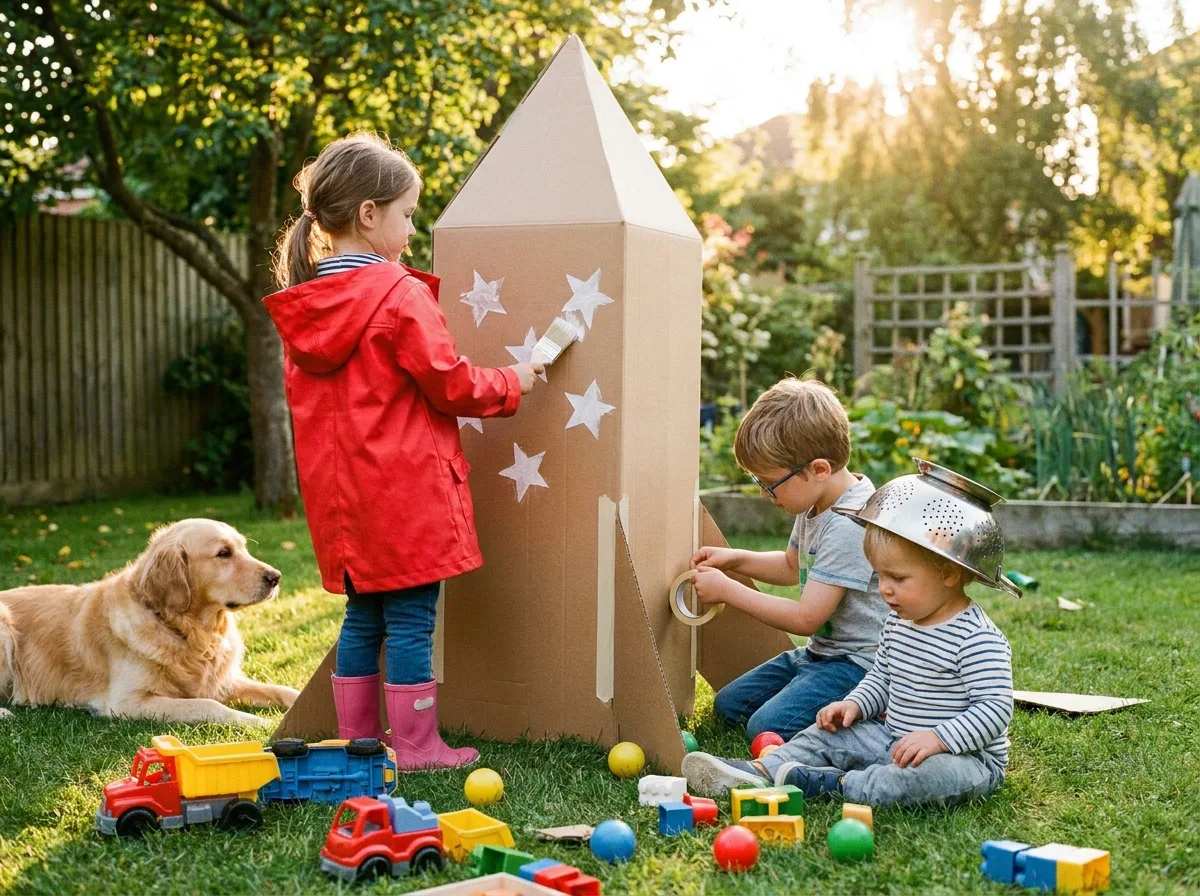
All seven items read clearly: the girl paints white stars, the boy holds a tape roll to a fin, and the retriever lies watching. Backlit afternoon sun and natural poses make it look like a real photo.
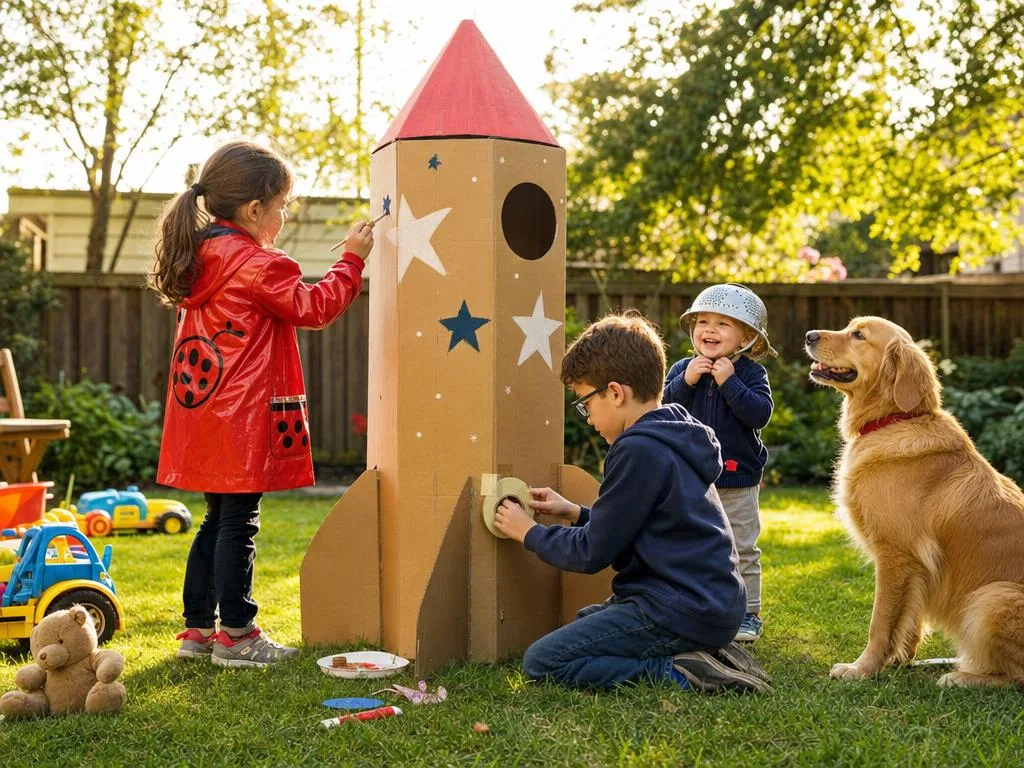
Every item lands, including a ladybug-print red raincoat, a tape roll on the fin and a giggling toddler in a colander. Warm low sun and a seated retriever looking on finish the brief.
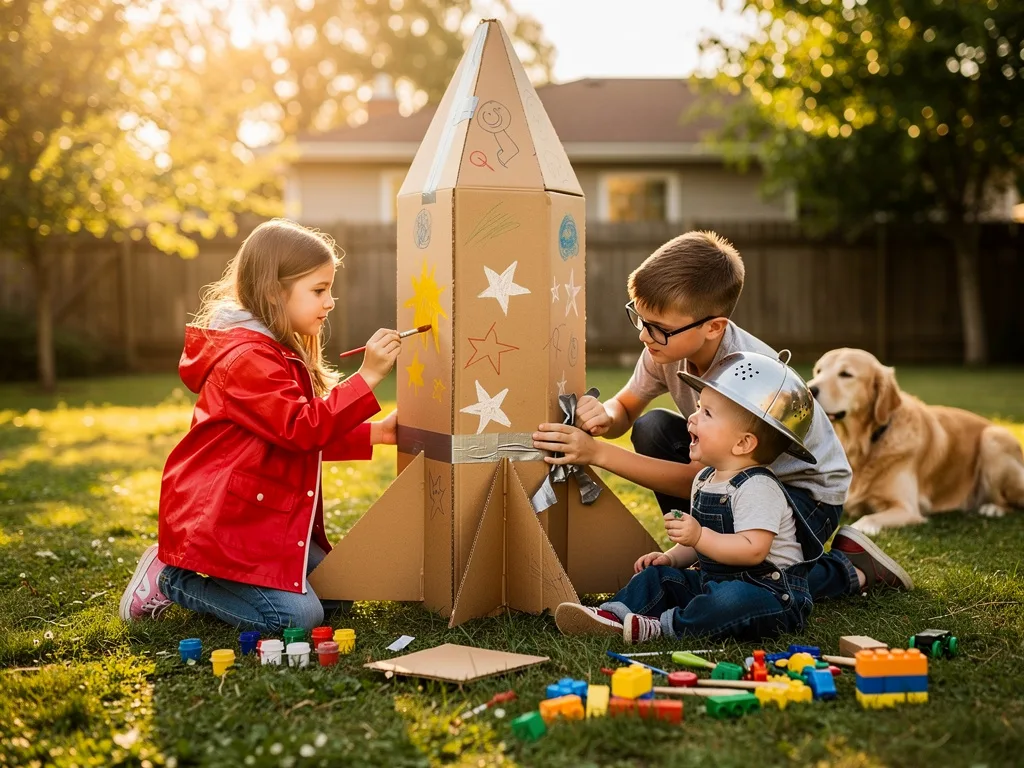
Seven of seven: the girl paints stars, the boy wraps tape where the fins meet the body, and toys and paint pots fill the grass under golden backlight. The toddler's colander looks more like a steel bowl with a few holes.
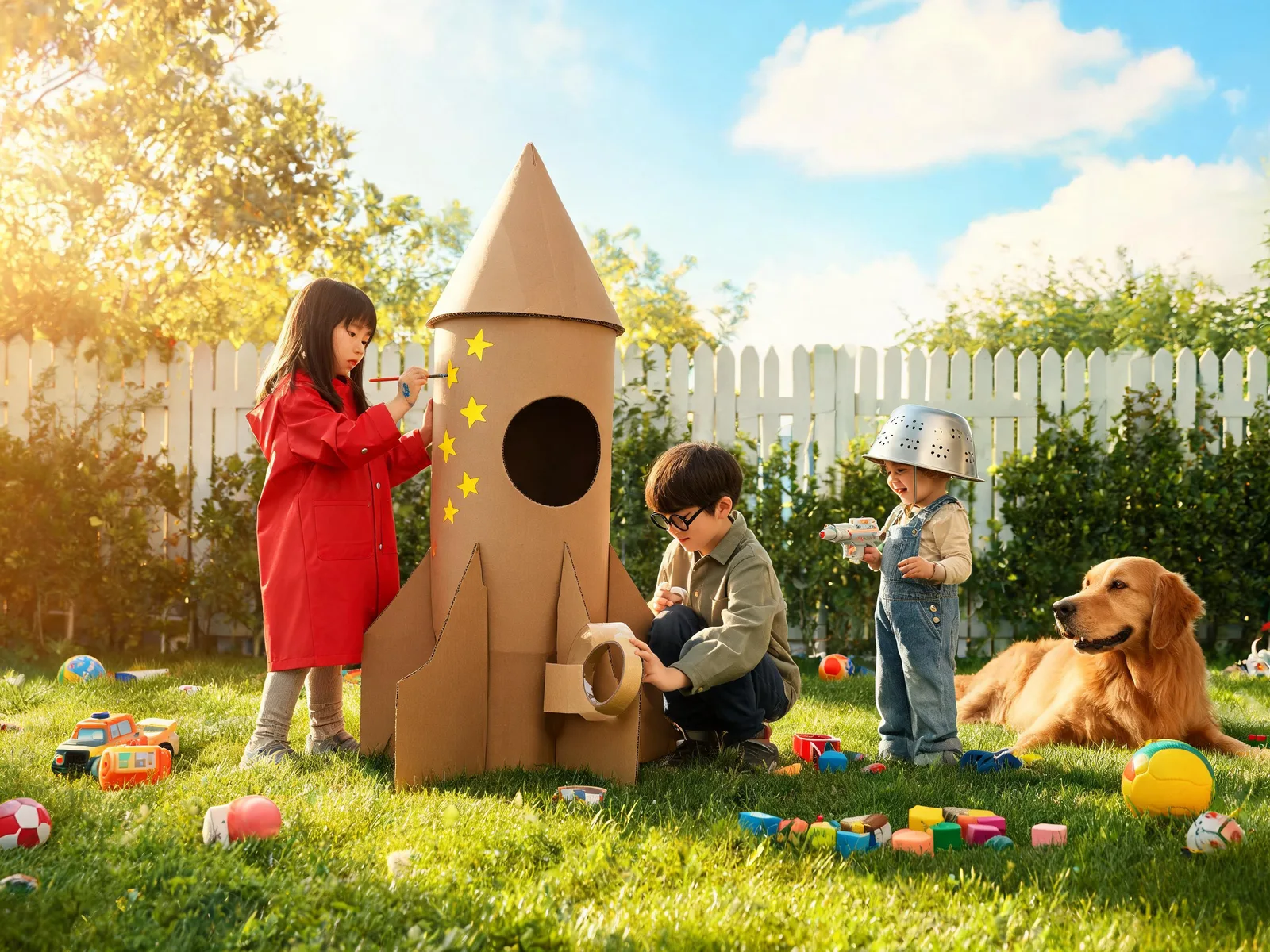
Six of seven: the kids, star painting, tape roll and colander are all there, but the retriever gazes off to the right instead of watching. A bright blue midday sky and glossy, CG-like finish undercut the warm-photograph brief.
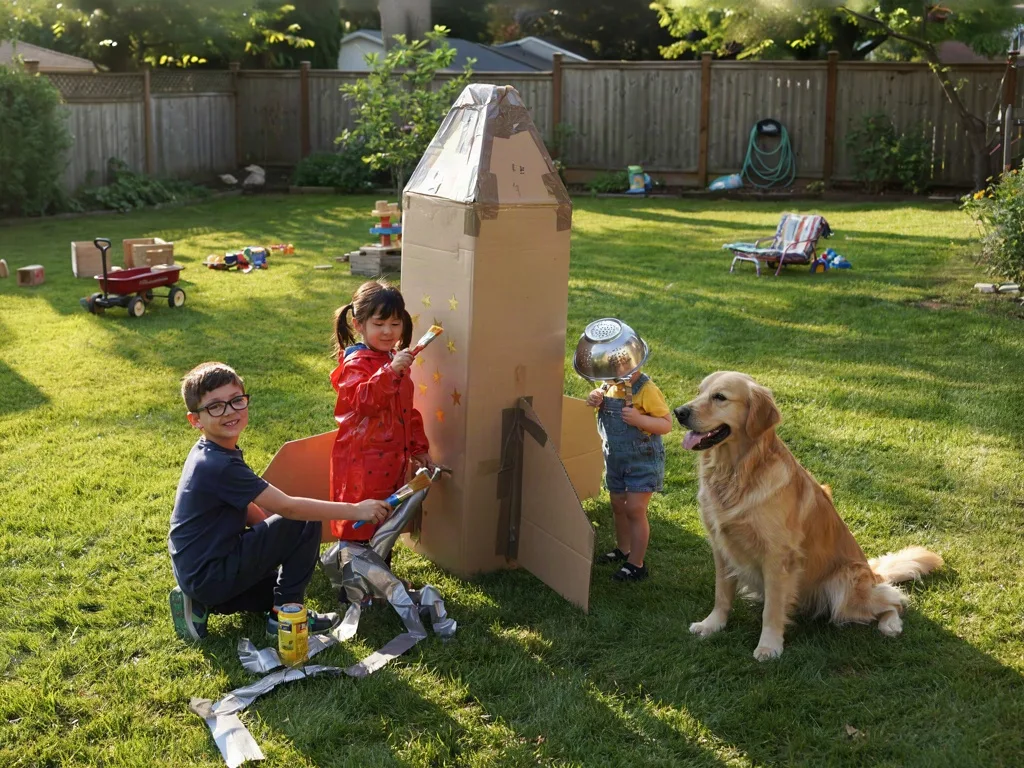
Six of seven: the girl paints stars and the toddler wears a colander, but the boy holds a paintbrush tangled in duct tape instead of taping the fins. Long, warm shadows and a natural backyard look right.
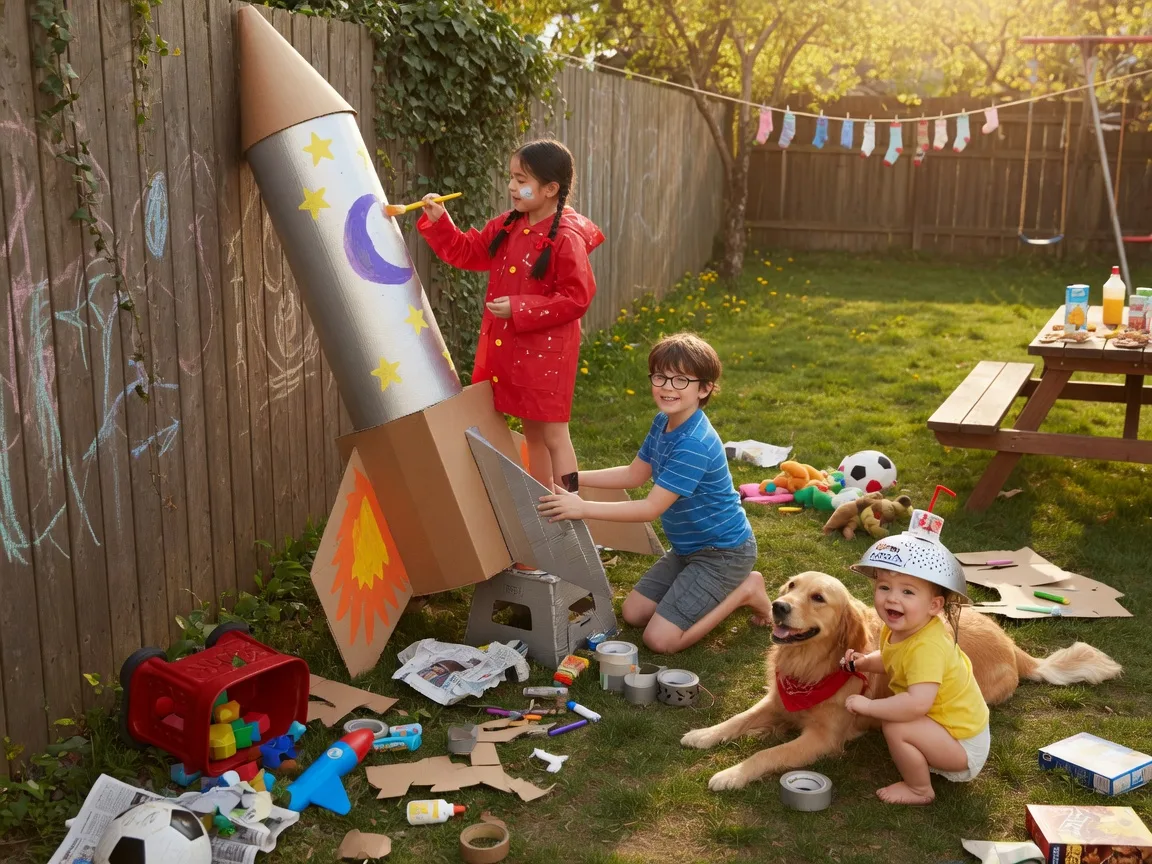
All seven items appear, with the boy pressing a duct-taped fin and the toddler in a colander beside the retriever. It piles on extra props (chalk drawings, a sock line, a picnic table), so the frame is busy.
Flat illustration
Style control: a limited palette and flat vector look are easy to describe and easy to miss.
Flat vector illustration of a cozy reading nook with a cat asleep on a stack of books, a window with rain outside, limited palette of teal, mustard and coral, subtle paper grain, children's book style
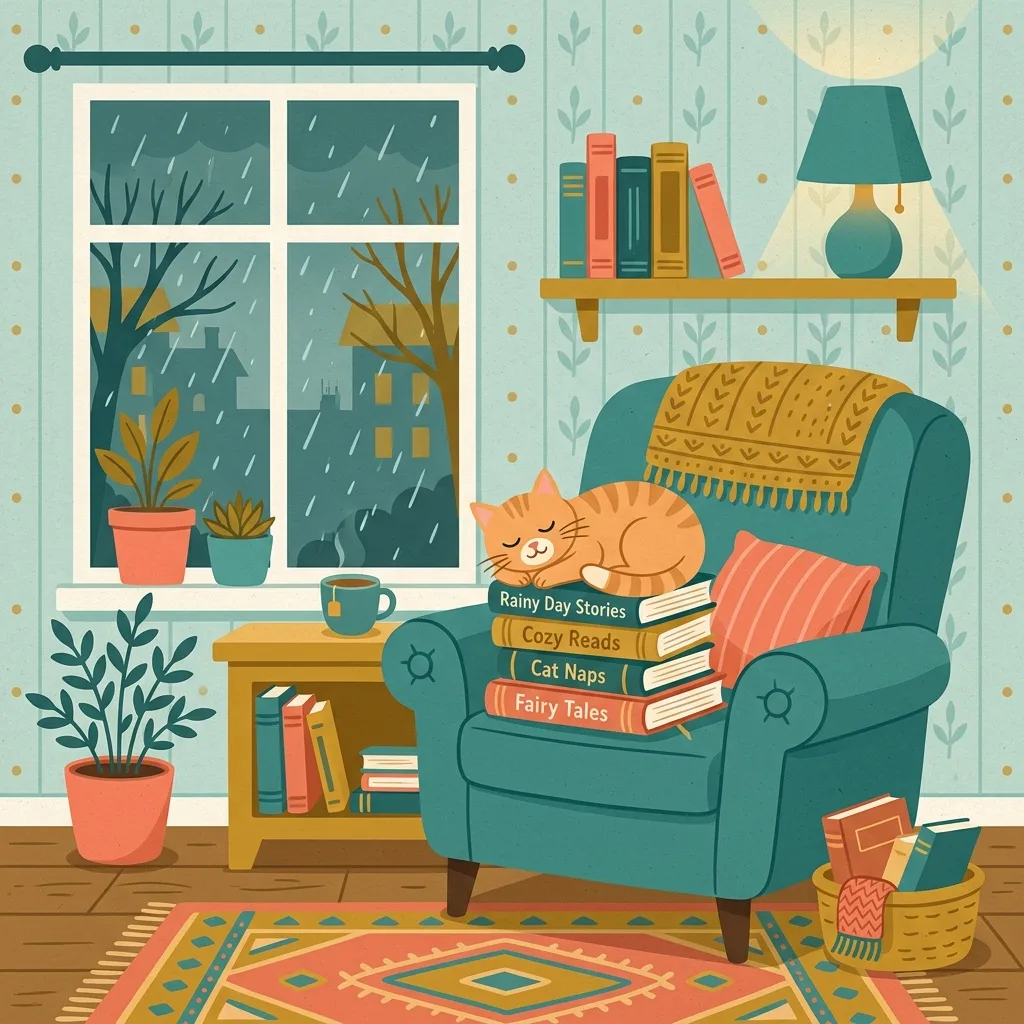
Flat and detailed, with the cat asleep on cleanly titled books, rain on the window and light paper grain. The palette spreads beyond teal, mustard and coral into browns, orange and mint.
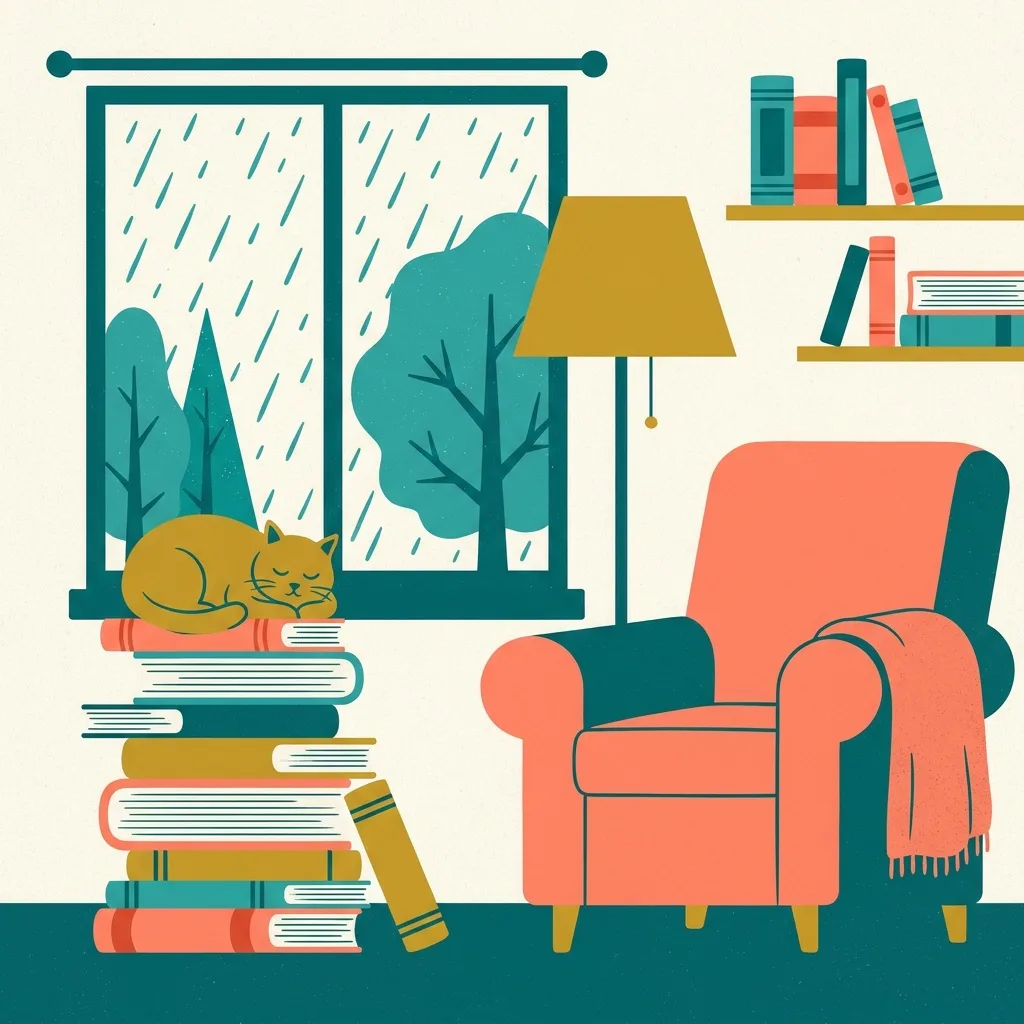
The strictest reading: flat shapes in only teal, mustard and coral on cream, a mustard cat asleep on a book stack, rain on the window and fine paper speckle.
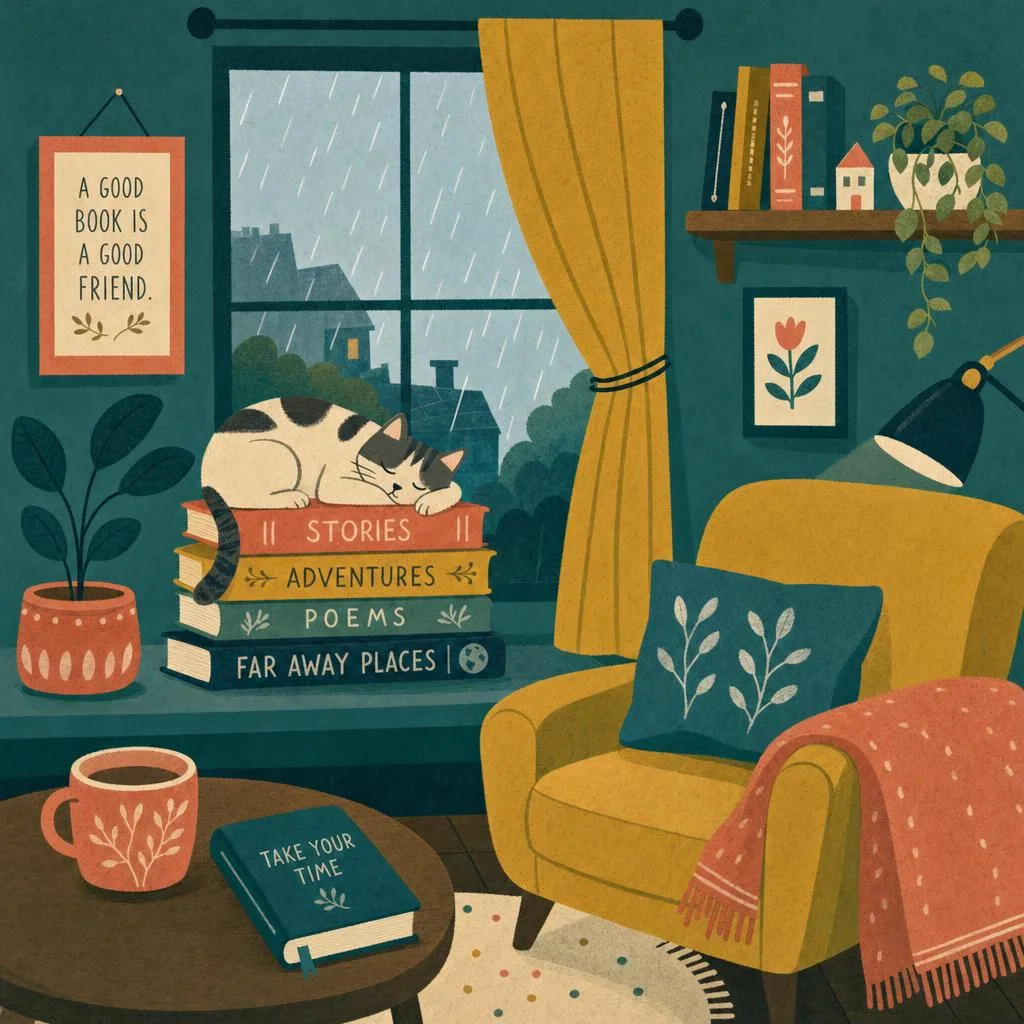
A warm, well-composed nook with strong paper grain, rain and a cat asleep on four correctly spelled books. Dark browns, gray and a black-and-white cat break the three-color palette.

Flat shapes, visible paper grain and a palette held to teal, sandy mustard and coral, with a ginger cat asleep on a book stack beneath a rainy window.
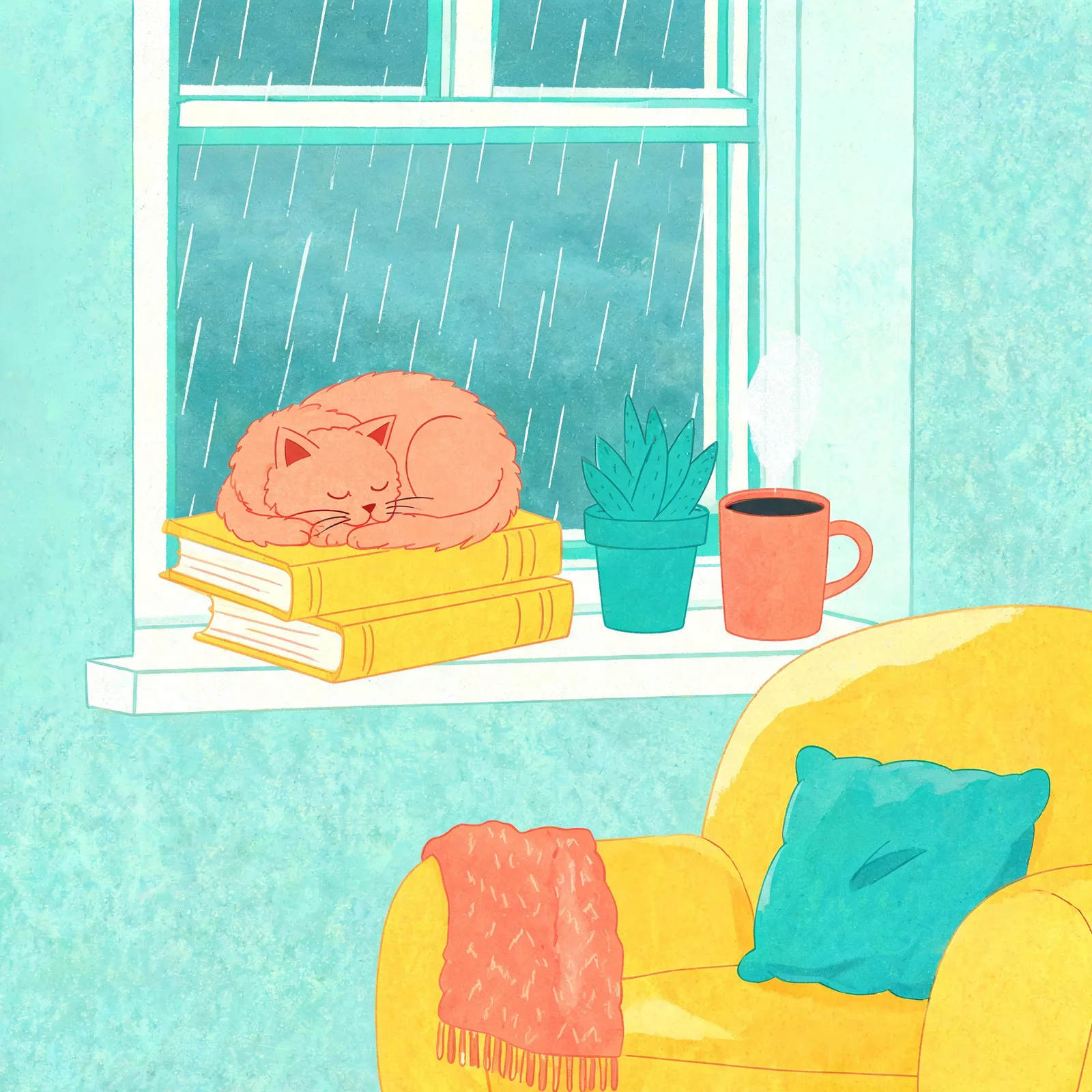
Cat on books, rain and heavy grain are there, but the textured, painterly fills read as gouache rather than flat vector. The yellow is a bright lemon rather than mustard.
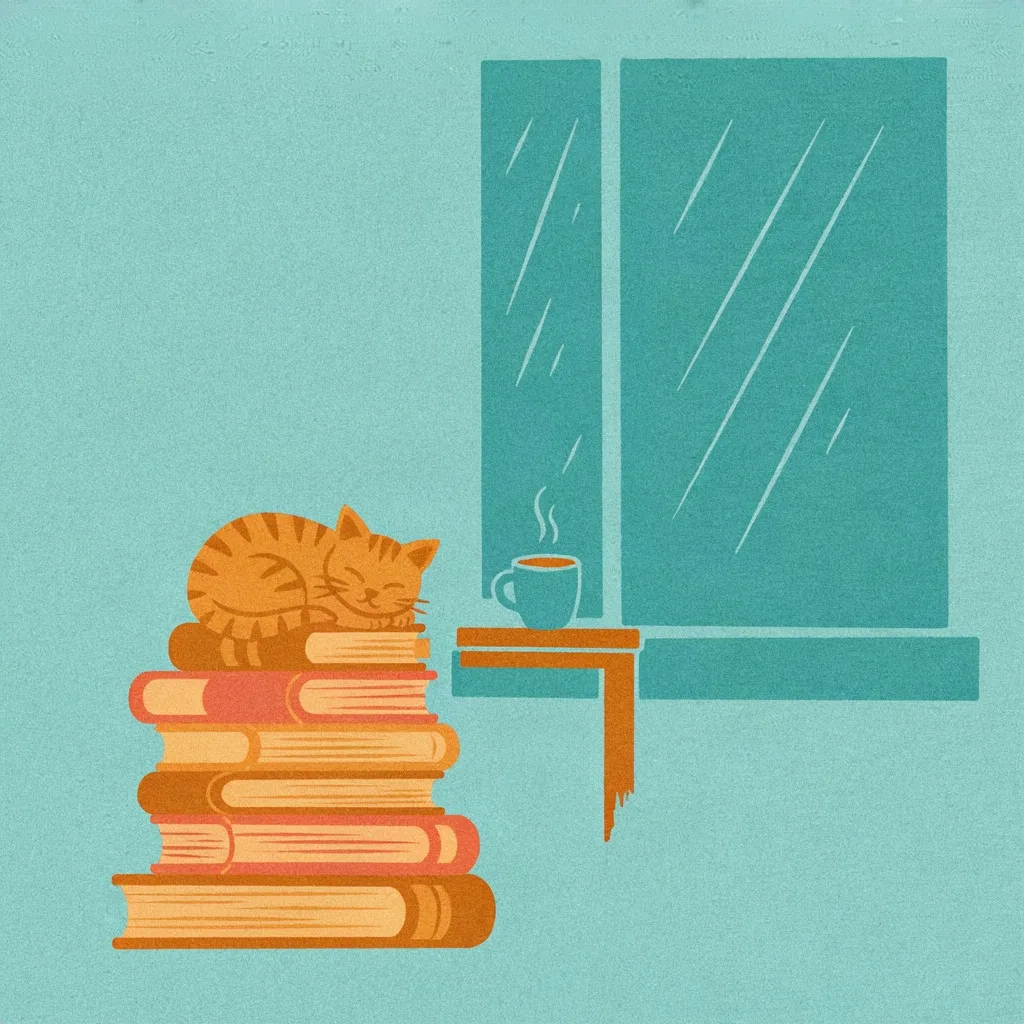
Very flat and grainy, with rain streaks and a cat asleep on books, but mustard drifts into burnt orange and the nook is reduced to a bare wall. The shelf leg ends in a drippy, unfinished edge.
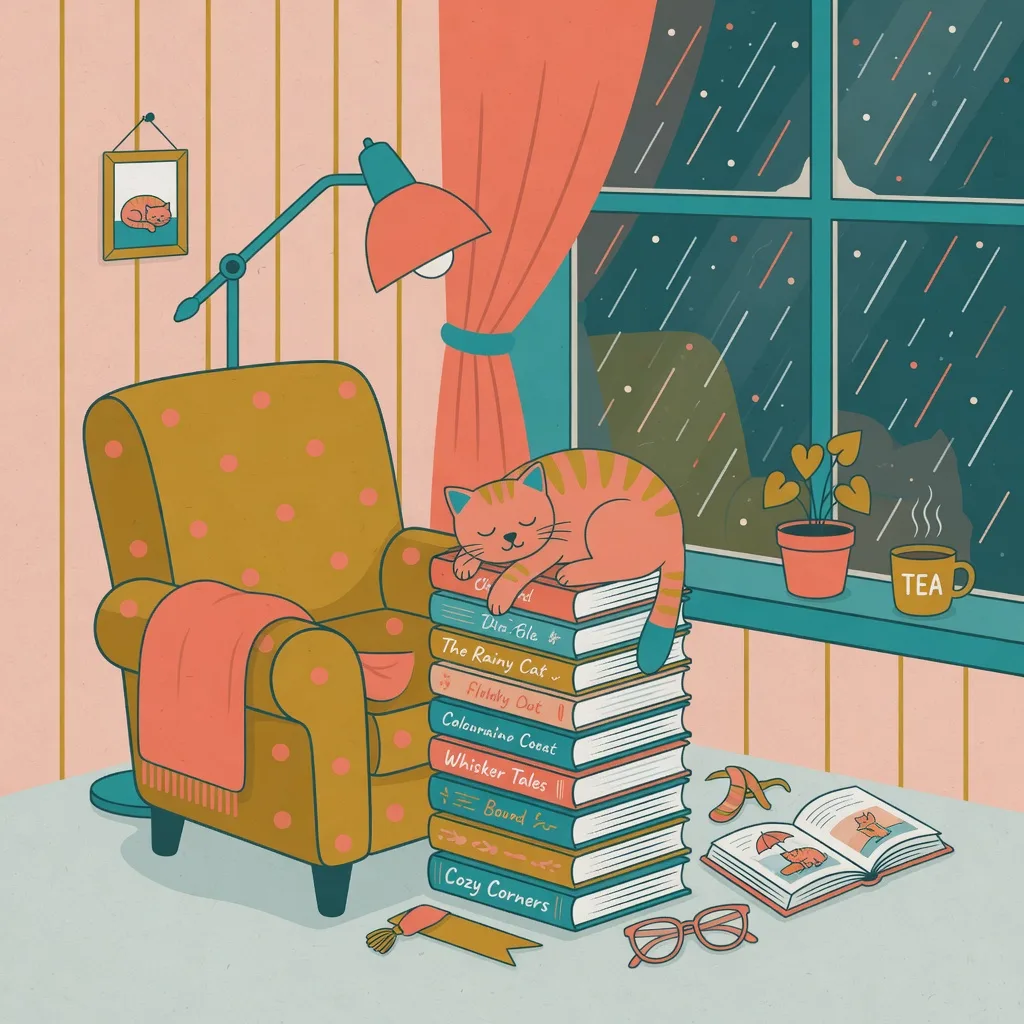
Flat, on palette and full of charm, with a cat draped over a tall book stack and rain on the window. Most book spines carry garbled text ("Colonmaine Cooat"), which needs fixing before use.
Editorial character shot
Our original benchmark prompt: a costumed animal in a real setting, with lens and focus instructions.
A raccoon in a perfectly tailored tuxedo sipping champagne at a rooftop gala in Paris at night, Eiffel Tower bokeh behind, editorial photograph, 85mm lens, shallow depth of field
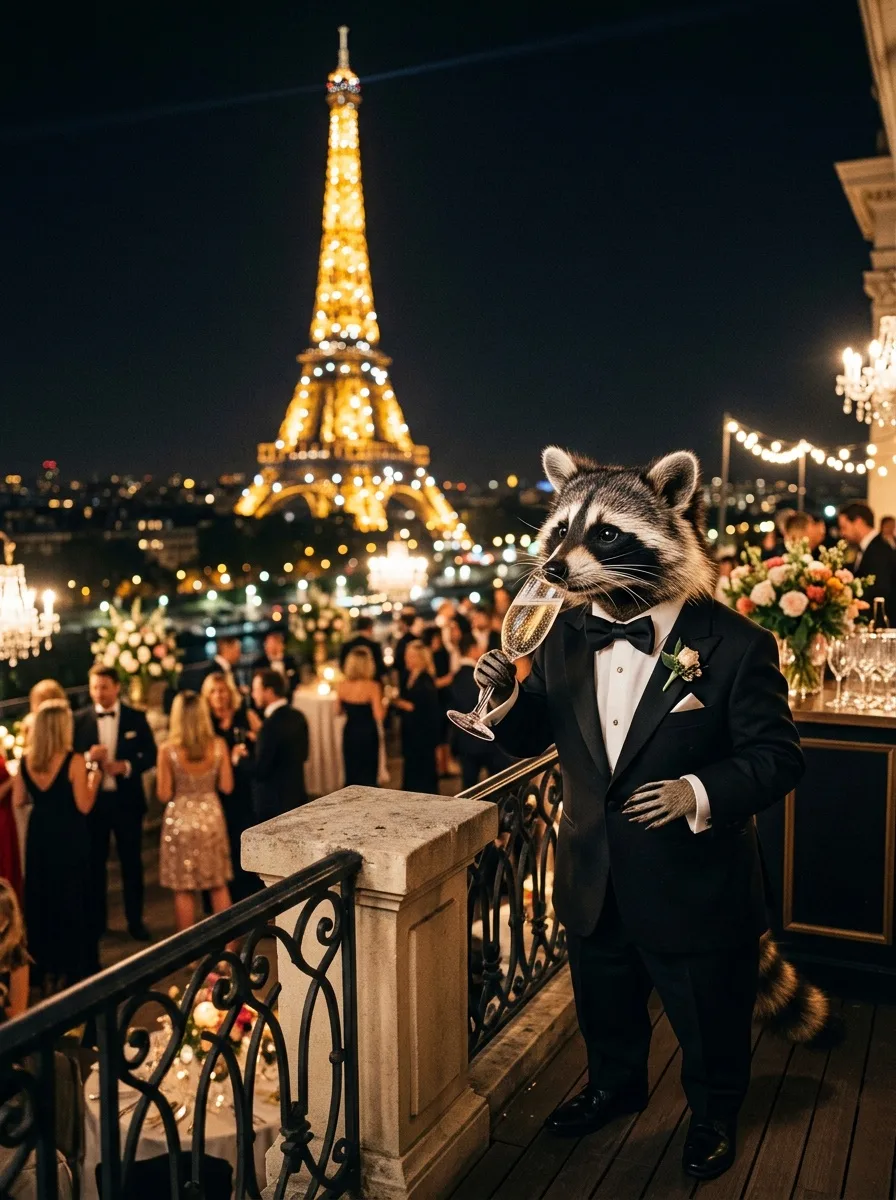
The most complete scene: a balustrade, an iron railing, a crowd in evening wear, a boutonniere and a tail behind a sipping raccoon. The tower is fully drawn rather than bokeh, and the wide, full-length framing ignores the 85mm instruction.
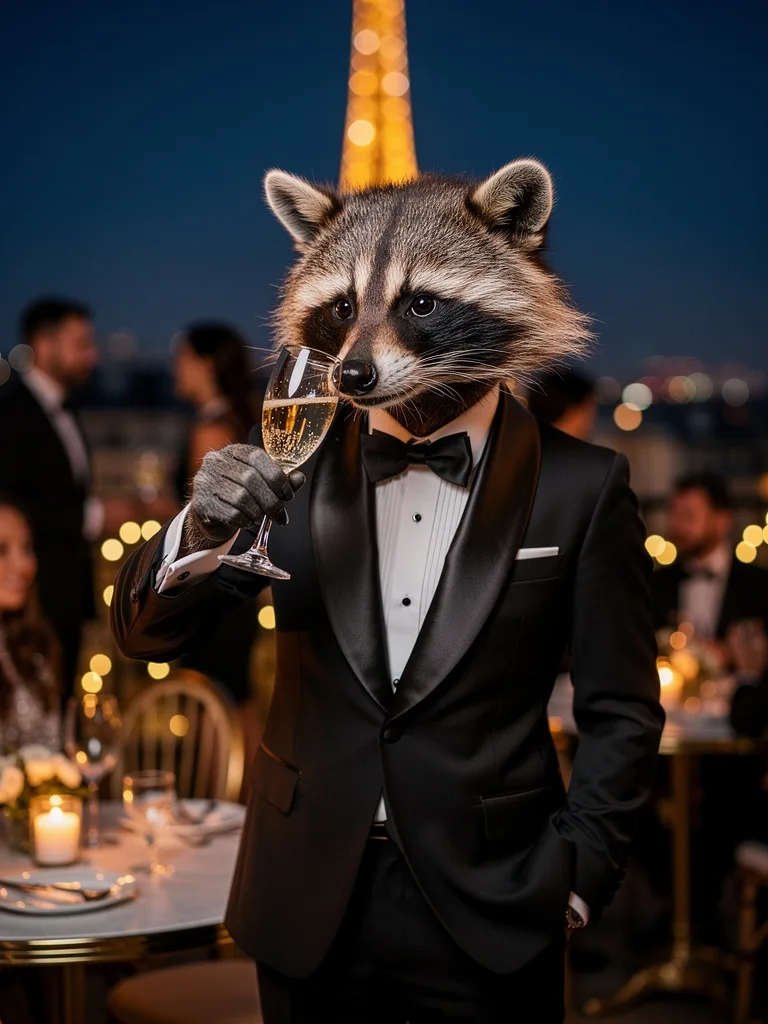
The most convincing 85mm look: waist-up framing, creamy bokeh and only the top of the tower glowing behind. The rooftop is implied rather than shown, and the paw reads as a human hand in a fur glove.
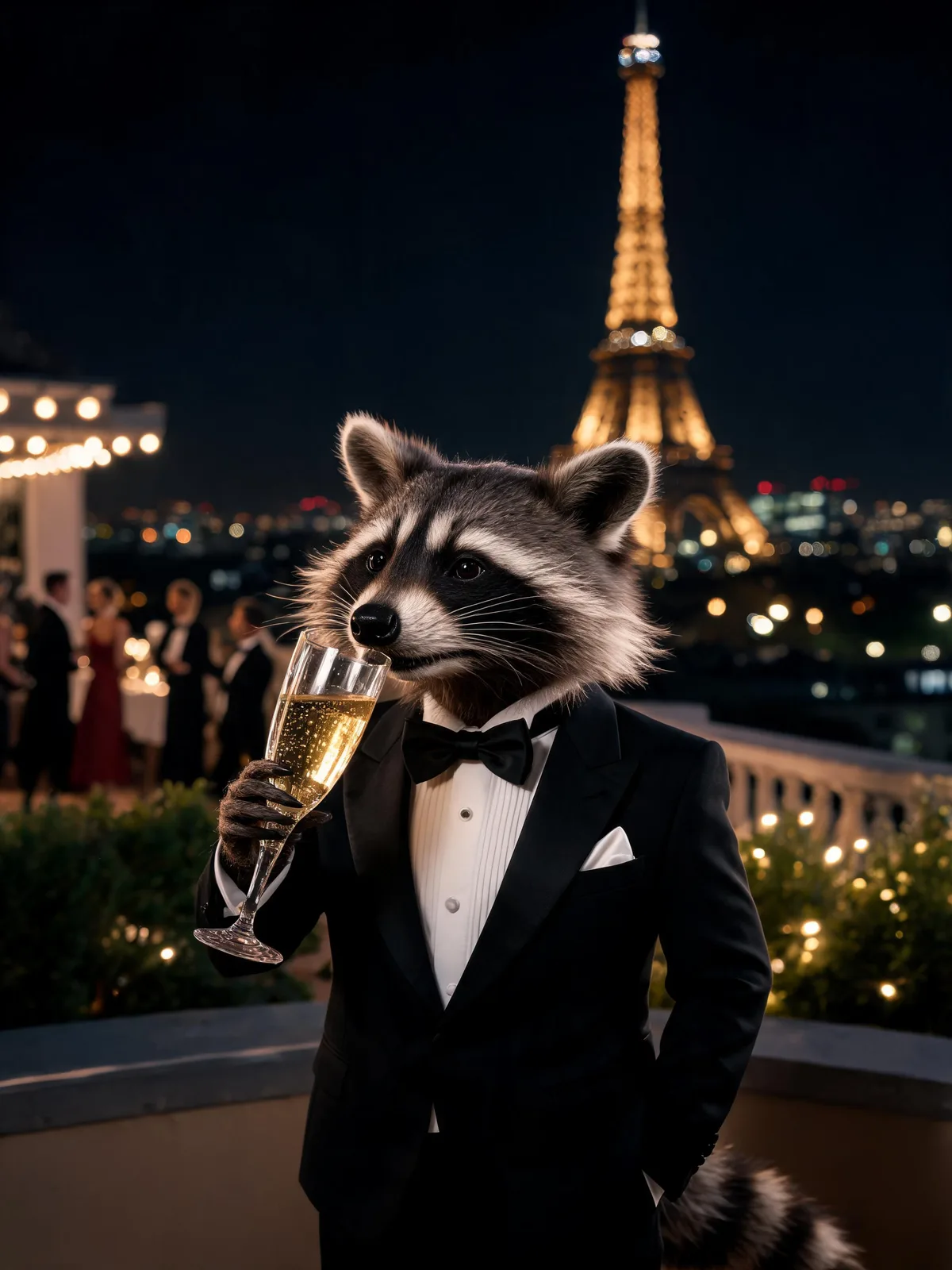
Hits every item: a real sip, a terrace balustrade, guests behind and a softly focused tower in a three-quarter, 85mm-style frame. Clawed paws and a striped tail look right.
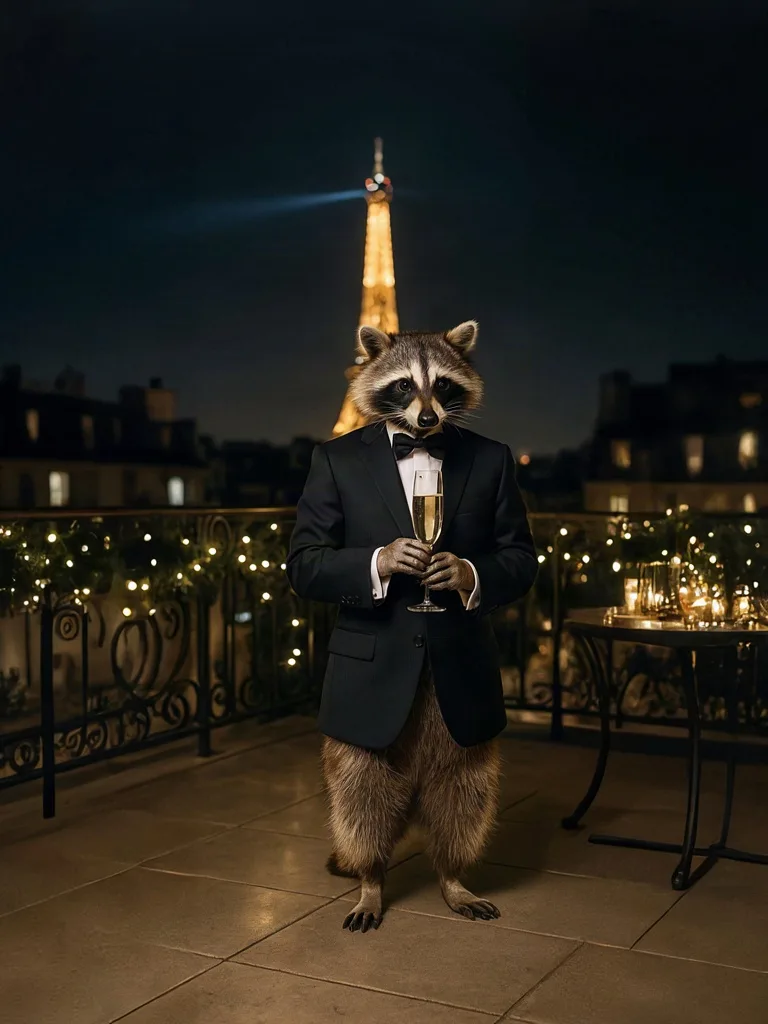
Charming but loose: a jacket with no trousers over bare furry legs, a glass held rather than sipped, and no gala crowd. The full-length framing and small tower miss the 85mm portrait brief.
Every video test, every model
A face turning to camera
People notice a changing face instantly; this shows identity stability through a head turn and a smile.

She turns from the window to the camera and breaks into a warm smile, a strand of hair falls across her cheek, slow push-in
She turns away over the wrong shoulder, showing the back of her head, and comes round as a visibly younger woman with brighter ginger hair, heavier freckles and a cable-knit sweater instead of the ribbed one. The push-in is smooth, but a dark gap flickers in her teeth mid-smile.
The steadiest identity in the test: same face, age, freckles and ribbed mustard sweater from first frame to last, with a smile that builds naturally from closed to open. The camera eases in gently, but no strand of hair ever falls across her cheek.
Keeps her face, freckles and sweater through a natural turn and smile, and it is the only clip that drops a lock of hair across her face. That strand renders as a translucent smear over her eye in the last half second.
Identity, freckles and sweater hold well, and she is facing camera by 2 s. From there she holds the same wide grin for three seconds, which reads frozen, the push-in is barely there, and no hair falls across her cheek.
Refused: the provider rejected the start frame because its filter flagged it as possibly showing a real person, even though the woman is AI-generated. Generated faces can trigger this filter too; the refused run was not charged.
The most detailed face in the test, with freckles, smile lines and a warm, natural smile that clearly match the start frame. The push-in is fast rather than slow, ending in a tight close-up by 4 s, and a curl flicks outward instead of falling across her cheek.
Liquid pour over ice
Fluids, ice and condensation expose weak physics fast.
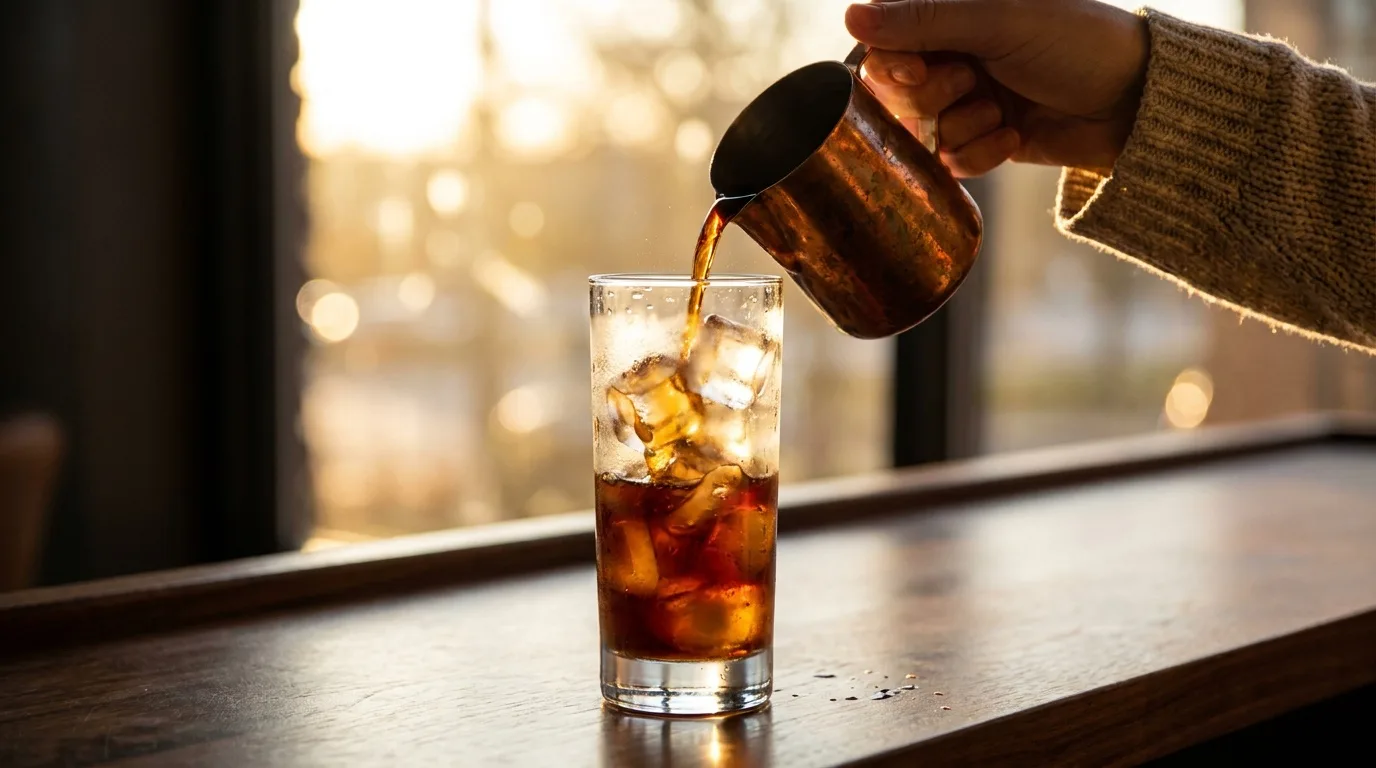
Cold brew pours from the copper jug into the glass, swirling around the ice, the ice shifts and settles, condensation runs down the glass, static camera
A continuous stream lands in the glass, the dark coffee rises around shifting ice, and the camera never moves; then the hand lifts the jug and sets it down on the bar. Dark drips run down the outside of the glass and pool at its base, which reads more like a spill than condensation.
A clean, steady pour: the stream enters the glass, the level climbs to a thin foam head as the cubes bob and settle, and the hand and hammered jug stay solid on a locked camera. The coffee turns a lighter, tea-like amber than in the start frame.
The pour reaches the glass the whole way, the ice shifts as the level rises, and the jug lifts away at the end with no warping. The coffee lightens to amber and the backlit cubes go slightly soft by the last second.
A thick, believable stream with crisp, clear cubes that tumble as the glass fills, a static camera and a stable hand; the pour stops and the jug lifts at about 4 s. The coffee is a little lighter than in the start frame.
Pours for the full five seconds with the stream landing inside the glass, ice bobbing as the dark coffee rises, and the color matching the start frame. The hand, jug and camera hold perfectly still.
The liquid itself looks great, a glossy stream swirling around clear ice. But the camera pushes in from the first second into a macro close-up of the glass, ignoring "static camera", and the jug ends up mostly out of frame.
Product orbit
A camera move around a still product tests shape stability and whether the model obeys camera instructions.
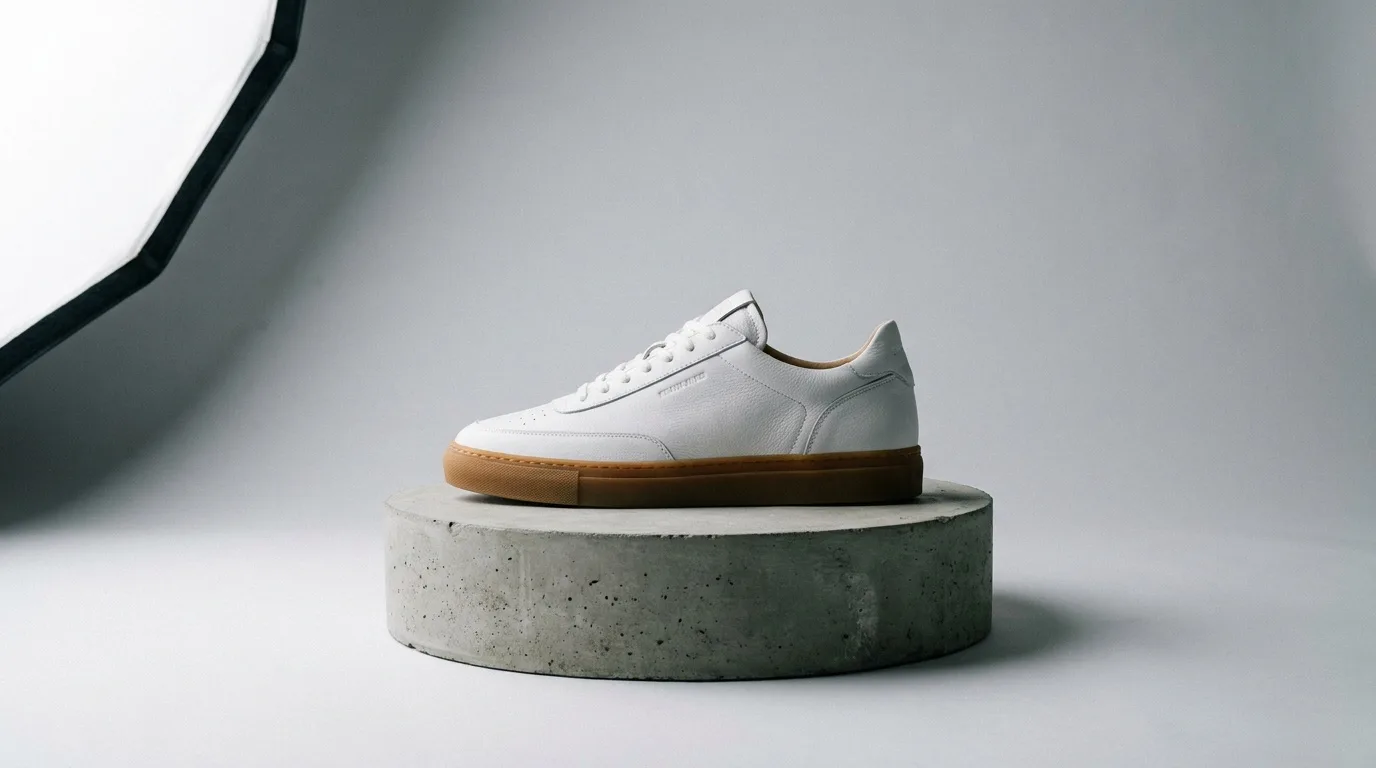
Slow 180-degree orbit around the sneaker, the sneaker stays perfectly still, light glides across the leather, the camera settles on the side view
This is a turntable spin, not an orbit: the sneaker rotates in place from side to heel to the other side while the softbox and backdrop barely move until the last two seconds. It ends on a clean side view, though the leather picks up a much heavier pebble grain than the start frame.
A real orbit: the softbox slides out, the backdrop seam and a light stand come into view, and the camera passes the toe on its way to the other side. It also pushes in hard, ending on a tight crop, and the side panel gains an invented, misspelled brand stamp.
A genuine 180-degree orbit: the background shifts from softbox to light stands to a plain wall and table edge as the camera goes past the toe, and the sneaker never moves or warps. It settles on a full side view at the same framing it started with.
The sneaker spins on the plinth like a turntable while the softbox and backdrop stay put for the first three seconds, so the camera barely orbits and the shoe does not stay still. The shoe keeps its shape and ends on a side view.
The camera really travels around the shoe: the key light swings behind it at the heel view and ends on the right, exactly where a 180-degree move would put it. The sneaker holds still and keeps its shape, and the shot settles on a side view at the original framing.
The camera does circle behind the heel, with the softbox sliding across the background, so this is a real orbit. It also dollies in to a tight close-up, cropping the plinth, and the heel goes soft mid-move.
Character action
A multi-step action (mount, start, ride out of the door) with a locked camera, on a stylized character.
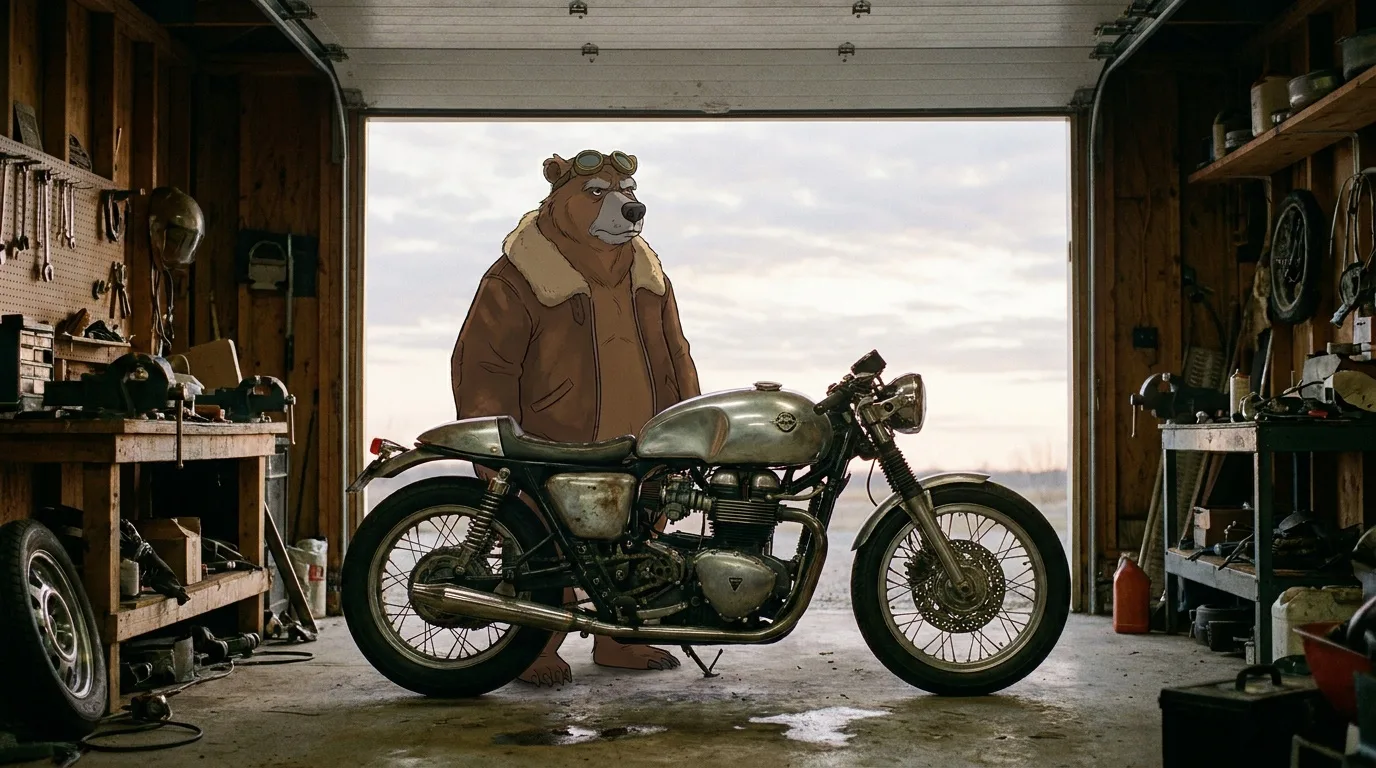
The bear swings a leg over the motorcycle, starts the engine and rides slowly out through the open garage door into the dawn light, static camera
Mounts by 1.5 s and keeps the camera locked, but only reaches the doorway as the six-second clip ends. The fur drifts from the illustrated look to realistic shag, a style change you would notice next to other shots.
A clean mount and a visible puff of exhaust as the engine starts at 3.5 s. Then the bear rides sideways out of the right edge of the frame instead of through the garage door.
Hits every beat: the bear swings on (a rubbery, stretched leg for a few frames at 1 s), cartoon exhaust puffs as the engine starts, and it rides out through the door with the camera locked. The illustrated style, goggles and sheepskin collar hold throughout.
Mounts awkwardly (at 1 s the bear sprawls over the tank), then turns and rides out through the door with the camera static. There is no visible engine start, and it ends just past the threshold with its feet still down.
Followed every beat: seated by 1.5 s, turned toward the door by 3.5 s, and a small figure riding into the distance by 4.8 s. The camera never moves, and the illustrated look, goggles and sheepskin collar hold throughout.
Mounts and rides out through the door with the character on model, but ignores "static camera": it pushes in by 2.5 s, then moves to the doorway behind the bear.
How we test
- One fixed prompt per test, identical for every model. Video tests start from the same still.
- Default settings at a comparable resolution, one take per model, no cherry-picking or retouching.
- Each output is judged against the checklist shown with the test, by looking at it at full size.
- Costs are the amounts actually billed for these renders. Prices change; the live ones are on the models page.
Want the method in depth? Read our image test and how to choose a video model.