
Veo 3.1 vs Kling 3.0
Veo 3.1 vs Kling 3.0 on four image-to-video tests from identical start frames: a face, a pour, a product orbit and a character action, with real costs.
Updated · Tested: Veo 3.1 Fast, image-to-video, 6 s, no audio; Kling 3.0 Standard, image-to-video, 5 s
The verdict
In our image-to-video tests Kling 3.0 came out ahead: it won two tests and tied two, and lost none. Veo 3.1 Fast changed the woman's face as she turned (younger, different sweater, wrong shoulder) and spun the sneaker like a turntable instead of orbiting the camera; Kling 3.0 held her identity and made a real orbit, though it pushed in hard. Both poured convincingly and handled the bear about equally. Kling 3.0 was also slightly cheaper per second. We ran both with audio off, so Veo's native sound, its main draw, is not part of this result.
- Veo 3.1
- Kling 3.0 Tests won
- 0
- 2 Average score
- 1.8
- 2.3 Credits per second
- 25
- 21 Render time
- 211 s
- 76 s
2 test(s) were a tie.
At a glance
| Test | Veo 3.1 | Kling 3.0 |
|---|---|---|
| A face turning to camera | Missed 150 cr | Mostly 105 cr |
| Liquid pour over ice | Nailed it 150 cr | Nailed it 105 cr |
| Product orbit | Missed 150 cr | Mostly 105 cr |
| Character action | Mostly 150 cr | Mostly 105 cr |
A face turning to camera
People notice a changing face instantly; this shows identity stability through a head turn and a smile.
Checked: Same woman throughout · Turns from window to camera · Natural smile · Hair strand falls across cheek · Slow push-in

She turns from the window to the camera and breaks into a warm smile, a strand of hair falls across her cheek, slow push-in
She turns away over the wrong shoulder, showing the back of her head, and comes round as a visibly younger woman with brighter ginger hair, heavier freckles and a cable-knit sweater instead of the ribbed one. The push-in is smooth, but a dark gap flickers in her teeth mid-smile.
The steadiest identity in the test: same face, age, freckles and ribbed mustard sweater from first frame to last, with a smile that builds naturally from closed to open. The camera eases in gently, but no strand of hair ever falls across her cheek.
Liquid pour over ice
Fluids, ice and condensation expose weak physics fast.
Checked: Liquid leaves the jug and enters the glass · Swirls around the ice · Ice shifts plausibly · Hand and jug stay stable · Static camera

Cold brew pours from the copper jug into the glass, swirling around the ice, the ice shifts and settles, condensation runs down the glass, static camera
A continuous stream lands in the glass, the dark coffee rises around shifting ice, and the camera never moves; then the hand lifts the jug and sets it down on the bar. Dark drips run down the outside of the glass and pool at its base, which reads more like a spill than condensation.
A clean, steady pour: the stream enters the glass, the level climbs to a thin foam head as the cubes bob and settle, and the hand and hammered jug stay solid on a locked camera. The coffee turns a lighter, tea-like amber than in the start frame.
Product orbit
A camera move around a still product tests shape stability and whether the model obeys camera instructions.
Checked: Camera orbits (not a push-in) · Sneaker stays still and keeps its shape · Light glides across the leather · Ends on a side view
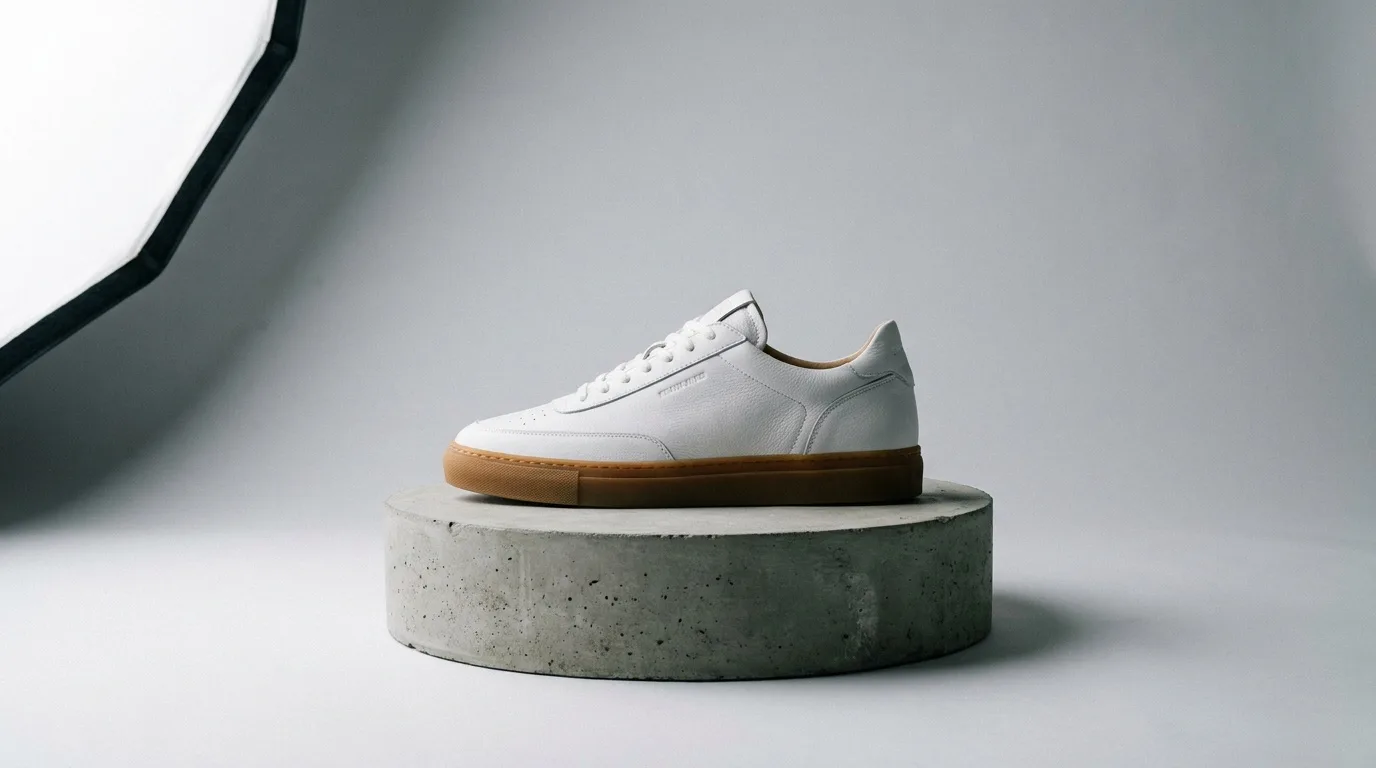
Slow 180-degree orbit around the sneaker, the sneaker stays perfectly still, light glides across the leather, the camera settles on the side view
This is a turntable spin, not an orbit: the sneaker rotates in place from side to heel to the other side while the softbox and backdrop barely move until the last two seconds. It ends on a clean side view, though the leather picks up a much heavier pebble grain than the start frame.
A real orbit: the softbox slides out, the backdrop seam and a light stand come into view, and the camera passes the toe on its way to the other side. It also pushes in hard, ending on a tight crop, and the side panel gains an invented, misspelled brand stamp.
Character action
A multi-step action (mount, start, ride out of the door) with a locked camera, on a stylized character.
Checked: Bear mounts the motorcycle · Engine starts · Rides out through the garage door · Camera stays static · Character stays on model
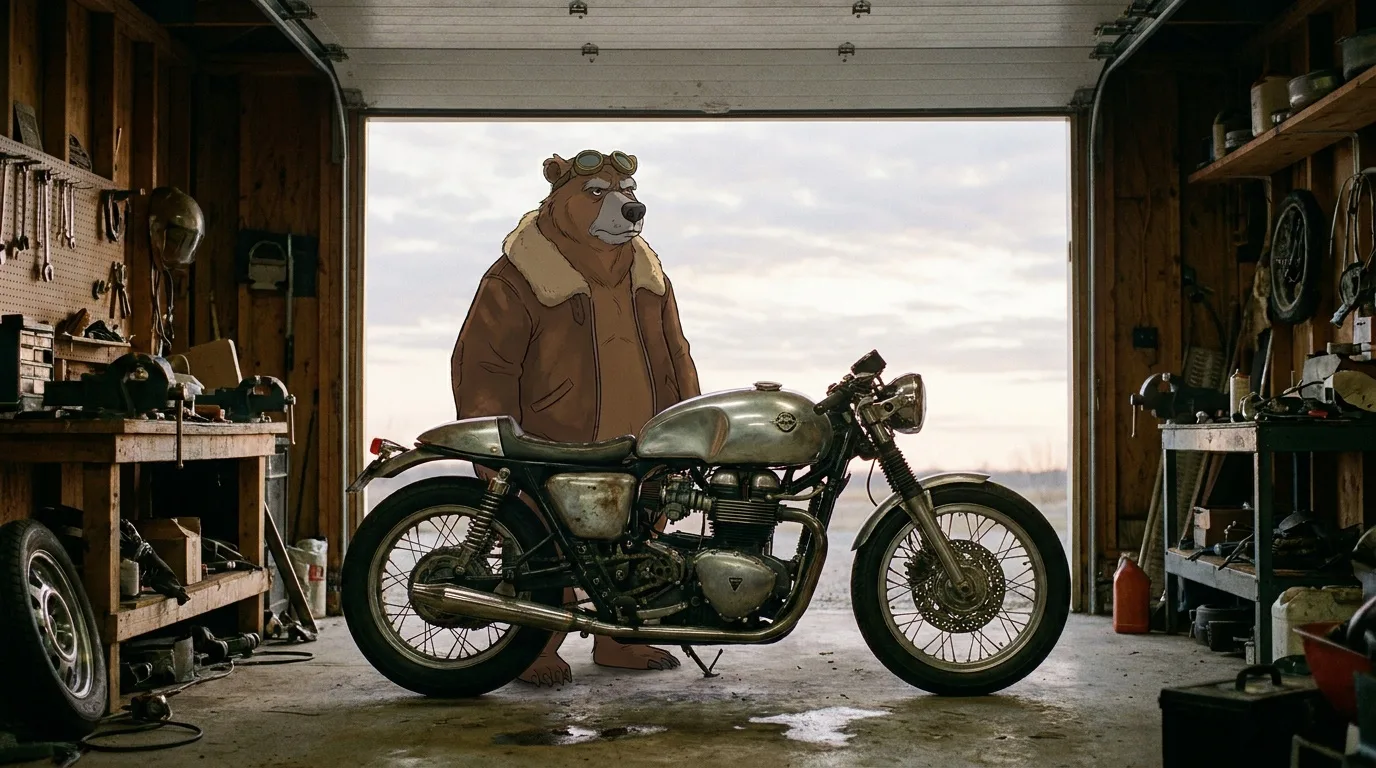
The bear swings a leg over the motorcycle, starts the engine and rides slowly out through the open garage door into the dawn light, static camera
Mounts by 1.5 s and keeps the camera locked, but only reaches the doorway as the six-second clip ends. The fur drifts from the illustrated look to realistic shag, a style change you would notice next to other shots.
A clean mount and a visible puff of exhaust as the engine starts at 3.5 s. Then the bear rides sideways out of the right edge of the frame instead of through the garage door.
Which should you use?
Choose Veo 3.1 for
- Shots that need native sound generated with the picture (not tested here)
- Liquids and physical detail, where it matched Kling in our pour test
- Projects already built around Google's Veo tooling
Choose Kling 3.0 for
- People: it kept the same face through a turn and a smile
- Product camera moves that must actually orbit
- A slightly lower cost per second
One take per model per test, judged in October 2026. Both models are updated often; prices and live availability are on the models page. Totals for these tests: Veo 3.1 $6.00, Kling 3.0 $4.20 of plan value.
Questions people ask
Is Kling 3.0 better than Veo 3.1?+
In our four silent image-to-video tests, yes: Kling 3.0 won two and tied two. Veo 3.1 Fast lost the face test on identity and the orbit test by rotating the product instead of the camera.
Which is better for realistic people?+
Kling 3.0 in our test: it held the same woman through the turn. Veo 3.1 Fast turned her over the wrong shoulder and she came round looking younger, with a different sweater.
Did you test Veo 3.1 with audio?+
No. All clips were rendered with audio off so the comparison is about picture only. Veo's native audio is a real advantage for dialogue and ambience and deserves its own test.
More comparisons
Test them on your own prompt
Run one prompt on Veo 3.1, Kling 3.0 and two more models side by side, rate the results and keep the winner. Every run shows its cost before you click.