
Kling O3 vs Kling 3.0
Kling O3 vs Kling 3.0 on four image-to-video tests from the same start frames: camera control, a face, a pour and a character action, at the same price.
Updated · Tested: Kling O3 Standard, image-to-video, 5 s; Kling 3.0 Standard, image-to-video, 5 s
The verdict
Same maker, same price per clip in our runs, and Kling O3 won the two tests about control: a true orbit that kept the framing (Kling 3.0 pushed in to a tight crop and added a garbled brand stamp) and the bear's complete action, which Kling 3.0 cut short by riding out of the side of the frame. The face and pour tests were ties. Unless you rely on a Kling 3.0-specific feature, Kling O3 is the better default.
- Kling O3
- Kling 3.0 Tests won
- 2
- 0 Average score
- 2.8
- 2.3 Credits per second
- 21
- 21 Render time
- 79 s
- 76 s
2 test(s) were a tie.
At a glance
| Test | Kling O3 | Kling 3.0 |
|---|---|---|
| A face turning to camera | Mostly 105 cr | Mostly 105 cr |
| Liquid pour over ice | Nailed it 105 cr | Nailed it 105 cr |
| Product orbit | Nailed it 105 cr | Mostly 105 cr |
| Character action | Nailed it 105 cr | Mostly 105 cr |
A face turning to camera
People notice a changing face instantly; this shows identity stability through a head turn and a smile.
Checked: Same woman throughout · Turns from window to camera · Natural smile · Hair strand falls across cheek · Slow push-in

She turns from the window to the camera and breaks into a warm smile, a strand of hair falls across her cheek, slow push-in
Keeps her face, freckles and sweater through a natural turn and smile, and it is the only clip that drops a lock of hair across her face. That strand renders as a translucent smear over her eye in the last half second.
The steadiest identity in the test: same face, age, freckles and ribbed mustard sweater from first frame to last, with a smile that builds naturally from closed to open. The camera eases in gently, but no strand of hair ever falls across her cheek.
Liquid pour over ice
Fluids, ice and condensation expose weak physics fast.
Checked: Liquid leaves the jug and enters the glass · Swirls around the ice · Ice shifts plausibly · Hand and jug stay stable · Static camera
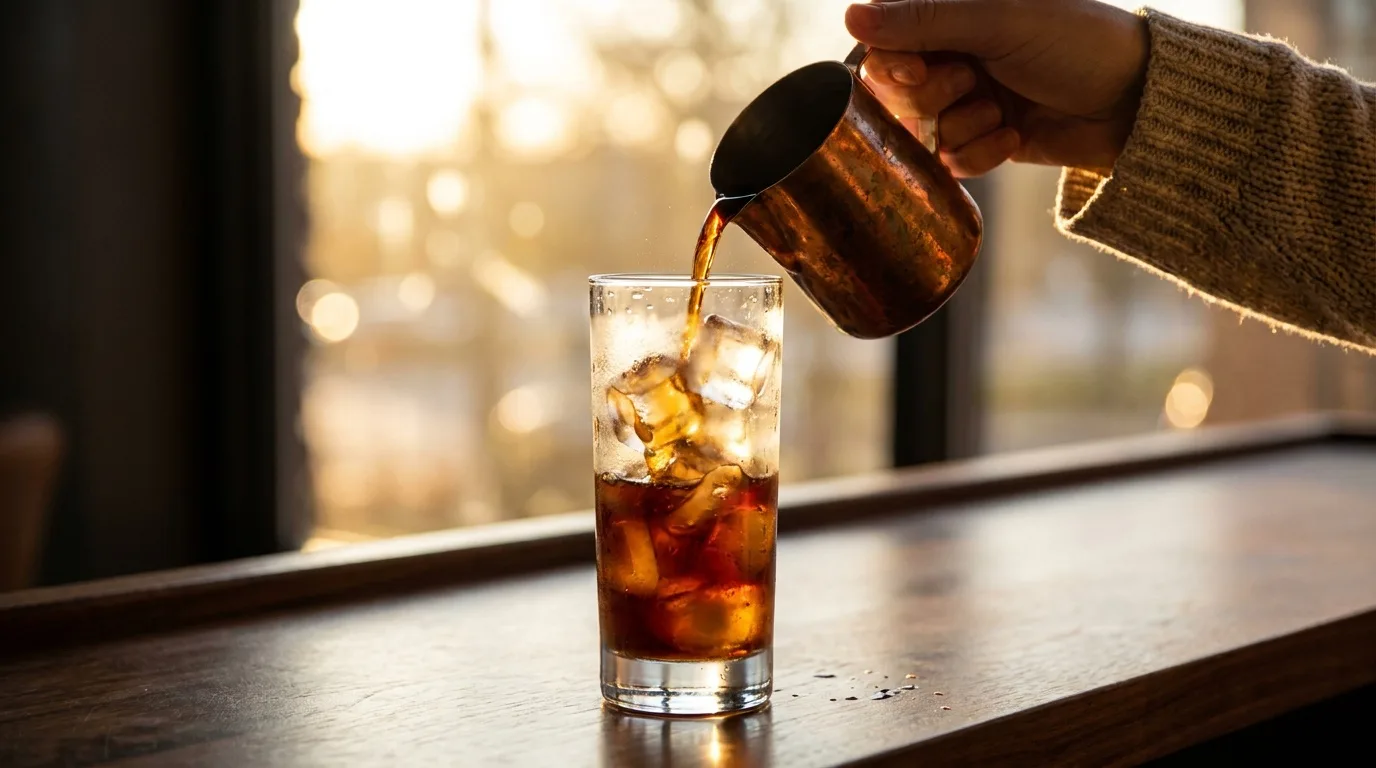
Cold brew pours from the copper jug into the glass, swirling around the ice, the ice shifts and settles, condensation runs down the glass, static camera
The pour reaches the glass the whole way, the ice shifts as the level rises, and the jug lifts away at the end with no warping. The coffee lightens to amber and the backlit cubes go slightly soft by the last second.
A clean, steady pour: the stream enters the glass, the level climbs to a thin foam head as the cubes bob and settle, and the hand and hammered jug stay solid on a locked camera. The coffee turns a lighter, tea-like amber than in the start frame.
Product orbit
A camera move around a still product tests shape stability and whether the model obeys camera instructions.
Checked: Camera orbits (not a push-in) · Sneaker stays still and keeps its shape · Light glides across the leather · Ends on a side view
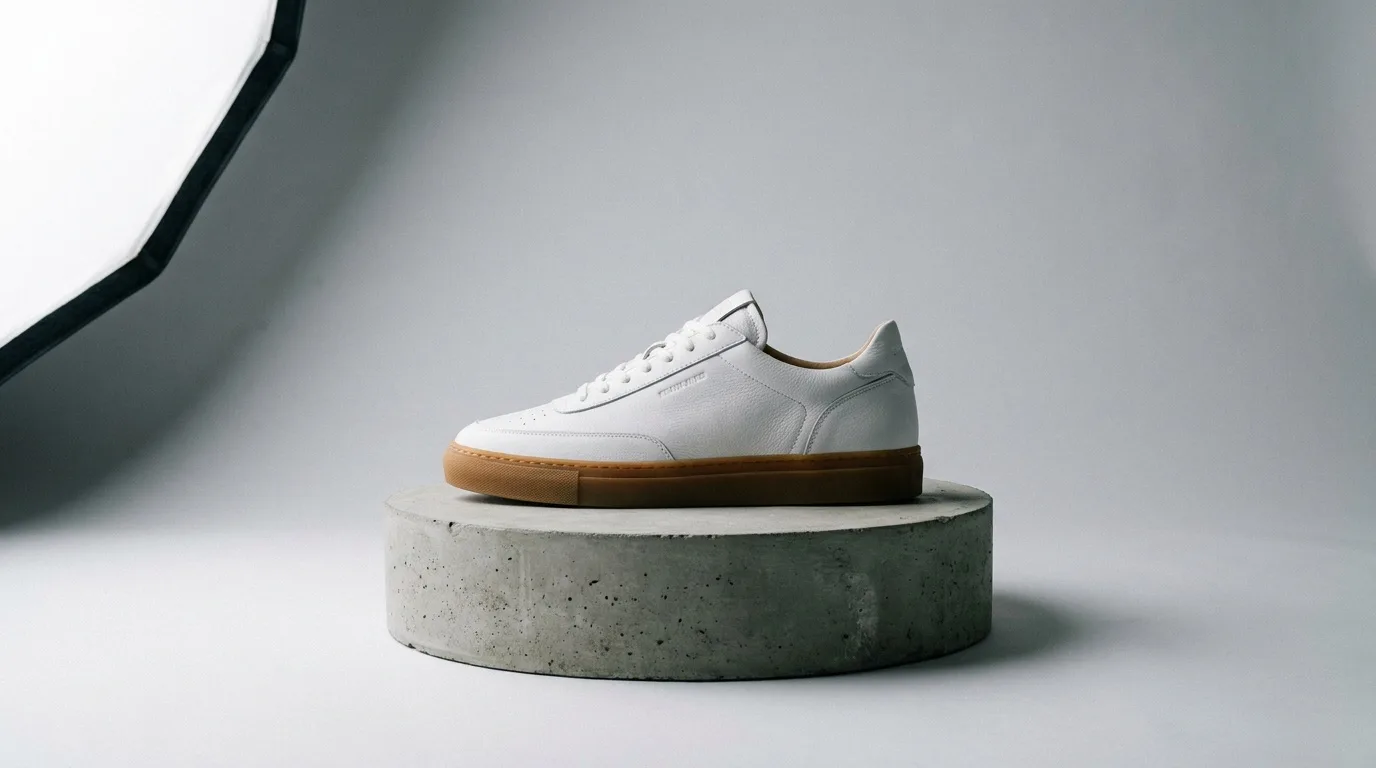
Slow 180-degree orbit around the sneaker, the sneaker stays perfectly still, light glides across the leather, the camera settles on the side view
A genuine 180-degree orbit: the background shifts from softbox to light stands to a plain wall and table edge as the camera goes past the toe, and the sneaker never moves or warps. It settles on a full side view at the same framing it started with.
A real orbit: the softbox slides out, the backdrop seam and a light stand come into view, and the camera passes the toe on its way to the other side. It also pushes in hard, ending on a tight crop, and the side panel gains an invented, misspelled brand stamp.
Character action
A multi-step action (mount, start, ride out of the door) with a locked camera, on a stylized character.
Checked: Bear mounts the motorcycle · Engine starts · Rides out through the garage door · Camera stays static · Character stays on model
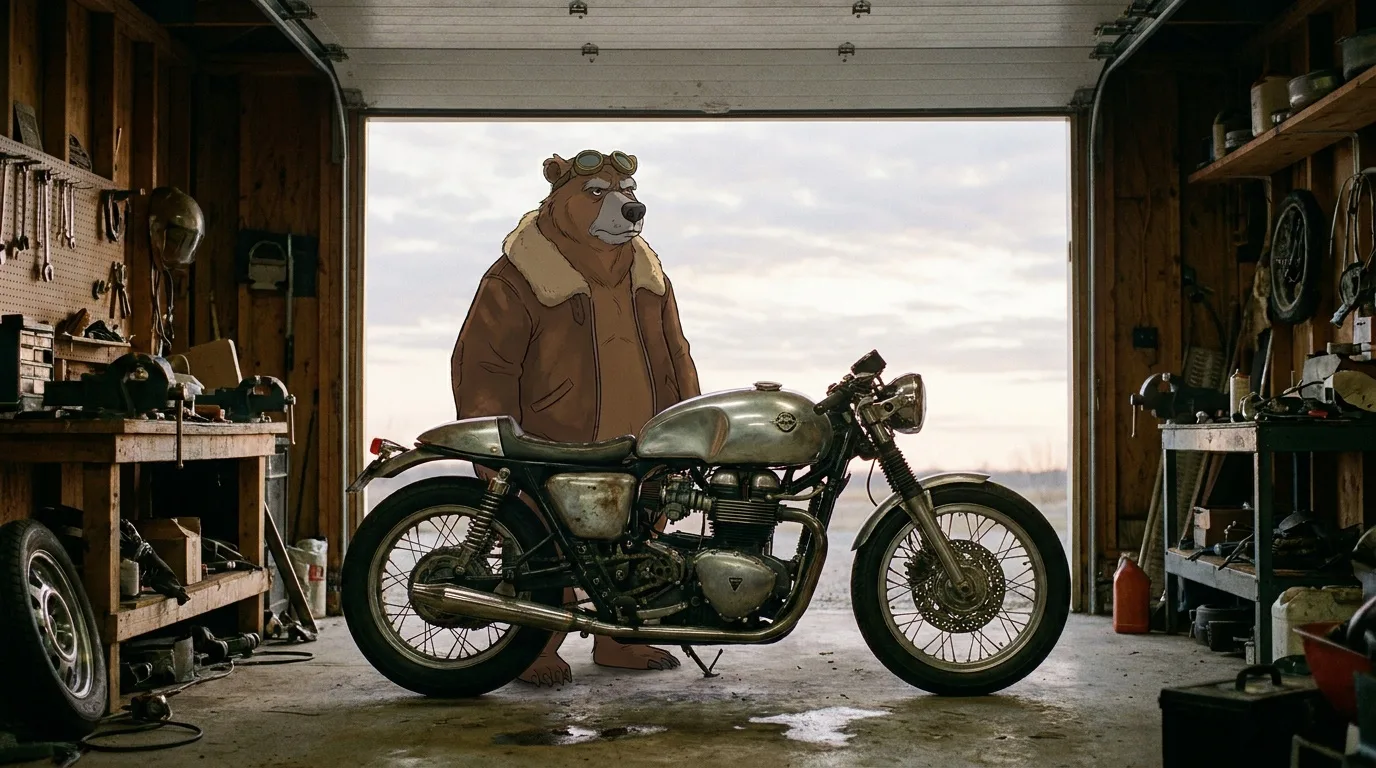
The bear swings a leg over the motorcycle, starts the engine and rides slowly out through the open garage door into the dawn light, static camera
Hits every beat: the bear swings on (a rubbery, stretched leg for a few frames at 1 s), cartoon exhaust puffs as the engine starts, and it rides out through the door with the camera locked. The illustrated style, goggles and sheepskin collar hold throughout.
A clean mount and a visible puff of exhaust as the engine starts at 3.5 s. Then the bear rides sideways out of the right edge of the frame instead of through the garage door.
Which should you use?
Choose Kling O3 for
- Camera moves that must keep the original framing
- Multi-step actions that must complete in frame
- The same price, with better instruction following in our tests
Choose Kling 3.0 for
- Holding a face steady through a turn (a tie, but its result was cleaner)
- Workflows already tuned to Kling 3.0's motion style
- Its 4K and Pro tiers, where your project needs them
One take per model per test, judged in October 2026. Both models are updated often; prices and live availability are on the models page. Totals for these tests: Kling O3 $4.20, Kling 3.0 $4.20 of plan value.
Questions people ask
Is Kling O3 better than Kling 3.0?+
In our tests, yes on control: it won the orbit and the character action, and the other two tests were ties. Both cost the same per clip in our runs.
What's the difference between Kling O3 and Kling 3.0?+
They are separate Kling model lines from Kuaishou with different modes and tiers. In practice, O3 followed camera and action instructions more literally in our image-to-video tests.
Which Kling model is cheapest?+
Of the ones we tested, Kling 2.5 Turbo cost the least per clip, but it spun the product in our orbit test instead of moving the camera.
More comparisons
Test them on your own prompt
Run one prompt on Kling O3, Kling 3.0 and two more models side by side, rate the results and keep the winner. Every run shows its cost before you click.