
The best AI image generator, tested: one prompt on four models (October 2026)
Leaderboards tell you which model wins on average. This is a dated, first-hand test: one demanding prompt on four popular models, checked item by item, with real costs and render times, plus a method to run the same test on your own work.
Updated · 9 min read · By the PromptLab team
The short version
- There is no single best AI image generator: in our October 2026 test, each of four models got a different part of the same prompt right.
- Nano Banana 2 told the most complete story, Flux 2 Pro nailed the 85mm portrait look, Seedream 5 Lite was the most literal, and Ideogram 4 was the cheapest at 3 credits.
- Judge models on six criteria: prompt adherence, realism, text rendering, reference and editing support, speed and cost. Weight them by the job.
- Check every output at full size. Our renders included a human hand on a dog, a painted-in transparency checkerboard and real brand logos nobody asked for.
- Leaderboards move monthly. Run your hardest real prompt on three or four models, score it with a rubric, and let a blind vote decide.
In this guide
The short answer: which AI image generator is best?
As of October 2026, the honest answer is that it depends on the picture. Independent arena leaderboards currently put newer models such as GPT Image 2 and Google's Nano Banana 2.1 near the top on average preference. Averages hide the thing you actually care about, though: whether a model does what your prompt asks, at a price and speed that fit your workflow.
So instead of a ranked list, here is a first-hand test. We wrote one demanding prompt and rendered it on four models that are popular, affordable and available in PromptLab today: Flux 2 Pro, Nano Banana 2, Seedream 5 Lite and Ideogram 4. Then we checked every image at full size against every element of the prompt. The short version:
- Best overall picture: Nano Banana 2. The most complete scene, and the one we would publish. It took liberties with the camera brief.
- Best lens realism: Flux 2 Pro. The most convincing 85mm portrait, at 8 credits, in about 8 seconds.
- Most literal: Seedream 5 Lite. It hit nearly every item in the prompt, but took about four times longer than the others.
- Best value for exploring: Ideogram 4. Loose on the details, but 3 credits a render.
Models and prices change every few weeks, so treat this as a dated snapshot. The model catalog lists what is live right now and what each run costs.
The test: one prompt, four models
A good test prompt stacks the things image models find hard. This one asks for an animal with human wardrobe (anatomy), a specific action (sipping, not holding), a named landmark, a night scene full of small light sources, and real camera language: an 85mm lens and shallow depth of field. That last part shows whether a model understands photography or just pattern-matches keywords.
Each model received the identical prompt at 3:4. Below is the render each one returned, with the credits it cost and our notes after checking it at full size.
A raccoon in a perfectly tailored tuxedo sipping champagne at a rooftop gala in Paris at night, Eiffel Tower bokeh behind, editorial photograph, 85mm lens, shallow depth of field
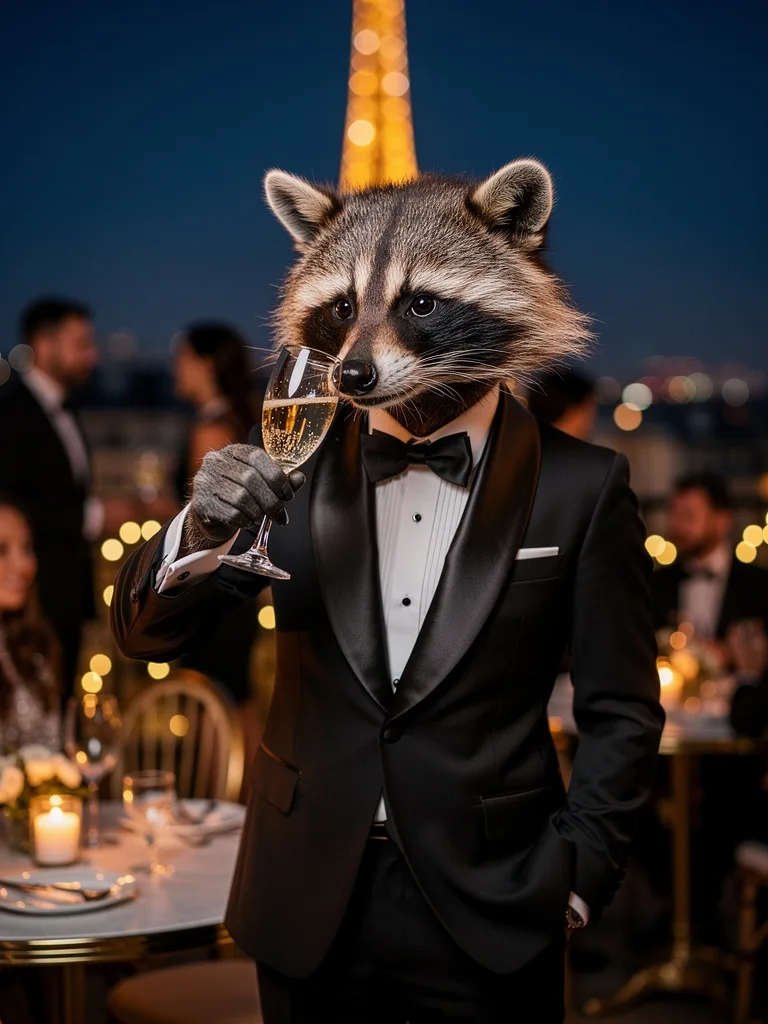
The most convincing 85mm portrait: waist-up framing, creamy bokeh, satin shawl lapels. The Eiffel Tower is only a glowing blur and the rooftop is implied rather than shown. The paw reads as a human hand in a fur glove, and one shirt cuff is muddled.
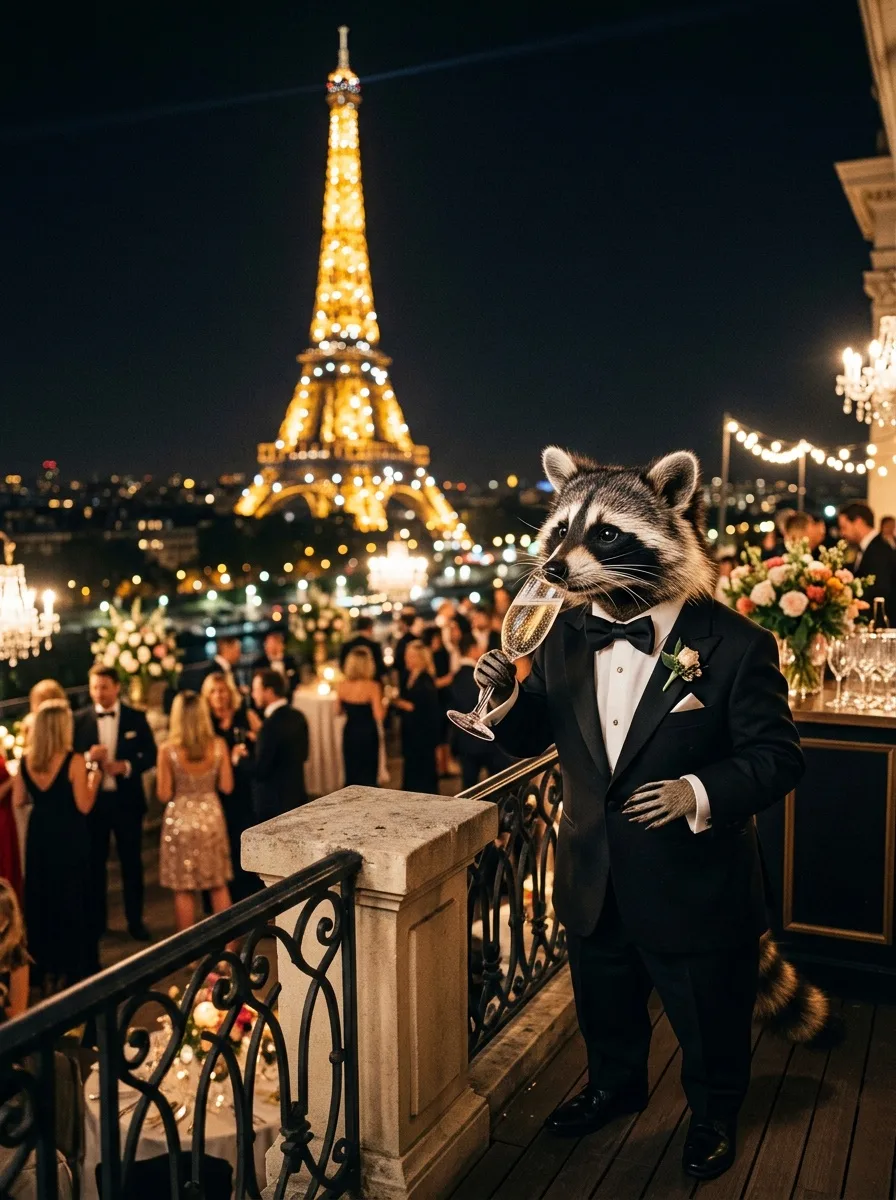
The most complete scene: stone balustrade, iron railing, a crowd in evening wear, a boutonniere and a visible tail. The tower and crowd are soft at full size, but the wide, full-length framing is not what an 85mm lens gives you.
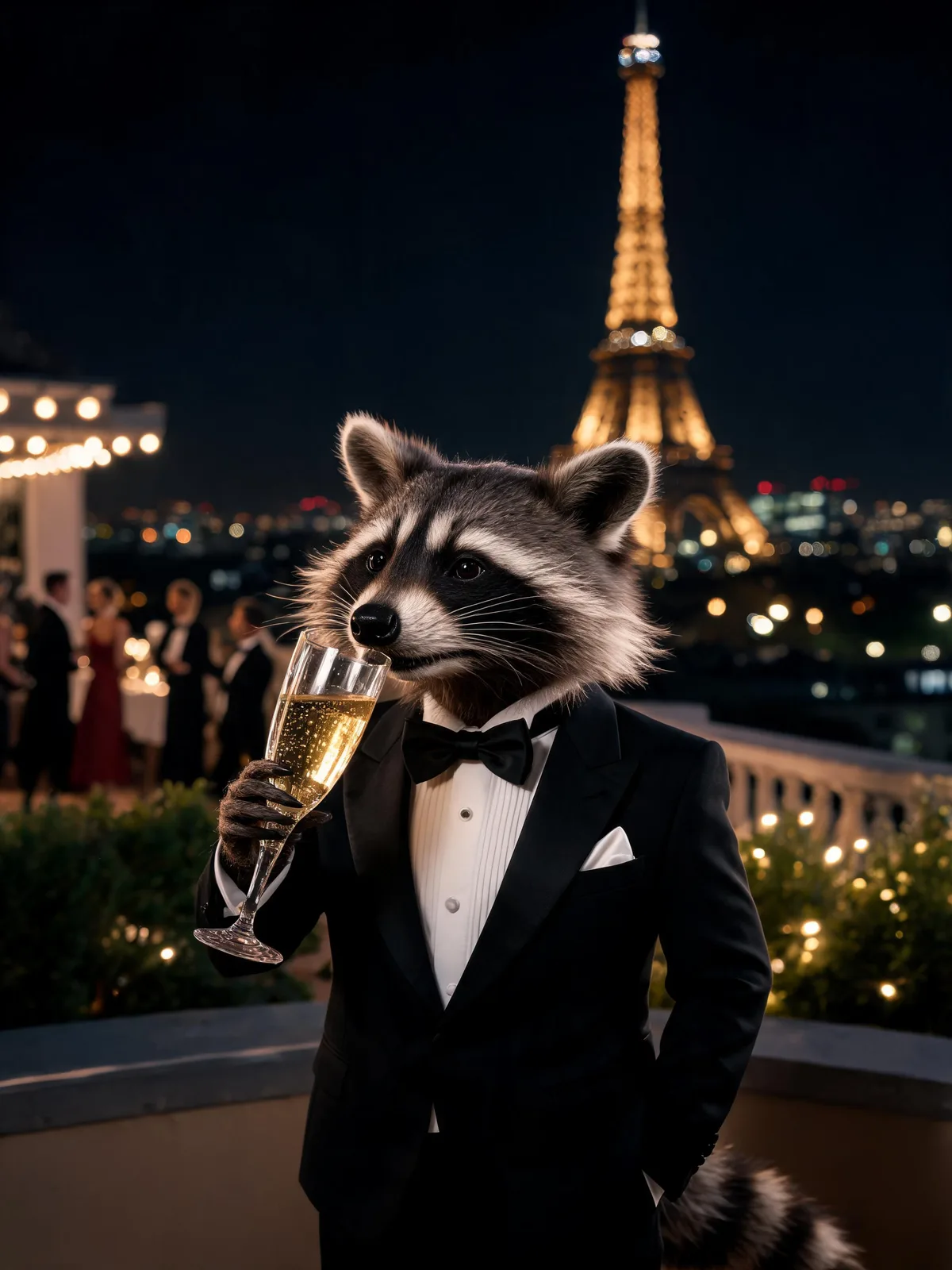
The most literal reading: terrace, guests, string lights, a real sip and a softly focused tower. Clawed raccoon paws look right. Also the slowest: about 44 seconds in our run, against 8 to 11 for the others.
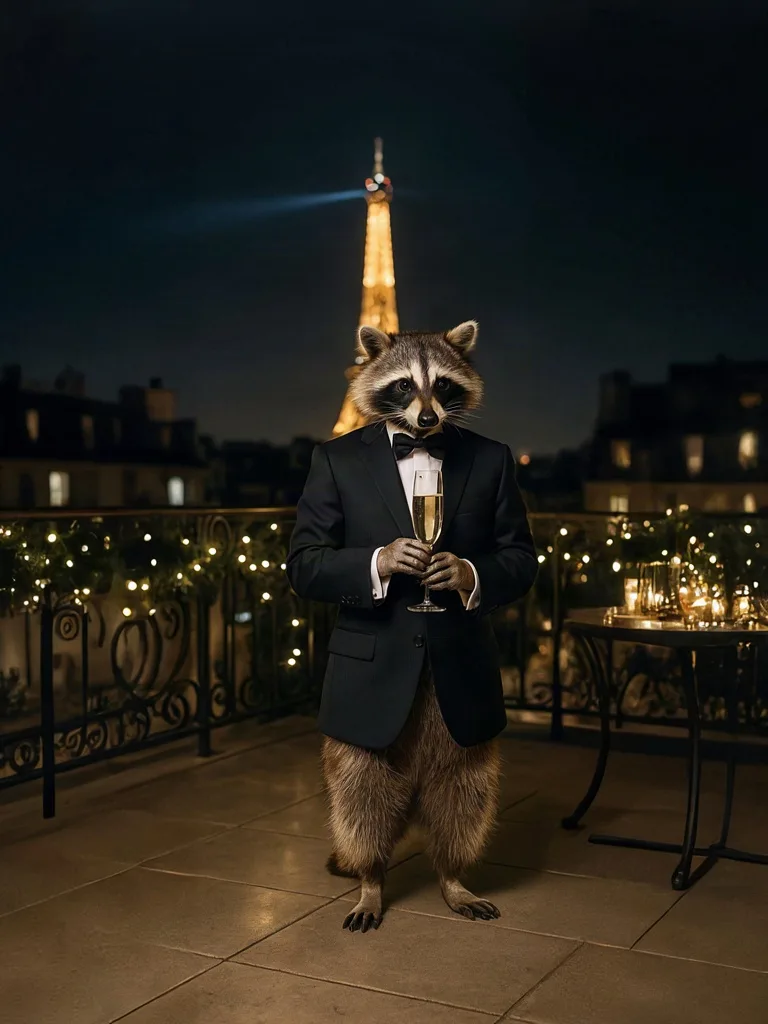
Charming but loose: the raccoon stands on bare furry legs in a jacket with no trousers, holds the glass instead of sipping, and there is no gala crowd. It did add the tower's searchlight beam. Fine for exploring at 3 credits.
Prompt adherence, item by item
"Looks good" is not a score. Breaking the prompt into its elements and checking each one is the fastest way to see what a model prioritizes. Here is the full scorecard from our renders.
| Prompt element | Flux 2 Pro | Nano Banana 2 | Seedream 5 Lite | Ideogram 4 |
|---|---|---|---|---|
| Tailored tuxedo | Yes, satin lapels | Yes, plus boutonniere | Yes, pleated shirt | Partly: jacket, no trousers |
| Sipping champagne | Yes | Yes | Yes | No, holds the glass |
| Rooftop | Partly, implied by skyline | Yes, balustrade and railing | Yes, terrace balustrade | Yes, terrace railing |
| Gala | Yes, guests and set tables | Yes, crowd in evening wear | Yes, guests behind | No, alone |
| Eiffel Tower as bokeh | Yes, top only | Partly: soft but fully drawn | Yes | Partly: small, soft |
| 85mm look | Yes, waist-up | No, wide and full-length | Yes, three-quarter | No, full-length |
| Shallow depth of field | Yes | Partly | Yes | Partly |
| Believable anatomy | Partly: human-like hand | Yes, clawed paws, tail | Yes, clawed paws, tail | Partly: human-like hands |
| Render time in our run | 8.3 s | 10.8 s | 44.2 s | 8.7 s |
Two patterns stand out. Nano Banana 2 put the story nouns first (rooftop, gala, Paris) and treated the camera terms as optional. Flux 2 Pro did the opposite: it followed the lens and focus instructions closely and sketched the setting. Neither is wrong; they weight a prompt differently.
That has a practical consequence. A prompt tuned on one model is not tuned for another. So we ran a follow-up on Nano Banana 2: the same prompt, with the camera terms moved to the front and the framing spelled out in plain words ("Tight waist-up portrait, 85mm lens, shallow depth of field:").
A raccoon in a perfectly tailored tuxedo sipping champagne at a rooftop gala in Paris at night, Eiffel Tower bokeh behind, editorial photograph, 85mm lens, shallow depth of field
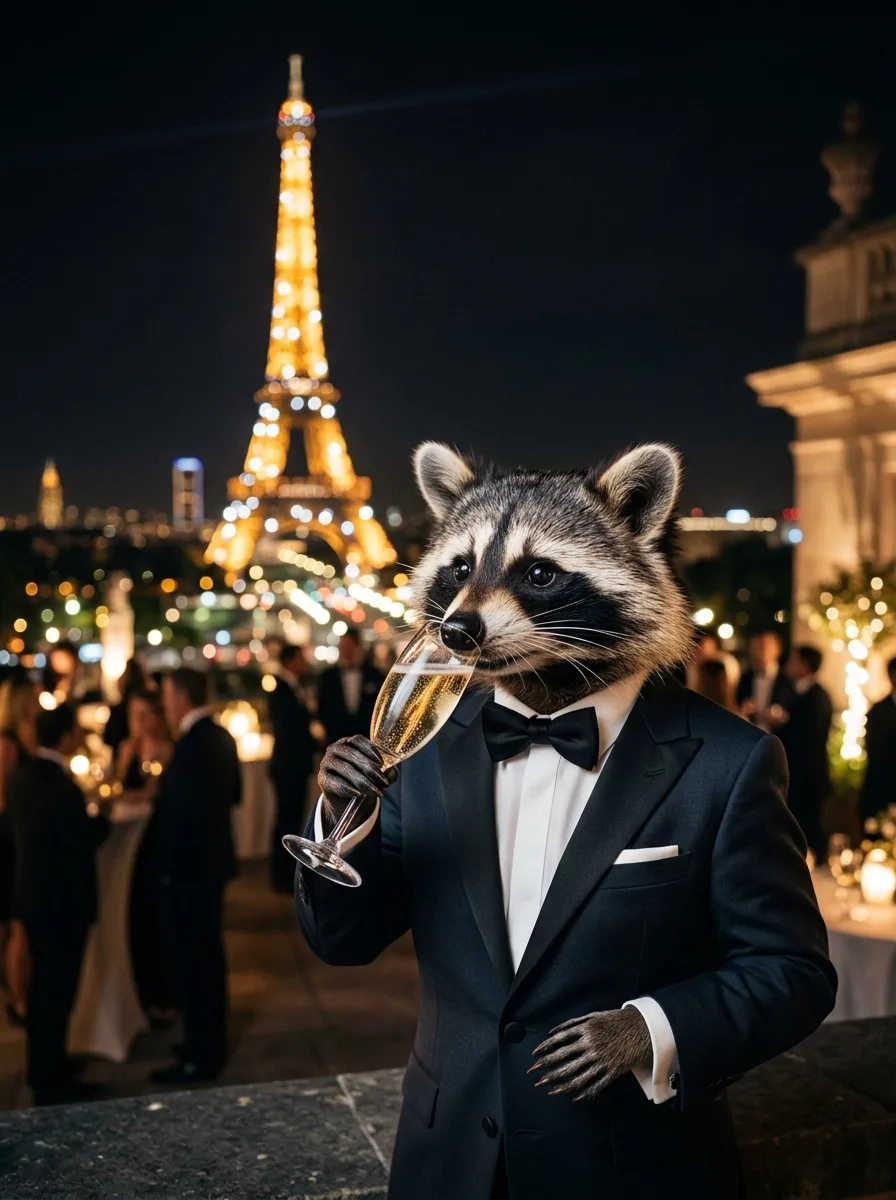
Tight waist-up portrait, 85mm lens, shallow depth of field: a raccoon in a perfectly tailored tuxedo sipping champagne at a rooftop gala in Paris at night, Eiffel Tower bokeh behind, editorial photograph
Word order moved the camera, but only part of the way. The raccoon now fills the right half of the frame, cropped at about the hips rather than shown head to toe, and the crowd behind it melts into a softer blur. It still sips, and the paws still have claws. It is not a tight waist-up portrait, though, and the Eiffel Tower is as crisp and fully drawn as before rather than a bokeh shape. The tighter crop also cost the scene: the iron railing, the boutonniere and the tail are gone. One render each, so treat it as a hint rather than a rule: put the framing you care about first, then check what it pushed out. Our guide to writing image prompts covers ordering and weighting in detail.
How to judge an AI image generator: six criteria
Our scorecard covers prompt adherence. A complete evaluation looks at six things, and which ones matter most depends on the job.
- Prompt adherence. Does it render every element you asked for, in the relationship you asked for? Count elements; don't eyeball.
- Realism. Hands and paws, fabric, how light sources agree with shadows, and backgrounds that repeat or smear at the edges. Premium is no guarantee: in our gallery, a 38-credit Nano Banana Pro render gives a golden retriever a human hand.
- Text rendering. Can it spell what you ask for, at the size you need? Models now add text you never requested, which is a separate risk.
- Reference images and editing. For a real product, face or recurring character you need a model that accepts references. Google says Nano Banana Pro takes up to 14 reference images; Flux 2 and Seedream also have edit variants, with limits listed on each model page. Our raccoon test is text-only, so it says nothing about reference fidelity.
- Speed. In our runs most models returned an image in 6 to 19 seconds; Seedream 5 Lite took 28 to 44. Speed matters when you iterate dozens of times.
- Cost. The renders in this guide cost from 3 to 38 credits each, roughly a 13-fold spread.
Text rendering deserves a closer look, because the results surprised us. None of these prompts asked for words, and all three images have them.
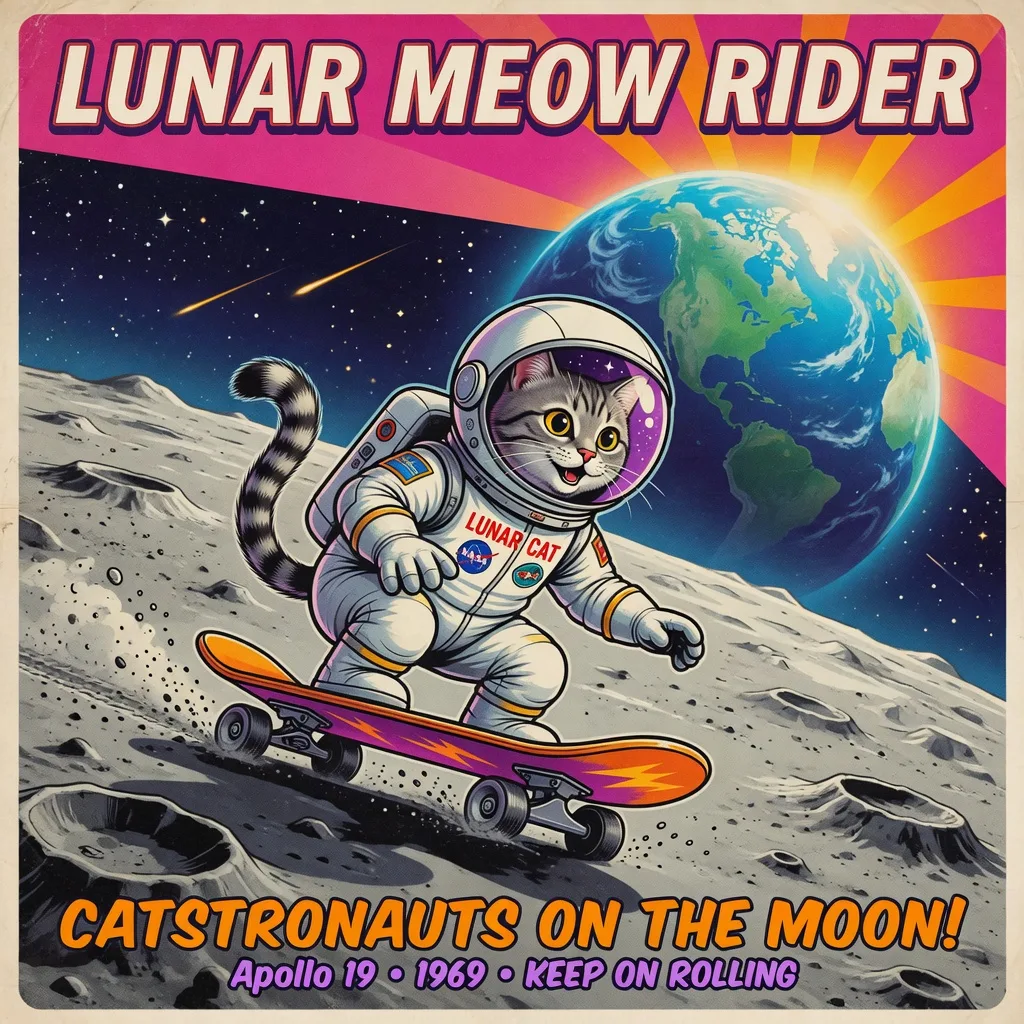
A cat in a tiny white spacesuit riding a skateboard across the lunar surface, Earth rising in the background, retro-futurist poster style, bold colours
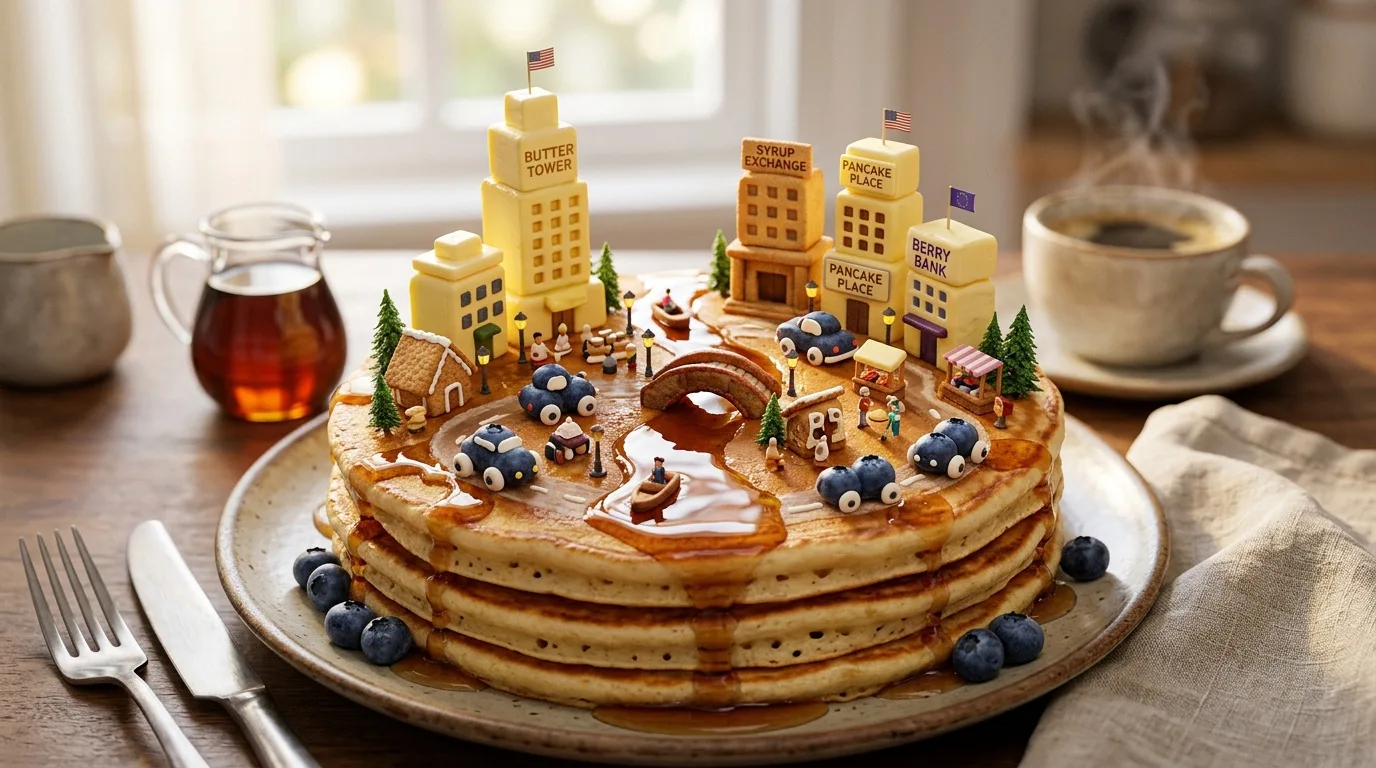
A miniature city built on a stack of fluffy pancakes, maple-syrup rivers, butter-pat skyscrapers, blueberry cars, tilt-shift photography, morning light
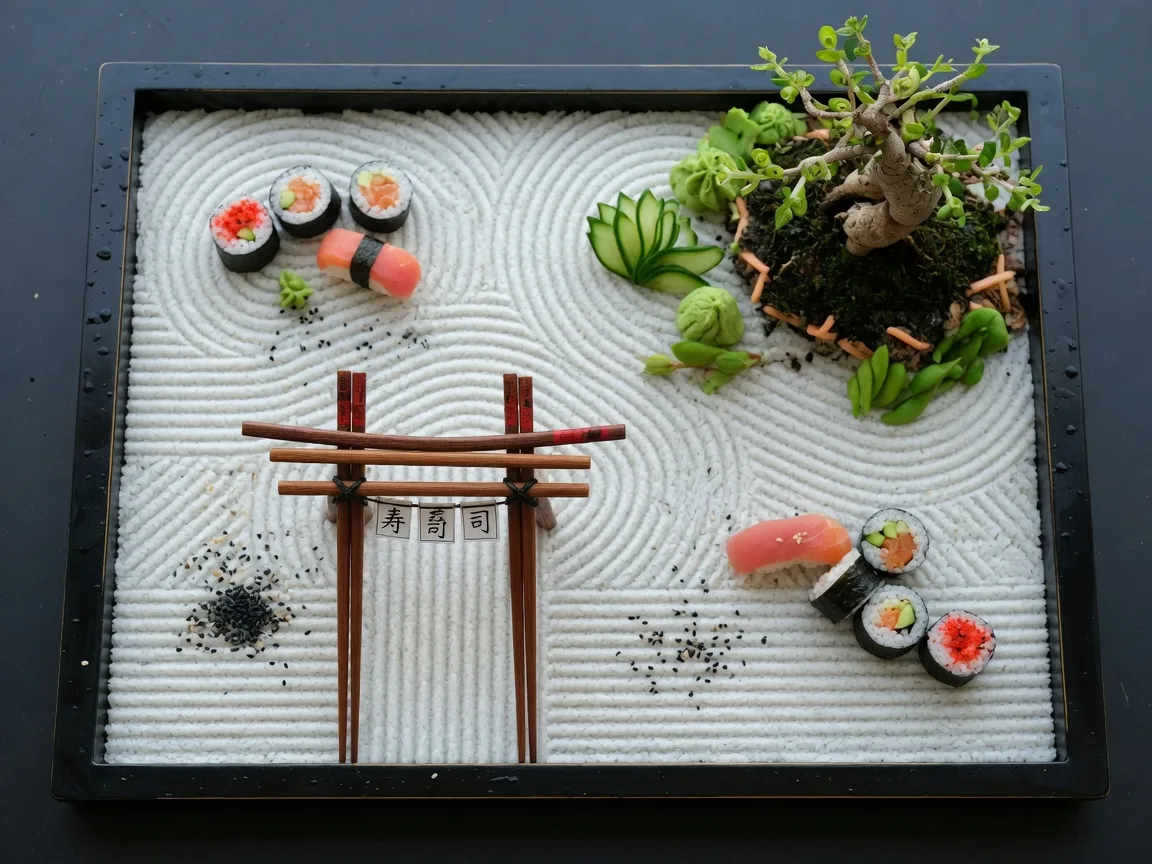
A sushi platter arranged as a tiny Japanese zen garden, raked rice sand, a bonsai made of wasabi, a miniature torii gate of chopsticks, overhead shot, soft daylight
Grok Imagine, at 13 credits, produced a retro poster with a correctly spelled headline it made up. Nano Banana 2 labeled the butter skyscrapers with readable signs, but used the same name twice. Grok Imagine also hung a sign on the chopstick gate with the two characters for "sushi" and a malformed third one between them. If exact copy matters (packaging, posters, anything legal) test text specifically. Ideogram is widely known for typography and layout, and for final copy many teams still set the text in a design tool.
Which AI image model for which job
Here is how we would start, based on what our renders show. Each comparison is a single render per model, so treat it as a starting shortlist, not a verdict.
| Job | Start with | Why |
|---|---|---|
| Story-driven campaign or editorial scene | Nano Banana 2 | Most complete scene in our test; legible signage elsewhere in our gallery |
| Realistic portrait with a specific lens look | Flux 2 Pro | Best 85mm read in our test, fast and mid-priced |
| A long brief someone will check line by line | Seedream 5 Lite | Most literal in our test; budget time for slower renders |
| Exploring compositions cheaply | Ideogram 4 or Flux 2 Pro | 3 and 8 credits, under 10 seconds each in our test; Grok Imagine was faster still in our runs, at 13 credits |
| Posters, packaging mockups, exact text | Ideogram 4, then test Nano Banana 2 | Ideogram's known strength; verify spelling at full size either way |
| Your real product or a recurring character | Nano Banana Pro or another edit model | Needs reference images; compare fidelity across two or three models |
For product shots specifically, our AI product photography guide walks through the reference workflow. Here is what every image in this guide cost:
| Render | Model | Credits | Plan value |
|---|---|---|---|
| A raccoon in a perfectly tailored… | Ideogram 4 | 3 | $0.03 |
| A raccoon in a perfectly tailored… | Flux 2 Pro | 8 | $0.08 |
| A raccoon in a perfectly tailored… | Seedream 5 Lite | 9 | $0.09 |
| A raccoon in a perfectly tailored… | Nano Banana 2 | 20 | $0.20 |
| Tight waist-up portrait | Nano Banana 2 | 20 | $0.20 |
| A cat in a tiny white spacesuit… | Grok Imagine | 13 | $0.13 |
| A sushi platter arranged as a tiny… | Grok Imagine | 13 | $0.13 |
| An ice cream cone where each scoop… | Ideogram 4 | 3 | $0.03 |
| A miniature city built on a stack of… | Nano Banana 2 | 20 | $0.20 |
| A giant panda DJ in a bucket hat… | Gemini 3.1 Flash | 20 | $0.20 |
| A golden retriever wearing a velvet… | Nano Banana Pro | 38 | $0.38 |
What the rest of our gallery shows
One prompt is a narrow test, so here are three more renders from different models, each with something worth noticing.
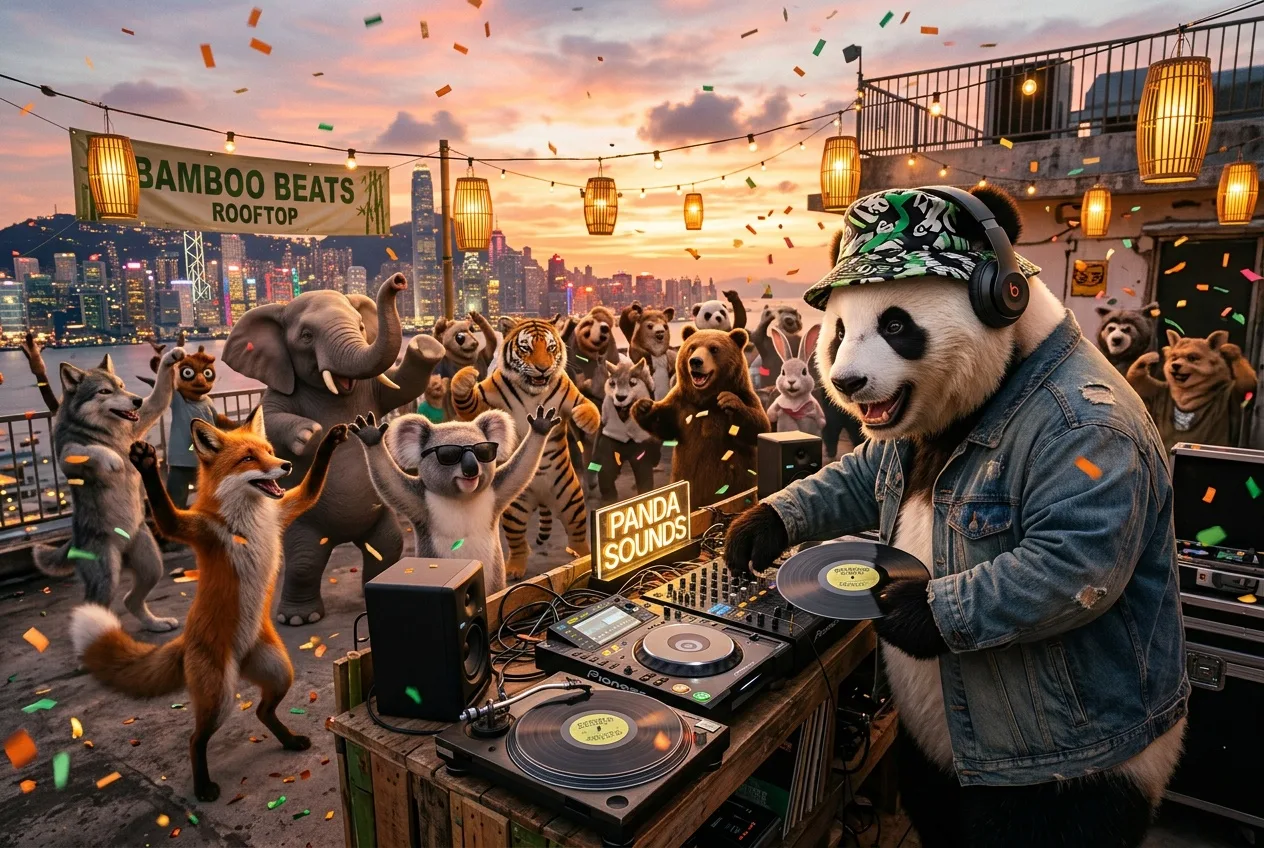
A giant panda DJ in a bucket hat spinning vinyl at a rooftop party at sunset, a crowd of animals dancing, bamboo lanterns, confetti, photorealistic
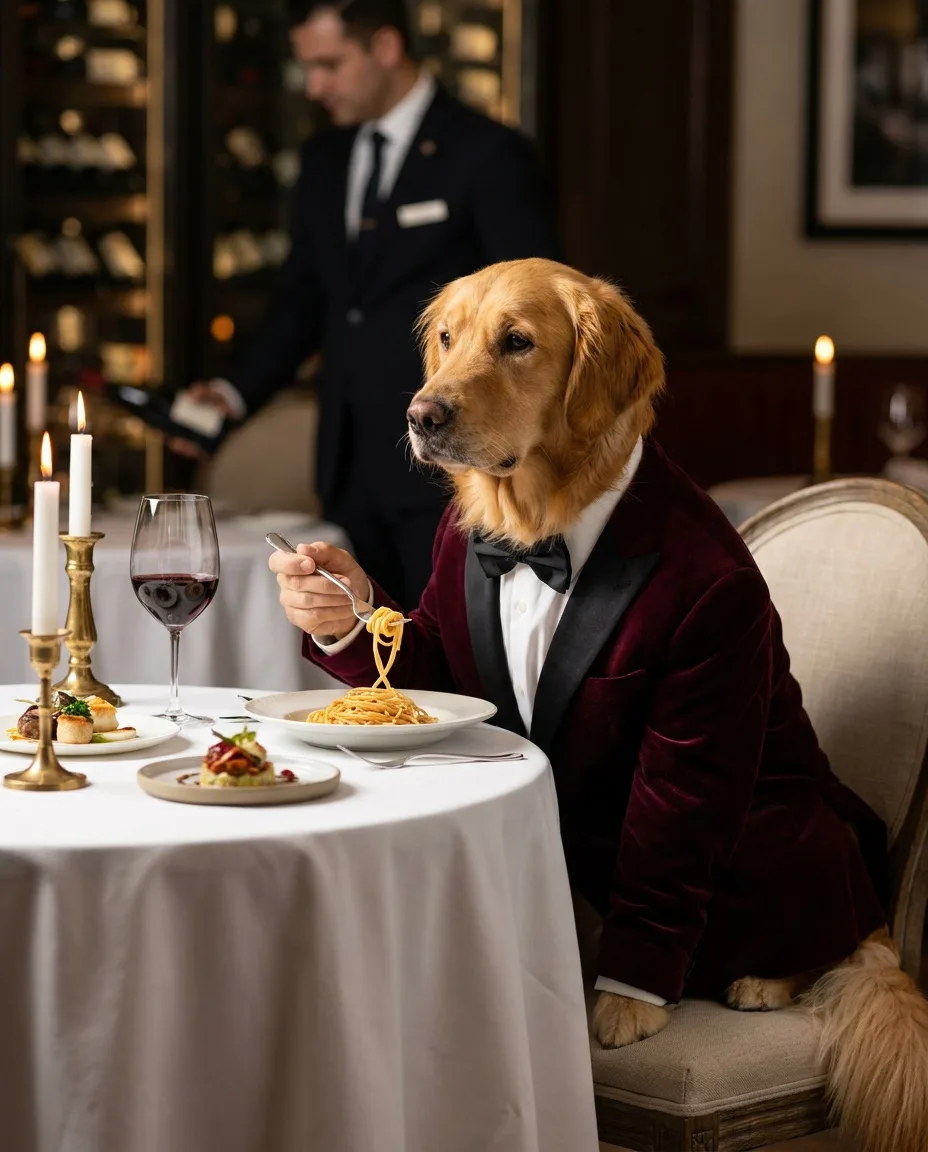
A golden retriever wearing a velvet dinner jacket and bow tie, seated at a Michelin-star restaurant, delicately twirling spaghetti with a silver fork, candlelight, white tablecloth, sommelier blurred in the background, editorial food photography, 85mm, shallow depth of field
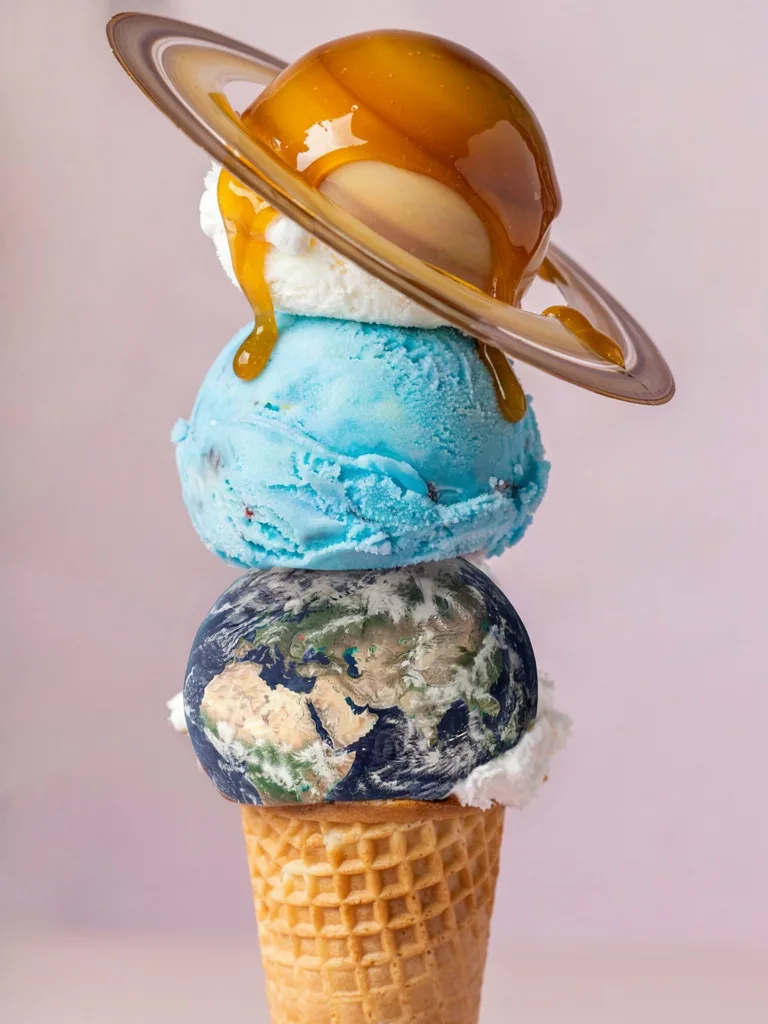
An ice cream cone where each scoop is a miniature planet, Saturn with rings dripping caramel, Earth with whipped-cream clouds, pastel studio background, playful product photography
- Gemini 3.1 Flash (20 credits). This is Google's developer name for the model sold as Nano Banana 2; Google Cloud lists it as "Gemini 3.1 Flash Image (Nano Banana 2)". It handled a crowded rooftop with a dozen animals and readable invented signs, and also drew real audio-brand logos on the gear. If you see both names in a catalog, compare before assuming they differ.
- Nano Banana Pro (38 credits). The most expensive image in this guide has lovely candlelight and a convincingly blurred sommelier, yet the dog twirls its spaghetti with a human hand. Always check hands, even on premium models.
- Ideogram 4 (3 credits). Saturn's caramel drip works and the studio backdrop is clean. The bottom scoop, though, is a photo of Earth wrapped onto a ball, not ice cream with whipped-cream clouds as asked.
The lesson: price tracks average quality loosely, not the quality of any single image. Cheap models are good enough to find the idea; spend premium credits only when you know what you want.
What the leaderboards say, and why you should still test
Arena leaderboards such as Artificial Analysis collect blind, head-to-head votes between models. At the time of writing they rank GPT Image 2 at or near the top for text-to-image, with the Nano Banana family close behind; Nano Banana 2.1, released in early October, is newer still. Those rankings are a sensible way to build a shortlist.
They are a poor way to make the final call, for three reasons:
- The prompts aren't yours. Votes are cast on generic prompts. Your brief has a brand palette, a product, a required headline.
- The judging is fast. Voters compare two images at a glance. Nobody checks the hands, the spelling or the logo on the coffee machine.
- They ignore price and speed. A model that wins slightly more votes at several times the cost may not be the right choice for hundreds of social variations a week.
The same applies to video, where the frontier is moving even faster; our lesson on choosing a video model uses the same approach.
How to run your own AI image benchmark
An hour of structured testing on your own prompts beats any ranking. This is the method we used above, generalized.
Pick your hardest real prompt
Use one that failed before or that your work depends on: the packshot with the label, the scene with three characters, the poster with a headline. Easy prompts make every model look good.
Shortlist three or four models
Include one inexpensive model, one current leaderboard leader and one specialist for your hardest requirement (text, references, realism).
Write the rubric before you look
List the required elements and decide what "pass" means for each. Writing it afterward lets your favorite image set the standard.
Render more than once if you can
One render can be lucky or unlucky; ours above are single renders. Two or three per model show whether a result is typical.
Score at full size, then vote blind
Check each element at 100% zoom. Then hide the model names and ask colleagues or customers to pick the image they would use.
Record the winner per job, and retest quarterly
Note the model, cost and render time next to the job it won. New models ship constantly, so rerun the test when your shortlist changes.
Prompt: [your hardest real prompt]. Score each image 1 to 5 on prompt alignment ([required elements]), realism ([what must look right]), text accuracy ([exact copy]), style match ([brand reference]) and originality. Note credits and render time. Winner for [job]: [model].
PromptLab's Benchmark is built for this: one prompt and its references across up to four models side by side, rubric ratings for prompt alignment, text accuracy, resemblance, style and originality, public share links for blind voting, and a dashboard that ranks models by win rate, speed and cost.
Questions people ask
What is the best AI image generator in 2026?+
No single model wins every job. In our October 2026 test, Nano Banana 2 produced the most complete scene, Flux 2 Pro the most convincing lens look and Seedream 5 Lite the most literal reading, while leaderboards rank newer models such as GPT Image 2 near the top. Test your own prompt on three or four models.
Which AI image generator is best for realistic photos?+
In our test, Flux 2 Pro and Seedream 5 Lite gave the most photographic results, with believable shallow depth of field. Realism varies by subject, so check hands, fabric and light sources at full size on any model.
Is Flux or Nano Banana better?+
They prioritize differently. In our side-by-side, Flux 2 Pro followed camera language such as 85mm and shallow depth of field more closely, while Nano Banana 2 built a fuller scene with more of the prompt's story. Flux 2 Pro cost 8 credits and Nano Banana 2 cost 20.
Which AI image generator is best for text in images?+
Ideogram is known for accurate typography and layouts, and Nano Banana 2 rendered legible signage in our tests. Text still drifts, especially small or non-Latin text, so verify spelling at full size or add final copy in a design tool.
How do I compare AI image generators fairly?+
Use the same prompt, aspect ratio and references on every model, write a scoring rubric before you look, check each image at 100% zoom, and have people vote without seeing model names.
Keep learning
How to write image prompts: the anatomy, words and habits that work
A practical text-to-image prompt guide built on real renders: the order to write things in, the camera and style words that visibly change a picture, how to make AI images look real, and how to turn a good prompt into a reusable template.
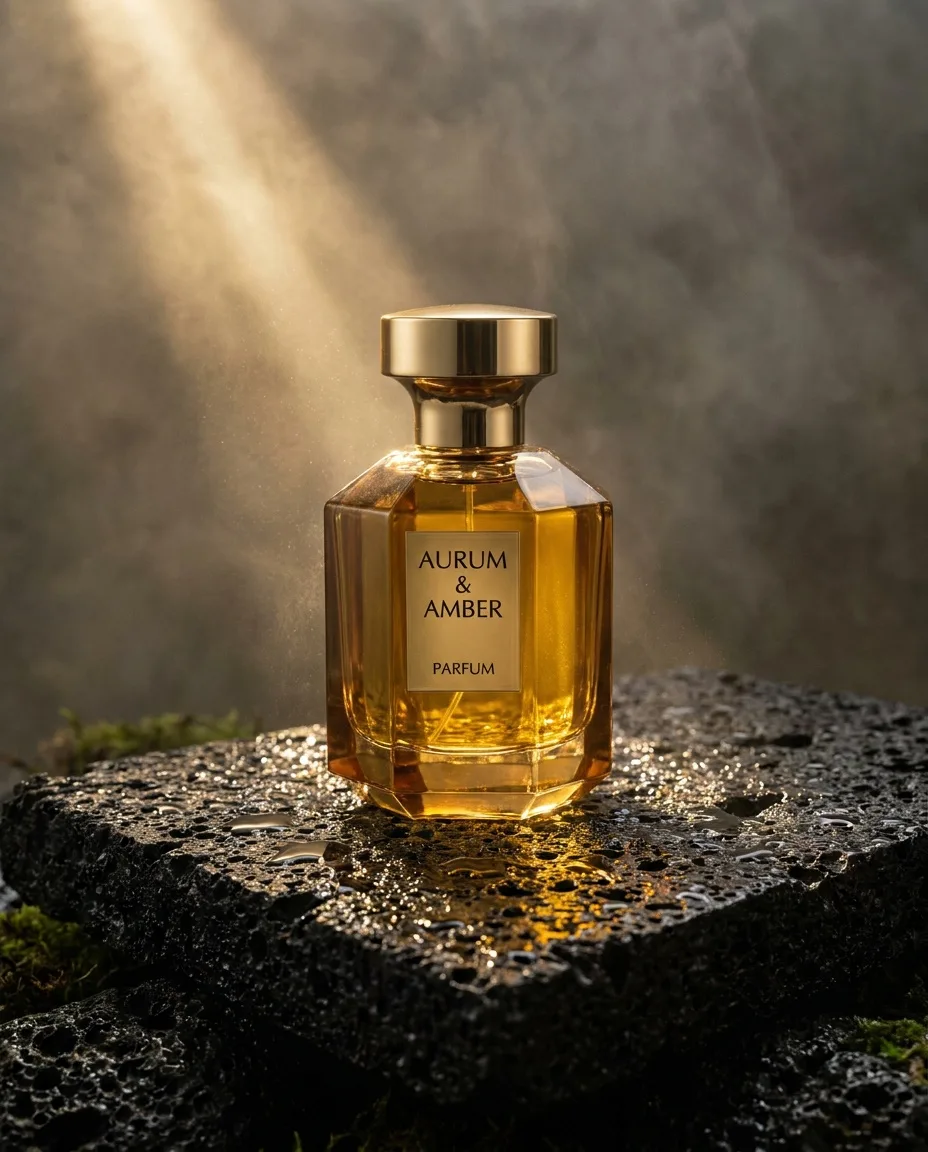
AI product photography: prompts, light and packshots that sell
A practical guide to AI product shots that look like a campaign rather than a stock photo: how to structure the prompt, pick a surface, light it like a photographer, and keep your real product accurate.
The best AI video generator for filmmaking: choose a model per shot
We gave five video models the same start frame and the same motion prompt, then checked fifteen real clips frame by frame for what each model got right, what it got wrong and what it cost. The answer to "which model is best" turned out to be "for which shot, and at what budget?"
Run these prompts on every model, side by side.
PromptLab puts Flux, Nano Banana, Kling, Veo, Seedance and dozens more in one workspace. See the cost before you click, keep the prompts that win.